
Saudi Arabia Begins Redirecting Oil Shipments to the Red Sea Amid Growing Hormuz Disruptions

Saudi Arabia Redirects Oil Exports Amid Gulf Shipping Challenges
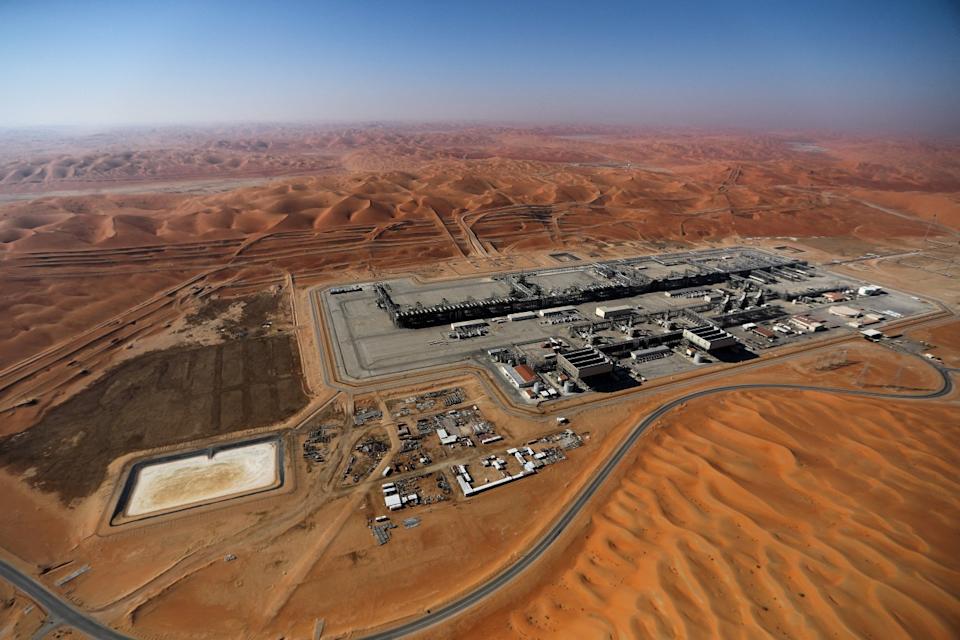
Saudi Aramco's Shaybah oil field in the Empty Quarter, Saudi Arabia, January 2024. Photo by Hamad I Mohammed/Reuters.
Saudi Arabia has begun moving more of its crude oil exports through the Red Sea port of Yanbu, responding to shipping disruptions in the Strait of Hormuz that have affected Gulf routes.
Data from Kpler, a vessel-tracking provider, shows that in the first four days of March, approximately 10 million barrels of crude were shipped from the Al-Muajjiz terminal on the Red Sea, averaging about 2.5 million barrels per day.
Top Stories from The Wall Street Journal
The country’s ability to reroute oil relies on the East-West pipeline, a 750-mile conduit that carries crude from the eastern oil-producing regions near the Gulf to Yanbu on the Red Sea coast.
Kpler reports that at least three very large crude carriers (VLCCs) in the Red Sea are currently signaling Yanbu as their destination, with two waiting offshore. Four additional empty VLCCs are on their way to Yanbu, expected to arrive between March 5 and March 19.
Saudi Aramco, which is state-owned, did not immediately respond to requests for comment.
Still, Kpler analysts note that the Red Sea route cannot fully compensate for disruptions in the Gulf. Yanbu’s export facilities are smaller than those at Ras Tanura, which limits how much oil can be redirected through the Red Sea at any given time.
While the East-West pipeline is capable of transporting about 7 million barrels per day, Yanbu’s loading capacity is between 4.3 million and 4.5 million barrels daily, according to Kpler. The Organization of the Petroleum Exporting Countries (OPEC) reported that Saudi Arabia produced just over 10 million barrels per day in February.
Another challenge is the presence of Iran-backed Houthi militants in the Red Sea, who have previously disrupted shipping during the Israel-Hamas conflict.
Under typical circumstances, most of Saudi Arabia’s oil exports are shipped from the Middle East Gulf. In the last quarter of the previous year, Ras Tanura handled about 6 million barrels per day, while Yanbu’s throughput was usually under 1 million barrels daily, according to Kpler.
This week, the Ras Tanura terminal and refinery complex was targeted by an Iranian drone. Officials stated that the attack caused no damage. The facility, which houses a major refinery and the world’s largest offshore oil-loading terminal, was also struck earlier in the week, temporarily halting operations after a drone attack caused a minor fire that was quickly contained.
Disclaimer: The content of this article solely reflects the author's opinion and does not represent the platform in any capacity. This article is not intended to serve as a reference for making investment decisions.
You may also like
Unemployment Increases by 0.1%? Not Impressed. Let Me Know When There's a 0.3% Shift
Netflix acquires Ben Affleck's AI film-tech firm
Doppler token creation platform powering most Base launches expands to Solana
Trending news
MoreCrypto prices
More





