
Microsoft Shares Fall as AI Optimism Grows — Could This Be the Right Time to Invest?

Microsoft Stock: Recent Decline Amid Strong AI and Cloud Momentum
Despite robust earnings and significant progress in artificial intelligence, Microsoft’s share price has dropped more than 15% so far this year. With a price-to-earnings ratio of 24.45, which is lower than both industry and peer benchmarks, some analysts believe the stock may be undervalued. Projections indicate Microsoft’s revenue could climb by 16% in fiscal 2026, fueled largely by the continued expansion of Azure and advancements in AI. Financial experts featured on CNBC have described Microsoft as the most reliable software investment, noting that its current valuation sits two standard deviations below its historical average. However, recent hikes in Microsoft 365 and server licensing fees could influence enterprise contract renewals and affect customer perceptions in 2026.
This year, Microsoft has experienced an unusual and notable decline in its stock price, falling over 15%—a rare event for a leading technology company. This downturn has sparked debate about whether the market is overreacting or if it signals challenges for Microsoft’s AI strategy. The outcome is significant not only for investors but also for businesses that rely on Microsoft’s cloud and software solutions. At the same time, recent price adjustments have raised concerns among corporate clients, while the company’s ongoing investments in AI infrastructure remain central to its long-term growth strategy.
Assessing Microsoft’s Investment Appeal After the Drop
Microsoft’s shares, which have historically shown resilience, are down nearly 18% year-to-date. Over the past three months, the stock has slipped 15.4%, and it has declined 6.1% in the last month, according to market data. This pullback comes despite impressive financial results—$305.5 billion in revenue and $119.3 billion in net income—prompting questions about whether the market is underestimating Microsoft’s AI prospects or pricing in new risks.
Valuation indicators suggest the stock is nearing its fair value. Discounted cash flow analysis estimates Microsoft’s intrinsic value at $455.45, compared to its current price of $392.74, as reported in recent analysis. The company’s P/E ratio is below both the software sector and its peers, implying that investors may be cautious due to concerns about AI-related spending and increased competition, as highlighted in industry research.
Nevertheless, Microsoft’s long-term growth outlook remains positive. Azure, its cloud platform, is forecasted to expand by 16% in fiscal 2026 and 15% in 2027, according to analyst projections. Should Microsoft’s valuation return to its historical average of 33 times earnings, the stock could potentially double within three years. Currently, Azure is seen as the primary driver of AI-related growth, benefiting from increasing demand for AI services and Microsoft’s strategic partnership with OpenAI, as noted in industry analysis.
Understanding the Stock’s Decline Despite Solid Performance
Even with its strong financial foundation, Microsoft’s shares have faced downward pressure as enthusiasm for AI cools. Investors are questioning whether the company can maintain its AI growth trajectory and protect its profit margins in a competitive landscape, as discussed in market analysis. Additionally, Microsoft’s recent price increases for products like Microsoft 365, Power BI, and server licenses have introduced uncertainty for enterprise clients, as reported by CNBC. The removal of tiered discounts and higher costs could complicate renewal negotiations and prompt organizations to reconsider their reliance on Microsoft’s ecosystem.
Despite these concerns, many investors remain positive. On CNBC’s ‘Halftime Report,’ Steve Weiss and Bill Baruch both increased their Microsoft holdings, arguing that worries about AI disruption are exaggerated. Weiss emphasized Microsoft’s early investment in OpenAI as a competitive edge, while Baruch pointed out that the stock is trading well below its long-term P/E average—a level he considers strong support. Joe Terranova also described Microsoft as the safest choice in the software sector.
Key Factors to Monitor: AI Initiatives and Pricing Adjustments
Microsoft’s future growth in AI will largely depend on the success of its Copilot and Windows initiatives, as well as the execution of its $80 billion investment in AI data centers, according to industry analysis. If these projects deliver, they could boost profitability and restore investor confidence. On the pricing side, organizations are encouraged to assess the effects of tier resets and SKU-level price hikes early, as advised by CNBC. With major enterprise contract renewals on the horizon in 2026, companies should carefully evaluate their exposure to Microsoft’s pricing changes and consider alternative solutions if necessary.
In summary, the recent drop in Microsoft’s share price may present a compelling entry point for long-term investors who believe in the company’s AI and cloud strategy. However, ongoing changes in enterprise pricing and broader economic uncertainties mean that Microsoft’s path to sustained growth will require careful navigation. Investors should keep a close eye on Copilot adoption, Azure’s financial performance, and the company’s ability to balance price increases with customer loyalty.
Disclaimer: The content of this article solely reflects the author's opinion and does not represent the platform in any capacity. This article is not intended to serve as a reference for making investment decisions.
You may also like
Solana Price Jumps 4% but Derivatives Data Shows Weak Trader Conviction

Crypto Founder Shares How XRP Could Become a Global Reserve Asset

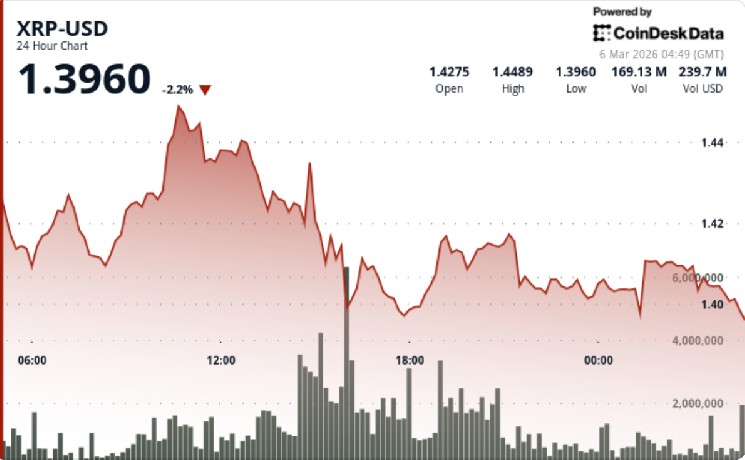
XRP drops 3% after failing to break $1.45 resistance
Bitcoin drops under $71,000, ETH, DOGE slide as war-week rally runs into resistance

Trending news
MoreCrypto prices
More





