
Petrobras Receives Approval to Bring in Gas from Argentina's Vaca Muerta

Petrobras Receives Approval to Import Argentine Natural Gas
Brazil's state-run energy company, Petrobras , has been officially permitted by Brazil’s National Agency of Petroleum, Natural Gas and Biofuels (ANP) to bring in natural gas from Argentina’s renowned Vaca Muerta shale region. This move marks a significant transition for Brazil, which has traditionally relied on Bolivian gas supplies.
The authorization, granted under Resolution SIM-ANP No. 737/2025, allows Petrobras to import up to 180 million cubic meters of gas annually, with daily peaks reaching 2 million cubic meters. Although these volumes are modest compared to Brazil’s total consumption, the strategic implications are considerable.
This agreement is part of a broader energy partnership established in late 2024, aiming to ramp up Argentine gas exports to Brazil to as much as 30 million cubic meters per day by 2030. Such growth could fundamentally alter the gas market dynamics in the Southern Cone.
Vaca Muerta: Argentina’s Shale Powerhouse
Vaca Muerta, located in the Neuquén Basin, stands as one of the world’s most prominent unconventional shale gas reserves. Over the past ten years, it has become a focal point for global shale development, thanks to its vast resources and improved extraction techniques.
Advancements in horizontal drilling and multi-stage hydraulic fracturing have enabled Argentina to unlock gas from dense shale formations, rapidly increasing production. This progress has shifted Argentina from a seasonal gas importer to a potential regional exporter.
For Argentina, exporting pipeline gas to neighboring countries offers steady income and encourages further investment in shale development. As output from Vaca Muerta expands, Argentina is positioning itself as a key energy supplier in South America.
Brazil’s Pursuit of Cost-Effective Pipeline Gas
Brazil’s gas demand, ranging from 65 to 70 million cubic meters per day, is fueled by its industrial sector, power generation, and petrochemical industry. Historically, Brazil has depended on domestic offshore production, Bolivian imports, and liquefied natural gas (LNG) shipments.
LNG purchases often subject Brazil to unpredictable global prices, especially during supply shortages. To address this, Brazil’s long-term energy strategy prioritizes access to affordable regional pipeline gas.
Argentine gas from Vaca Muerta presents an attractive alternative. Pipeline gas is typically more economical than LNG and strengthens regional energy security. For Brazil’s manufacturing heartland in the southeast, reliable pipeline gas can lower operational costs and boost competitiveness.
Bolivia’s Diminishing Gas Output Alters Supply Patterns
Brazil’s shift toward Argentine gas is closely linked to Bolivia’s declining natural gas production, which once served as Brazil’s main pipeline supplier. A decade ago, Bolivia exported large volumes through the Gasbol pipeline, connecting its fields to Brazilian markets.
Bolivian output has dropped from about 61 million cubic meters per day in 2014 to less than 30 million by 2025. Reduced reserves, limited exploration, and insufficient investment have hindered Bolivia’s ability to maintain export levels.
As Bolivian supplies dwindle, Brazil is increasingly seeking new sources to meet its needs. Argentine shale gas, especially from Vaca Muerta, is emerging as the most promising replacement.
Pipeline Networks Open New Gas Routes
The new supply pathway from Argentina to Brazil utilizes both existing pipelines and upgraded transmission systems. Gas from Vaca Muerta travels north through Argentina’s pipelines, reaching Bolivia.
From Bolivia, the gas enters the Gasbol pipeline, which previously carried Bolivian gas south to Brazil. Its established capacity and strategic location make it ideal for transporting Argentine gas in the opposite direction.
Bolivia stands to gain by collecting transit fees for gas passing through its territory, partially offsetting losses from its own declining production.
Gasoducto Norte Reversal Expands Export Capabilities
A crucial infrastructure upgrade, the Gasoducto Norte reversal project, was completed between 2024 and 2025. This project changed the pipeline’s flow direction, enabling gas from the Neuquén Basin to reach northern Argentina.
Previously, the pipeline mainly carried Bolivian gas southward. Now, with the reversal, Vaca Muerta gas can move north toward export routes.
This enhancement significantly improves Argentina’s ability to connect its shale resources with neighboring markets and supports long-distance pipeline trade across the Southern Cone.
Regional Energy Integration Accelerates
The Petrobras approval represents more than a simple import deal—it highlights the growing trend of energy integration in South America. Regional resources are increasingly shared via interconnected pipelines.
Argentina benefits by monetizing its shale reserves and stabilizing its energy sector. Brazil gains access to competitively priced gas, supporting industrial growth and energy security. Bolivia, despite reduced production, remains a strategic transit hub.
Collectively, these developments are transforming the Southern Cone gas market into a more connected and dynamic ecosystem, driven by infrastructure, market needs, and unconventional resource development.
Future Outlook for Southern Cone Gas Trade
If Argentina achieves its target of exporting 30 million cubic meters of gas per day to Brazil by 2030, Vaca Muerta could become a cornerstone of Brazil’s industrial energy supply.
Such expansion will require ongoing investment in pipelines, compression facilities, and upstream development in the Neuquén Basin. The fundamentals are strong: Argentina’s abundant shale and Brazil’s rising demand.
The Petrobras import approval is an important early step toward a new regional energy landscape. As unconventional gas production grows and cross-border infrastructure advances, South America’s gas trade is entering a new era defined by collaboration and resource optimization.
PBR’s Zacks Rank and Notable Alternatives
At present, PBR holds a Zacks Rank #3 (Hold).
Investors interested in the energy sector may consider higher-ranked stocks such as USA Compression Partners, Oceaneering International, and Nabors Industries, each currently rated Zacks Rank #2 (Buy).
- USA Compression Partners is valued at $3.98 billion and specializes in natural gas compression services, operating one of North America’s largest fleets to support energy production.
- Oceaneering International has a market value of $3.5 billion and provides engineered solutions, including remotely operated vehicles and subsea services, mainly for the offshore energy sector. The company also serves aerospace, defense, and entertainment industries with advanced technology.
- Nabors Industries is valued at $1.12 billion and is a global leader in drilling rigs and related services, focusing on both land and offshore operations. With a presence in over 20 countries, Nabors supports oil and gas exploration through innovative solutions.
Quantum Computing Stocks Poised for Growth
Artificial intelligence has already changed the investment landscape, and its intersection with quantum computing could create unprecedented opportunities for wealth generation.
Now is the time to position your portfolio at the forefront of this technological shift. Our special report, Beyond AI: The Quantum Leap in Computing Power, reveals lesser-known stocks that could lead the quantum computing race and deliver substantial gains to early investors.
For the latest stock recommendations from Zacks Investment Research, you can download the 7 Best Stocks for the Next 30 Days.
Disclaimer: The content of this article solely reflects the author's opinion and does not represent the platform in any capacity. This article is not intended to serve as a reference for making investment decisions.
You may also like
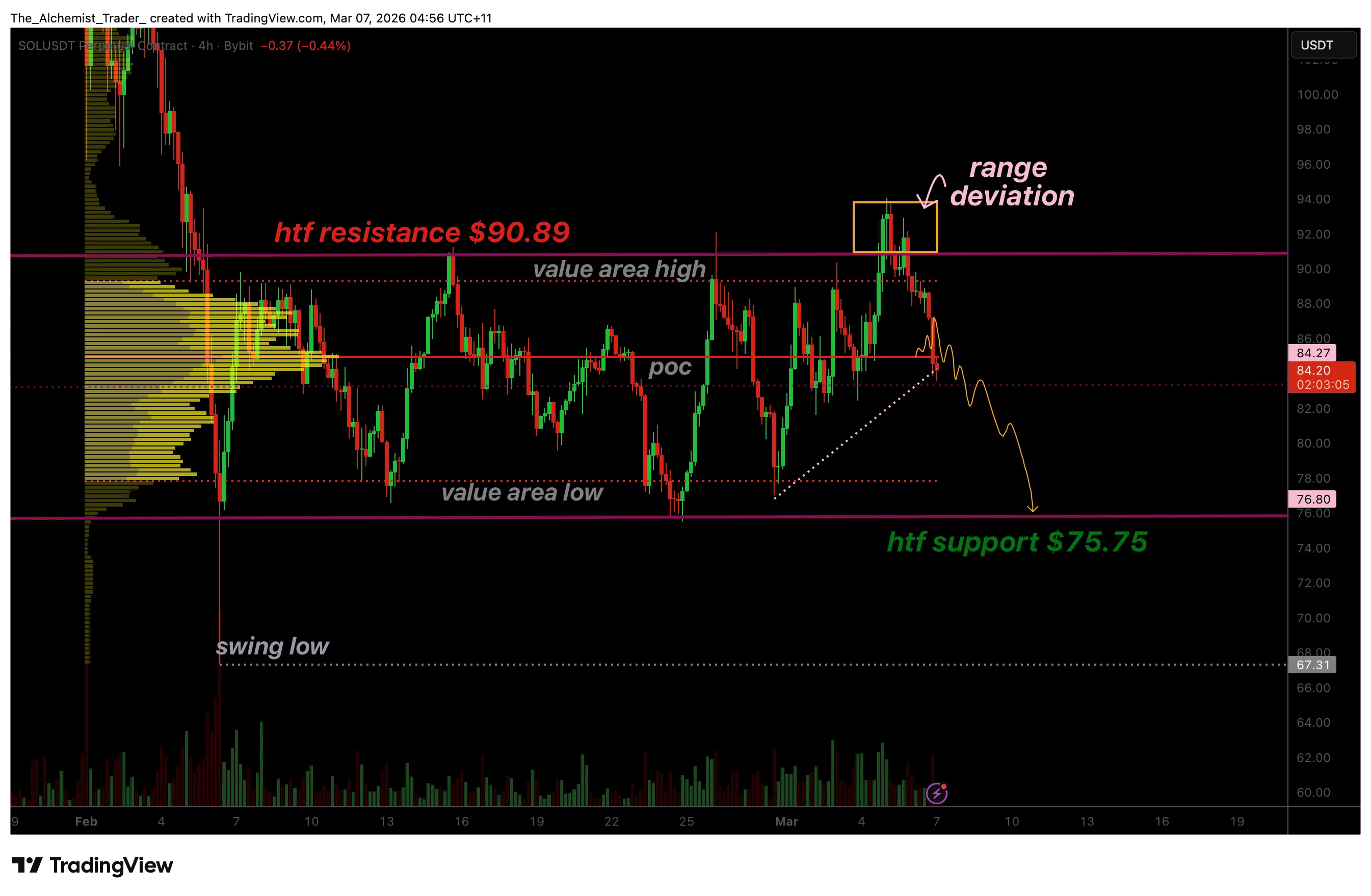
Solana price deviates range-high resistance as capitulation risk grows
What's Going On With Iovance Biotherapeutics Stock On Friday?
Fed’s Miran: Fed typically does not respond to oil prices
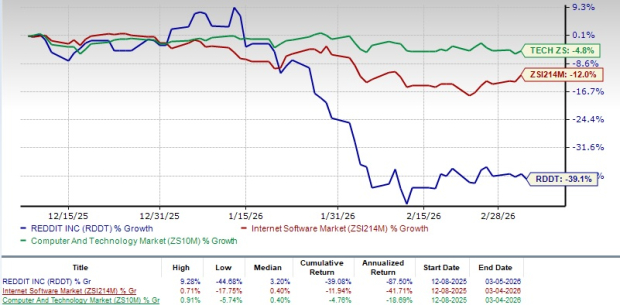
RDDT Shares Drop 39% Over the Last Three Months: Is It Time to Keep or Sell?
Trending news
MoreCrypto prices
More





