
February jobs report: What to expect

Is the Labor Market Finding Its Footing or Losing Ground?
After a challenging year filled with disappointing employment figures, the upcoming February jobs report is highly anticipated as a potential indicator of whether the labor market is stabilizing or continuing to decline.
According to economists polled by Bloomberg, February is expected to show an increase of 55,000 jobs—lower than the previous month but still above the 2025 monthly average of 15,000 new positions. The unemployment rate is projected to remain unchanged at 4.3%.
January’s employment report, which may be updated in the new release, revealed a stronger-than-expected gain of 130,000 jobs at the start of 2026. Most of these new roles were concentrated in healthcare and social assistance sectors.
Kory Kantenga, LinkedIn’s Head of Economics for the Americas, noted in a recent analysis that job creation in 2025 slowed significantly, but limited growth in the labor force helped keep unemployment stable. He emphasized that healthcare was the primary driver of payroll gains and suggested that job growth in 2026 will depend on whether healthcare can continue to offset weakness in other industries.
LinkedIn’s estimates indicate that 40,000 jobs were added in February, which Kantenga described as just enough to maintain the current unemployment rate. Private payroll data from ADP echoed this trend, reporting an increase of 63,000 jobs last month.
Shruti Mishra, a U.S. economist at Bank of America Securities, highlighted in a research note that a large-scale strike by Kaiser Permanente healthcare workers in California and Hawaii—where 31,000 employees participated—could negatively impact February’s job numbers.
Despite this setback in healthcare employment, Mishra remains optimistic about the sector’s outlook for 2026, citing its resilience, minimal exposure to artificial intelligence disruptions, and the effects of an aging population.
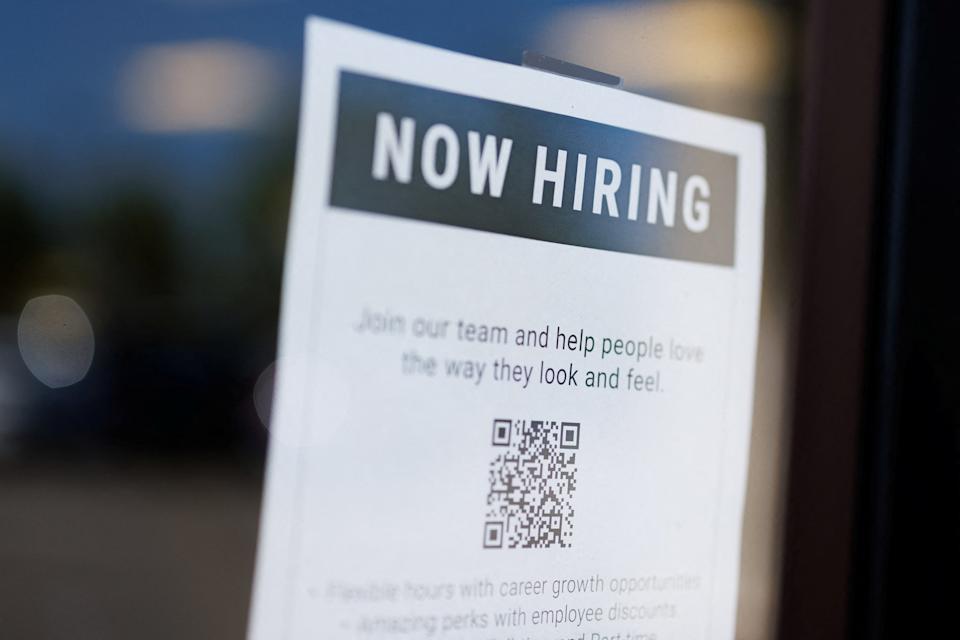
A "now hiring" sign at a local business in Encinitas, California, August 1, 2025. (Reuters/Mike Blake)
Additional declines in February’s employment report may also be linked to weather-sensitive industries, as a series of snowstorms and cold snaps temporarily increased unemployment claims. Nevertheless, Mishra pointed out that both initial and ongoing claims remained low during the survey period for the jobs report.
Nancy Vanden Houten, lead economist at Oxford Economics, similarly observed that payroll growth likely slowed sharply in February, even as overall labor market conditions appeared to at least stabilize, given the combination of cold weather and the healthcare strike.
Looking Ahead: What the Numbers Suggest
Vanden Houten estimates that nonfarm payrolls rose by 35,000 in February, following a 130,000 increase in January. She notes that this pace still exceeds the estimated threshold needed to keep the unemployment rate from rising, potentially exerting downward pressure on joblessness over time.
Disclaimer: The content of this article solely reflects the author's opinion and does not represent the platform in any capacity. This article is not intended to serve as a reference for making investment decisions.
You may also like
Federal Realty (FRT) Price Target Raised to $125 at Ladenburg amid Retail REIT Re-Rating

UBS Cuts Harley-Davidson (HOG) Price Target; Morgan Stanley Sees Uneven Consumer Environment

UBS Cuts Harley-Davidson (HOG) Price Target; Morgan Stanley Sees Uneven Consumer Environment

Nick Szabo Warns Inscriptions Expose Node Operators to Legal Liability
Trending news
MoreCrypto prices
More





