
Deciphering the Energy Market Gap: A Cyclical Indicator Emerging from the Middle East

Market Turmoil: Oil Price Surge Sends Warning Signals
Financial markets are sending a clear cautionary message. Brent crude oil soared by more than 10% in a single trading day, reaching $84.24—a peak not seen since July 2024. This dramatic jump was accompanied by a broad selloff in equities, with the S&P 500 dropping 2.08% and the Russell 2000 falling 3.34%. The situation closely resembles the 2022 oil crisis, where geopolitical turmoil caused oil prices to spike, but energy stocks failed to keep pace, resulting in a pronounced divergence.
This is a classic case of geopolitical events temporarily overshadowing longer-term economic trends. The immediate trigger is escalating conflict in the Middle East, with President Trump indicating that military actions could extend well beyond initial expectations. The closure of the Strait of Hormuz—due to insurers pulling out and shipping companies refusing to transit—has disrupted about a quarter of the world’s seaborne oil trade, making transportation economically unfeasible. This has led to a real shortage of Middle Eastern oil, evidenced by a widened Brent-Dubai price spread and record-high supertanker rates of $400,000 per day.
Investors are responding with a flight to safety, boosting demand for the US dollar and Treasuries while pulling out of stocks. Analysts describe this as a “safety first, questions later” environment. The disconnect is stark: oil prices are surging on supply concerns, while equities are tumbling on worries about growth and inflation. This mirrors the pattern seen in 2022, where similar shocks led to a comparable split. Importantly, this is a short-term shock, not a reflection of the underlying economic cycle. The longer-term direction for commodities will depend on real interest rates and global growth, but for now, the cycle is on hold.
Energy Stocks and Oil: A Complicated Relationship
The recent spike in oil prices is challenging the assumption that energy stocks always move in tandem with oil. In reality, the connection between oil prices and the broader stock market is much weaker and more nuanced than many believe. Research from the Federal Reserve Bank of Cleveland found that oil and equities only occasionally move together, with no significant correlation at the 95% confidence level. This makes sense: while high oil prices can hurt consumers and manufacturers, they also benefit energy producers. The overall impact on the market depends on the broader economic context.
ATR Volatility Breakout Strategy for Brent Crude
- Entry: Buy when ATR(14) exceeds its 60-day average and the price closes above the 20-day Donchian high.
- Exit: Sell when the price closes below the 20-day Donchian low, after 20 trading days, or if gains reach +8% or losses hit −4%.
- Asset: CO1 (Brent crude)
- Risk Controls: Take-profit at 8%, stop-loss at 4%, maximum holding period of 20 days.
Backtest Results
- Total Return: 21.21%
- Annualized Return: 10.84%
- Maximum Drawdown: 15.38%
- Profit-Loss Ratio: 2
- Total Trades: 8
- Winning Trades: 4
- Losing Trades: 3
- Win Rate: 50%
- Average Holding Days: 10.88
- Max Consecutive Losses: 2
- Average Gain per Win: 8.59%
- Average Loss per Loss: 4.29%
- Largest Single Gain: 15.48%
- Largest Single Loss: 8.99%
This complexity was evident in 2025. The S&P 500 delivered a robust 16.4% total return, while energy stocks gained just 7.9%. This lag was not due to weak oil prices, but rather differences in how companies executed their business models. Refiners and midstream firms outperformed, while upstream producers struggled, highlighting that operational efficiency and capital discipline matter more than oil price movements alone. The headline numbers conceal a story of winners and losers shaped by corporate strategy, not a broad-based commodity rally.
This year, oil and US equities have shown a positive correlation, but this reflects shared macroeconomic concerns rather than a fundamental link. As analysts point out, the correlation is rising because fears about global growth are weighing on both markets. When investors worry about a slowdown, both oil demand and risk appetite for stocks tend to decline together. This is the reverse of 2022, when a supply shock pushed oil up while equities fell. Now, growth concerns are pulling both down. The key takeaway is that this correlation is driven by shared macro fears, not a deep structural connection between oil and equities.
In summary, the current geopolitical shock is a short-term, external factor. While it may drive oil prices higher, it does not guarantee that energy stocks will follow. The long-term outlook for equities will depend on real interest rates, economic growth, and corporate earnings. For now, investors are seeking safety in the dollar and Treasuries. Energy stocks, often seen as a proxy for commodity risk, may not rise with oil if broader market pressures persist.
Macro Backdrop: Inflation, Interest Rates, and the Energy Transition
While the geopolitical shock is powerful, it is only one piece of a much larger puzzle. For energy prices to remain elevated, they must contend with three major forces: the uneven pace of the energy transition, structural changes in demand, and uncertainty around Federal Reserve policy.
First, the shift to cleaner energy is progressing, but not nearly fast enough. Less than 15% of the low-emission technologies needed to meet Paris Agreement goals have been implemented, and progress has been slow. Advances are concentrated in areas like solar, wind, and electric vehicles, while more challenging sectors such as hydrogen and heavy industry lag behind. This means that while the move toward clean energy is underway, fossil fuels—especially oil—will remain a key part of the global energy mix for years to come. The transition is complex and uneven, ensuring continued demand for hydrocarbons.
Second, global energy demand is evolving in ways that favor some fuels over others. In 2024, total energy demand grew by 2.2%, with electricity demand rising by 4.3% and accounting for most of the increase. This growth, fueled by data centers, artificial intelligence, and electrification, supports natural gas and renewables. For oil, however, its role in power generation is shrinking, creating a persistent headwind even as geopolitical events cause short-term price spikes. The energy mix is shifting, and oil’s share of future growth is diminishing.
Third, the market’s reaction to rising oil prices is challenging the narrative of an imminent Federal Reserve pivot. The surge above $76 WTI has reversed expectations for rate cuts, pushing real yields to their highest level in two years and strengthening the dollar. The current environment points to a hawkish pause rather than a dovish shift. Higher real yields and a stronger dollar typically limit commodity price gains over the medium term. The Fed is likely to overlook a temporary supply shock unless core inflation accelerates. A drop in WTI toward $70-72 as tensions ease could reopen the possibility of rate cuts in late 2026, potentially weakening the dollar and relieving pressure on energy prices.
From this perspective, the current disconnect is understandable. The geopolitical shock is a short-term spike against a backdrop of longer-term trends. The energy transition provides a structural floor for fossil fuel demand, but its slow pace means oil’s role will persist. The shift toward electricity is a structural challenge for oil. Meanwhile, elevated real yields and a cautious Fed set a ceiling on how high prices can go without risking a broader economic slowdown. While the shock may lift oil prices temporarily, the ultimate direction will be determined by these deeper forces.
Key Catalysts and Risks to Monitor
While the analysis suggests a temporary disconnect, the market is testing its boundaries. Several upcoming events will determine whether this is a fleeting shock or a sign of a lasting break between oil and the broader economic cycle. Three main catalysts are worth watching:
- Brent Above $85: A sustained move above $85 Brent would confirm the geopolitical premium. If prices cannot hold this level, the premium may fade, easing pressure on the dollar and freeing up capital for risk assets. A pullback in oil would likely reverse the Fed’s hawkish stance, making rate cuts more likely and reducing the cap on commodity prices. If WTI drops toward $70-72, the door for rate cuts in late 2026 reopens, signaling that the shock is subsiding and the cycle is regaining control.
- Oil Prices vs. Energy Earnings: Watch for a continued disconnect between oil prices and energy sector earnings revisions. The 2025 experience showed that stock performance depended on business execution, not just oil prices. If oil remains high but energy earnings revisions are muted or negative, it would confirm that operational challenges outweigh the commodity tailwind. This divergence, especially between refiners and upstream producers, is a key indicator of sector health versus headline price movements.
- Geopolitical Risk: The biggest threat is that the current shock leads to a prolonged supply disruption, breaking historical correlations and triggering a broader risk-off move. Investors are already flocking to Treasuries and the dollar. If the Strait of Hormuz remains closed for an extended period, the resulting scarcity could turn a temporary spike into a lasting inflationary shock, forcing the Fed to reconsider its stance. As one strategist put it, if the chokepoint stays shut, “all bets are off.” The 2022 experience shows that such shocks can cause temporary disconnects, but a prolonged disruption would fundamentally change the macro landscape.
In conclusion, the market is in a tense holding pattern. The main factors to watch are a sustained oil price breakout, divergence in energy sector earnings, and the status of key shipping routes. The thesis depends on the shock fading and longer-term drivers—real yields, growth trends, and the uneven energy transition—taking over. For now, the divergence across asset classes suggests a temporary rally, but the risk of a deeper break remains if geopolitical tensions persist.
Disclaimer: The content of this article solely reflects the author's opinion and does not represent the platform in any capacity. This article is not intended to serve as a reference for making investment decisions.
You may also like
Solana's Payment Process: 755% Increase in Volume, Key Ecosystem Catalysts
Fed clarifies capital rules for tokenized securities, says framework is ‘technology neutral’
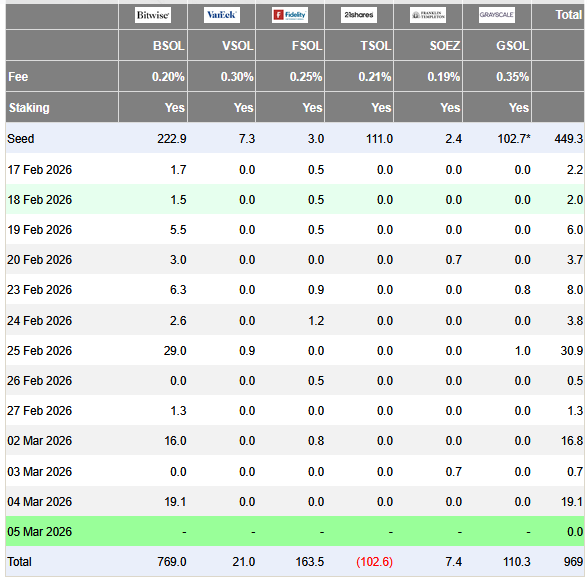
Solana & Ripple ETFs Pull In Fresh Inflows, But Crypto’s Rally Narrows
A.k.a. Brands: Fourth Quarter Financial Highlights
Trending news
MoreCrypto prices
More





