
US Nonfarm Payrolls expected to increase steadily in February following a strong performance in January

Upcoming US Nonfarm Payrolls Report: Key Details
The US Bureau of Labor Statistics is set to publish February’s Nonfarm Payrolls (NFP) figures at 13:30 GMT. This release is expected to spark notable movement in the US Dollar, as traders look for clues about the Federal Reserve’s future interest rate decisions—especially in light of renewed inflation worries following recent Middle East tensions.
Forecasts and Market Expectations for February NFP
Market participants anticipate that NFP will increase by 59,000, following a robust 130,000 gain in January. The Unemployment Rate is projected to hold steady at 4.3%, and annual wage growth, measured by Average Hourly Earnings, is also expected to remain at 3.7%.
Analysts at TD Securities predict a more moderate job growth of 90,000 for February. They attribute this slowdown mainly to the healthcare sector, which saw unusually high gains previously. Private sector jobs are forecast to rise by 100,000, while government employment may decrease by 10,000. The Unemployment Rate is likely to stay at 4.3%, though there is a chance it could edge up to 4.4%. Wage growth is expected to slow to 0.2% month-over-month, maintaining a 3.7% annual rate.
Recent Labor Market Indicators
- The ISM Manufacturing PMI’s Employment Index climbed to 48.8 in February from 48.1 in January, signaling ongoing contraction but some improvement.
- ADP reported a 63,000 increase in private sector jobs, surpassing the forecast of 50,000.
- The ISM Services PMI’s Employment Index rose to 51.8 from 50.3, suggesting stronger job creation in the services sector.
Potential Impact of the NFP Release on EUR/USD
The US Dollar has benefited from safe-haven demand, particularly after joint US-Israel military actions against Iran, which pressured the EUR/USD pair downward.
Earlier this week, the US Senate voted against a measure that would have required President Trump to obtain congressional approval for further military action in Iran. Reports also indicate that US operations in Iran are intensifying, though still in early stages.
From a policy standpoint, investors are closely monitoring how Middle East developments might influence energy prices and, consequently, inflation. The CME FedWatch Tool shows that the likelihood of the Federal Reserve keeping rates unchanged at its next three meetings has risen to nearly 70%, up from around 50% before the US-Iran conflict escalated.
Neel Kashkari, President of the Minneapolis Fed, commented at a recent Bloomberg conference that it remains uncertain how the Iran conflict will affect inflation, but acknowledged it could influence monetary policy decisions.
Market Scenarios Based on NFP Results
- If NFP meets or exceeds 70,000 and unemployment stays at 4.3%: The data may be seen as strong enough for the Fed to delay rate cuts until later in the year, likely supporting further gains in the US Dollar and putting additional pressure on EUR/USD.
- If NFP falls to 30,000 or below and unemployment rises: Such a weak report could prompt investors to anticipate a rate cut as soon as June. However, unless Middle East tensions ease, any Dollar weakness may be limited.
- Most bearish scenario for the Dollar: A combination of falling oil prices, normalization of shipping in the Strait of Hormuz, and clear signs of labor market deterioration could drive a strong rebound in EUR/USD.
Societe Generale analysts expect a solid NFP outcome, noting that recent US labor data has consistently surprised to the upside. They caution, however, that under current conditions, strong data may not necessarily boost risk assets or weaken the Dollar, and that energy prices could play a decisive role in market direction.
Technical Analysis: EUR/USD Outlook
Eren Sengezer, lead analyst for the European session, observes a bearish short-term trend for EUR/USD. The pair recently closed below its 200-day Simple Moving Average for the first time in a year, and the Relative Strength Index has dropped below 40.
Support levels: 1.1500 is the first major support, followed by 1.1400 and the 1.1300–1.1290 range.
Resistance levels: A significant resistance zone lies between 1.1670 and 1.1700, marked by the 200-day and 100-day SMAs. If the pair can break above this area and stabilize, the 50-day SMA at 1.1770 could become the next resistance target.
Disclaimer: The content of this article solely reflects the author's opinion and does not represent the platform in any capacity. This article is not intended to serve as a reference for making investment decisions.
You may also like
Shiba Inu Struggles After Bounce — Is Another Selloff Brewing?
Atos hits yearly revenue target after restructuring slashed 19% of workforce
No one is talking about Altseason — Santiment says that could be bullish
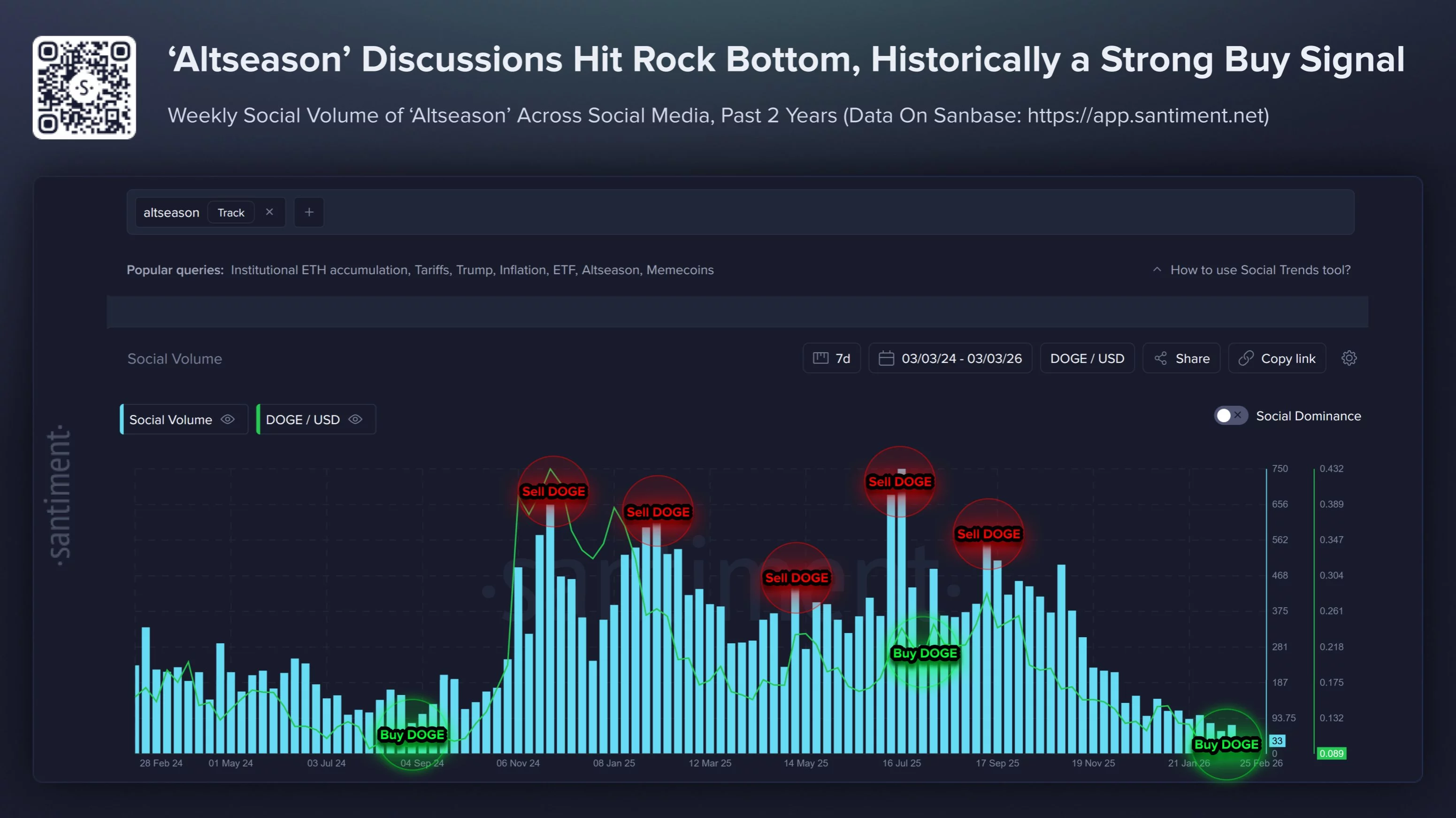
Almost nobody is talking about altseason anymore. That may be bullish

Trending news
MoreCrypto prices
More





