
Why financial experts on Wall Street are warning of similarities to the 2008 financial crisis

Wall Street's Private Credit Sector Under Scrutiny
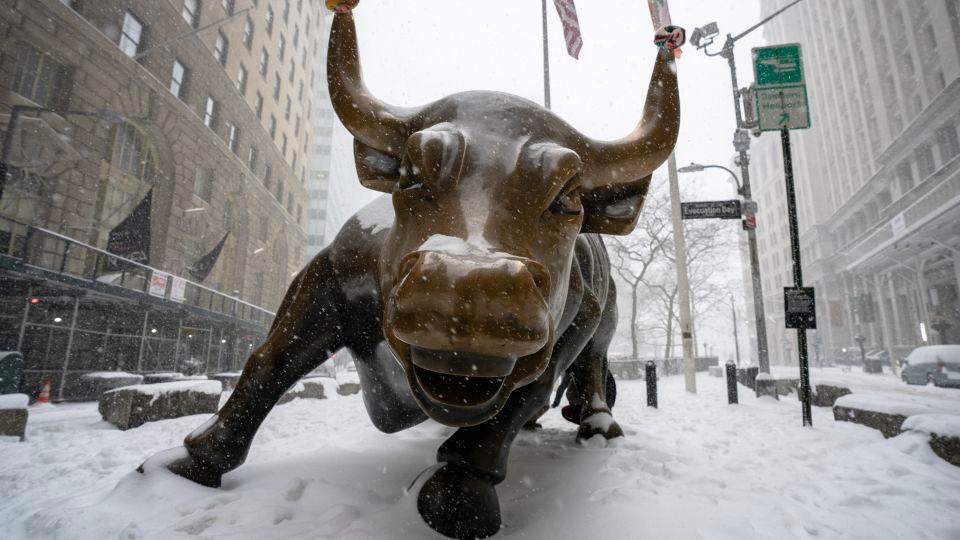
Visitors gather around the iconic Wall Street Bull as snow blankets New York's Financial District. Photo by Craig T Fruchtman/Getty Images
In recent months, both investors and market experts have been closely monitoring the private credit market—a lesser-known segment of the financial world—amid growing concerns that it could trigger a crisis reminiscent of 2008. The debate continues over whether these warning signs are simply isolated incidents or if they signal a deeper, more widespread vulnerability within the $1.8 trillion industry. Regardless, understanding the current dynamics is crucial if there’s even a slight chance of broader risk.
Understanding Private Credit
Private credit involves investors providing loans directly to private companies, bypassing traditional banks. These borrowers are typically smaller businesses that banks might consider too risky or complicated for standard lending. In return for quick funding and more adaptable loan terms, these companies agree to pay higher interest rates.
Here’s the typical process: Large asset managers—such as Blackstone, known for its acquisitions—collect capital from institutional investors like pension funds or insurance companies seeking better returns than those offered by bonds. The pooled funds are then lent directly to businesses that might otherwise struggle to secure financing.
While private credit isn’t a new concept, it expanded significantly after the 2008 financial meltdown, as stricter regulations made bank lending more difficult.
The challenge is that issues within private credit can quickly spill over into the broader financial system.
As Steve Sosnick, chief strategist at Interactive Brokers, explains: “Many of these loans, and the companies behind them, lack transparency. While some scenarios may be relatively harmless, there’s also the risk that underlying problems are being concealed.”
Although recent disruptions in private credit seem contained for now, Sosnick warns that the interconnectedness of financial markets means a major crisis could have far-reaching consequences if credit markets freeze and banks are forced to absorb losses.
He adds, “This doesn’t mean we’re heading for a private credit collapse identical to the subprime mortgage crisis, but there are definite similarities.”
Major Players: Blue Owl, Blackstone, and Others
Recently, private credit investors have rushed to withdraw their funds, worried that lenders may have overestimated the value of loans to high-risk companies—many of which are software firms potentially threatened by advances in artificial intelligence. Some analysts predict that AI could trigger a wave of defaults among mid-sized software and business services companies, which became popular with private lenders during the pandemic.
Blue Owl’s logo displayed outside the Seagram Building at 375 Park Avenue in Midtown East, New York. Photo by Bloomberg via Getty Images
Much of the current anxiety on Wall Street centers on asset manager Blue Owl, which recently faced a surge in redemption requests. The firm was forced to halt withdrawals and sell assets to return money to investors. Despite Blue Owl’s efforts to reassure the market that this was not a sign of weakness, its stock price has dropped 15% over the past two weeks. Short bets against Blue Owl have also reached record levels, according to S3 Partners.
Concerns intensified further when Blackstone, a leading private equity firm, had to fulfill $3.8 billion in redemption requests from its flagship private credit fund. Bloomberg reports that at least 25 senior executives contributed around $150 million of their own money to help meet these demands.
Other alternative asset managers—including KKR, Ares Management, and Carlyle—have also seen their share prices decline.
“This is the market’s first significant stress test,” says John Bringardner, executive editor at Debtwire. “After the pandemic, lending standards loosened considerably. Now, we’re seeing the consequences of that period.”
Echoes of the 2008 Financial Crisis
Some high-profile investors see clear parallels to the subprime mortgage crisis. Jamie Dimon, CEO of JPMorgan Chase, has criticized certain firms for reckless behavior and warned about potential “cockroaches” lurking in private credit. Mohamed El-Erian recently questioned on X whether Blue Owl’s troubles might be an early warning sign similar to those seen in 2007.
However, not everyone on Wall Street agrees. Some fund managers and bank analysts argue that the concerns are exaggerated.
“We need to keep things in perspective—this isn’t a major crisis,” Brookfield Corp. CEO Bruce Flatt told Bloomberg TV this week. “It’s nothing like 2008.”
Still, the lack of transparency in private credit often leads to speculation and worst-case assumptions. While the sector is much smaller than the pre-2008 housing market, Bringardner notes that the “irrational exuberance” in lending over the past five years and the complexity of financial structures echo the period before the last crisis.
“I don’t see anything yet that could topple the entire economy as in 2008,” he adds, “but there are many factors at play,” including geopolitical tensions in the Middle East that could disrupt global oil supplies. “There’s so much uncertainty that it’s hard for anyone to feel confident about the economic outlook right now.”
At present, Sosnick advises that prudent investors should remain vigilant about private credit risks without succumbing to panic.
He references a saying inspired by Ernest Hemingway: “How did you go broke? ‘Gradually, then suddenly.’ That’s often how financial crises unfold.”
Disclaimer: The content of this article solely reflects the author's opinion and does not represent the platform in any capacity. This article is not intended to serve as a reference for making investment decisions.
You may also like
AU Registers 72% Y/Y Surge in 2025 Revenues: More Upside Ahead?
Liquidity Pressures Slow Crypto Rally as Regulatory Uncertainty Persists
Japan: GDP revision seen on stronger wages – ING
Tesla, Inc. (NASDAQ: TSLA) – Corrective Pullback Shows Signs
Trending news
MoreCrypto prices
More





