
US Bonds Suffer Biggest Weekly Drop Since April Amid Inflation Worries

Rising Oil Prices Drive Treasury Selloff Despite Weak US Jobs Data
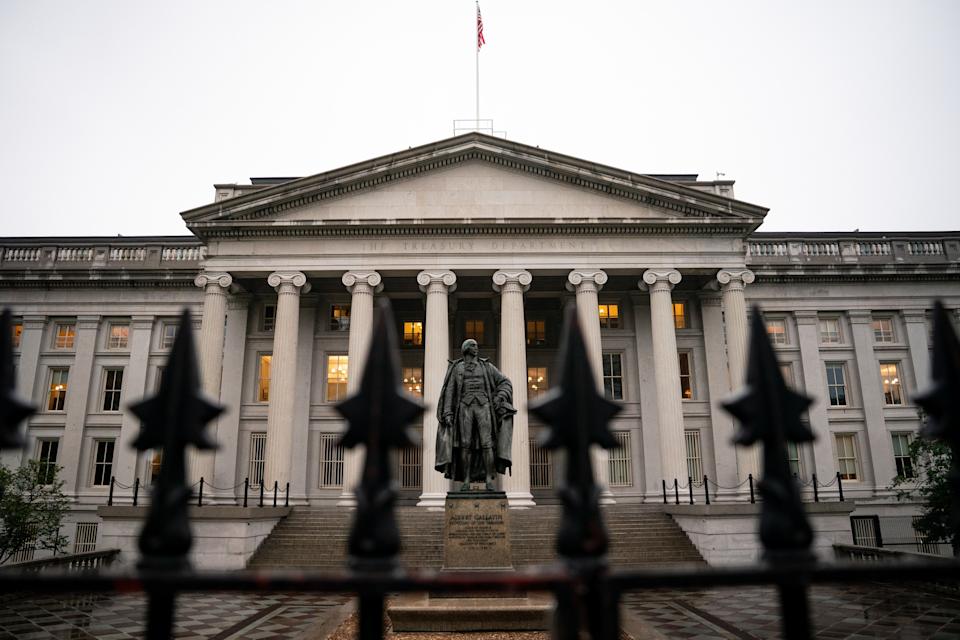
Photographer: Al Drago/Bloomberg
US Treasury bonds are experiencing their steepest weekly decline since April 2025, as escalating oil prices stoke fears of inflation. These concerns are outweighing the impact of a lackluster US employment report, which under different circumstances might have strengthened the argument for the Federal Reserve to lower interest rates.
On Friday, long-term government bonds lagged behind, with yields on 10-year notes climbing by up to five basis points, bringing the total increase for the week to 22 basis points. This marks the largest weekly jump since the US imposed major tariffs on trading partners nearly a year ago. Market participants are now anticipating at least one rate cut by the Fed this year, potentially as early as September.
Top Stories from Bloomberg
“Given the ongoing conflict in the Middle East and its potential to drive inflation higher, it’s not surprising that the Treasury market is finding it difficult to rally,” observed Ian Lyngen, who leads US rates strategy at BMO Capital Markets.
Bond Market Reacts to Oil and Fed Policy
Yields on longer-term Treasuries, ranging from 10 to 30 years, increased on Friday as Brent crude oil prices reached $90 per barrel. In contrast, yields on two-year notes—which are more responsive to Fed policy changes—dipped by about two basis points to roughly 3.6%, trimming their weekly gain to 18 basis points.
These weekly shifts are shaping sentiment in the $31 trillion US bond market, with investors paying closer attention to rising energy costs and their possible effects on global inflation and central bank decisions, rather than focusing on recent signs of weakness in the labor market.
Recent government data revealed that US employers eliminated 92,000 jobs in February, pushing the unemployment rate higher. Additionally, retail sales fell in January, largely due to sluggish auto sales and disruptions caused by winter weather.
“Today’s employment figures suggest a recessionary trend,” commented Guy LeBas, chief fixed income strategist at Janney Montgomery Scott. “Typically, a significant miss in jobs numbers would trigger a strong rally in bonds, especially when the labor market is fragile. However, this time, the influence of rising energy prices on interest rates seems to be overshadowing the negative economic data.”
After cutting interest rates three times last year in response to a weakening job market, US central bankers paused in January, citing persistent inflation as a reason to hold off on further reductions. However, the latest payroll numbers may give some Fed officials more reason to advocate for additional easing.
Fed Officials and Market Expectations
Mary Daly, President of the San Francisco Fed, remarked on Friday that the disappointing jobs report challenges the idea that the US labor market is stabilizing. Meanwhile, Fed Governor Christopher Waller stated he does not anticipate the Iran conflict will have a lasting effect on inflation. Waller, who disagreed with the Fed’s January decision, favored a quarter-point rate cut due to ongoing labor market softness.
Interest-rate swap markets indicate that traders, after reassessing their outlooks amid the intensifying Middle East conflict, now expect the Fed to lower rates by a total of 36 basis points by year-end, with the next move likely in September. This is a notable shift from the 60 basis points of cuts anticipated just a week ago for 2026.
“The bond market is now fixated on higher oil prices and their potential to drive inflation,” said Kevin Flanagan, head of investment strategy at WisdomTree. “For the Fed, the prudent approach may be to wait and see how events unfold.”
Global Impact and European Markets
The ongoing conflict has also significantly altered the outlook for European bonds, which are particularly sensitive to energy price shocks. Money markets now predict that the European Central Bank will raise interest rates in 2026—a reversal from last week, when a rate cut seemed more likely. Swaps are fully pricing in a quarter-point hike by December, with about a one-in-three chance of another increase by April 2027. As a result, German government bonds are on track for their worst week in three years.
Worldwide, investors and policymakers are debating whether the inflationary effects of rising oil prices will be temporary, especially after the Fed underestimated the persistence of inflation following the pandemic and Russia’s 2022 invasion of Ukraine.
“The market is questioning whether the economy is robust enough to withstand the current combination of energy-driven stagflation and uncertainty,” said Priya Misra, a portfolio manager at JPMorgan Asset Management. “Markets are operating on two assumptions: that the war will be short-lived and that economic fundamentals remain strong. Both of these are now under scrutiny.”
Reporting assistance by Michael MacKenzie.
(Story updated with latest price movements and commentary.)
Most Popular from Bloomberg Businessweek
©2026 Bloomberg L.P.
Disclaimer: The content of this article solely reflects the author's opinion and does not represent the platform in any capacity. This article is not intended to serve as a reference for making investment decisions.
You may also like
Carnival's Shares Plummets 5.04% as Geopolitical Tensions and Oil Spikes Send $930M Volume to 131st Rank
Charles Schwab Earnings Soar on 18.9% Revenue Surge and $12.2 Trillion Assets Despite 132nd Trading Rank
Where Should You Invest $20,000 Now for a Reliable and Consistent Return
AT&T's AI Push Drives 5x ROI but Stock Falls 1.14% as Trading Volume Ranks 109th
Trending news
MoreCrypto prices
More





