
Energy companies rush to secure gains from rising oil prices amid ongoing risks to the Strait of Hormuz

Stagflation Fears Intensify Amid Market Turmoil
Recent market volatility has highlighted a classic stagflation scenario. Last Friday, disappointing employment data coincided with a dramatic surge in oil prices triggered by geopolitical tensions, leading to a sharp decline in equities. The S&P 500 dropped 1% to 6,760, and the Dow Jones lost about 600 points, or 1%, closing at 47,472. In contrast, energy stocks defied the broader selloff and rallied strongly.
The main driver was a significant shortfall in job growth. February saw nonfarm payrolls decrease by 92,000, well below forecasts, pushing the unemployment rate up to 4.4%. This signals a cooling economy and poses a challenge for growth prospects. At the same time, oil prices soared to $91 per barrel—the highest since October 2023—marking a nearly 35% weekly gain. This spike was fueled by escalating conflict in the Middle East, which disrupted regional infrastructure and nearly halted shipping through the vital Strait of Hormuz.
These developments have created a complex dilemma for the Federal Reserve. Weak labor numbers typically point to the need for lower interest rates, but surging energy prices threaten to reignite inflation, suggesting rates may need to stay elevated. The simultaneous pressures of slowing growth and rising costs are classic indicators of stagflation, leaving policymakers with difficult choices and fueling heightened market volatility.
Macro Outlook: Inflation, Interest Rates, and Economic Growth
The intersection of disappointing employment data and skyrocketing oil prices is reshaping the bond market, a key indicator of the broader economic cycle. The yield on the 10-year U.S. Treasury rose to 4.13%, its highest since mid-February, as investors responded to the energy shock by adjusting inflation expectations upward. As a result, traders have scaled back expectations for Federal Reserve rate cuts, with swaps markets now projecting 41 basis points of cuts by year-end, down from 61 basis points a week earlier.
This situation places the Fed in a difficult position. On one hand, the sharp drop in employment and rising unemployment rate point to an economy in need of monetary support. On the other, the risk of persistent inflation due to higher oil prices argues for maintaining a restrictive policy stance. The bond market is signaling that inflationary pressures from energy may be more enduring, potentially delaying any easing of monetary policy even as economic growth slows.
From a broader perspective, these dynamics suggest a period of heightened volatility ahead. The economy now faces stagflationary headwinds, with growth weakening and energy costs surging. This environment tends to keep real yields under pressure and can result in choppy, range-bound trading for both bonds and stocks. The recent oil shock has shifted the near-term inflation outlook, making it less likely that the Fed will adopt a more dovish stance in the coming months.
Market Dynamics and Investor Strategies
The surge in volatility has prompted a swift and coordinated response from both market participants and producers. On the first trading day following the escalation, investors rushed to hedge their positions, leading to a record 12.7 million energy futures and options contracts traded on the Intercontinental Exchange. This unprecedented activity highlights the scale of risk management and speculation as traders adapt to rapidly changing conditions.
Within the energy sector, the effects were uneven. U.S. diesel futures saw the largest gains, jumping nearly 12% on Monday and outperforming both crude oil and gasoline. Diesel's sensitivity stems from the Middle East's role as a key supplier and already low domestic inventories following a harsh winter that boosted demand for heating and power. As a result, diesel is especially vulnerable to further disruptions in regional supply chains.
Oil producers also acted quickly. Many U.S. oil companies coordinated with financial institutions at the market open to lock in elevated crude prices. According to a hedging firm, about 25% of their oil-producing clients were prepared to trade as soon as the market reopened, using swaps to secure fixed income in the face of price spikes—a standard risk management tactic when critical shipping routes like the Strait of Hormuz are threatened.
The intensity of market moves has prompted potential government intervention. The U.S. is considering direct action in the futures market to temper rising prices, an unusual step aimed at influencing energy costs through financial mechanisms rather than physical supply. Additionally, the Treasury has granted waivers to Indian refiners to purchase sanctioned Russian crude, seeking to offset supply disruptions from the Middle East. These measures reflect a blend of market-driven hedging and possible government involvement to manage the ongoing shock.
Key Drivers and Future Risks
The recent spike in oil prices has ushered in a critical period for decision-makers. The trajectory from this surge to a broader economic shift depends on three main factors:
- Geopolitical Developments: The status of the Strait of Hormuz is pivotal. The conflict has already disrupted tanker traffic through this crucial passage, which handles about 20% of global oil shipments. The risk of a complete closure is significant, and as Qatar's energy minister has warned, such an event could drive oil prices above $150 per barrel. Markets are already factoring in the possibility of a severe, lasting supply shock that would dramatically alter inflation and growth expectations.
- U.S. Policy Actions: The government is taking steps to counteract the price surge, moving beyond reliance on market forces alone. The Treasury has authorized Indian refiners to buy Russian crude to help compensate for Middle East supply losses. More notably, officials have indicated that the Treasury may soon announce measures targeting the oil futures market, a rare intervention aimed at curbing speculative price increases, though it may not resolve the underlying supply issues.
- Effectiveness of Interventions: The main risk is that these efforts may not be enough to contain the shock. If the conflict endures and the Strait of Hormuz remains closed, persistently high oil prices could sustain inflation while weighing on global growth. This would likely force the Federal Reserve to maintain restrictive monetary policy for longer, as reflected in rising bond yields and reduced expectations for rate cuts. A prolonged energy shock could further elevate yields and delay any policy easing.
Ultimately, this episode is a major test of the current economic cycle's resilience. While initial responses have included aggressive market hedging and the prospect of government intervention, the fundamental vulnerability—disruptions to physical supply—remains unresolved. Should the geopolitical crisis escalate to a full closure of the Strait, the resulting shock could define the year, entrenching stagflation and reshaping investment strategies for an extended period.
Disclaimer: The content of this article solely reflects the author's opinion and does not represent the platform in any capacity. This article is not intended to serve as a reference for making investment decisions.
You may also like
Why Bitcoin Fell Short as Lyn Alden Points to Weak Demand and Routine OG Selling
The US spot Bitcoin ETF saw a net outflow of $348.9 million yesterday.
Nvidia - Starting the final -15% correction!

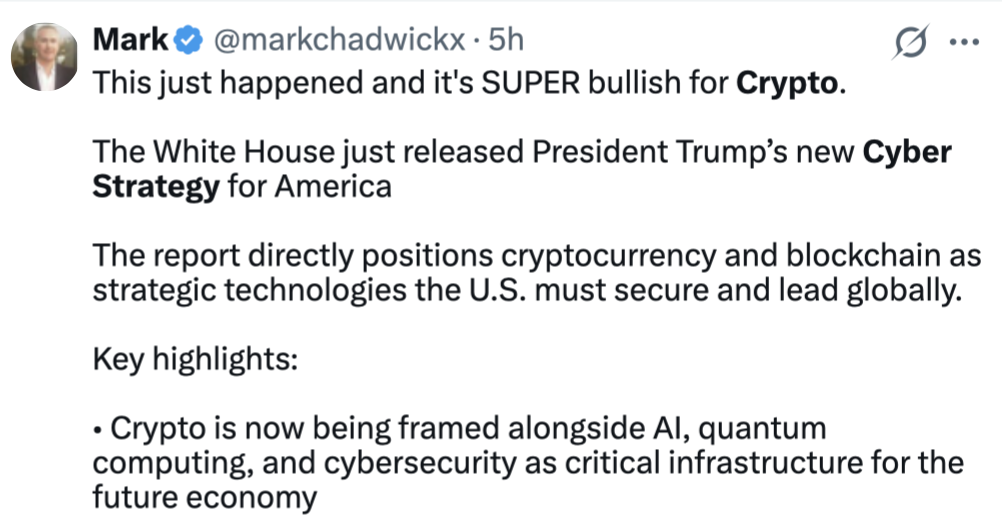
Trump’s National Cyber Strategy pledges to support crypto and blockchain
Trending news
MoreCrypto prices
More





