
Air freight companies rush to lessen the effects of the Iran conflict

Air Cargo Industry Faces Disruptions Amid Middle East Conflict
Companies are urgently seeking alternative air transport solutions for their shipments, anticipating increased freight costs and surcharges as ongoing closures of airspace and airports in the Middle East—resulting from the Iran conflict—limit aircraft access and force lengthy flight reroutes, thereby decreasing available cargo capacity.
Logistics specialists note that even if hostilities cease soon, it will take several days to clear shipment backlogs at key hubs and for airlines to resume regular operations. Glyn Hughes, director general of The International Air Cargo Association, explained during a media briefing that cargo stranded on heavily trafficked routes may take weeks to move through the global network, and perishable or urgent shipments could be lost.
While the crisis poses challenges, it may also benefit airlines and logistics providers as shippers seek to avoid delays at sea and shipping lines divert Middle East-bound cargo to ports in India, Sri Lanka, and elsewhere. Stefan Paul, CEO of Kuehne+Nagel, suggested during an earnings call that a shift from ocean to air transport could help air freight rates rise.
According to Xeneta, a freight intelligence firm, air cargo volumes increased by 4% year-over-year in 2025 and saw robust growth at the start of this year, with demand rising about 6% in the first two months—outpacing capacity growth of 4%.
Major airports in Dubai, Abu Dhabi, and Qatar—key hubs for trade between Europe and Asia—are currently closed to commercial flights, though some emergency operations are permitted.
Rotate, an air logistics consultancy, reports that global air cargo capacity has dropped 18% week-over-week, with 13% of that reduction linked to major Middle Eastern carriers such as Emirates, Qatar Airways, and Etihad Airways.
Consulting firm Aevean notes that freighter and passenger-belly capacity on the Asia-Middle East/South Asia-Europe corridor has fallen nearly 40%, pulling global cargo capacity 21% below pre-Chinese New Year levels, when airlines typically ground some cargo jets due to factory closures.
Passenger and cargo airlines have suspended service to Israel and other Middle Eastern countries or rerouted flights until tensions ease. FedEx has halted all flights in and around the Arabian Gulf, and Cargolux has canceled all Middle East flights except those to Muscat, Oman.
Qatar Airways Cargo, the largest non-express cargo airline globally, has kept operations suspended due to closed Qatari airspace, though a few freighters continue on routes that bypass Doha. Emirates has started limited passenger and cargo flights on select routes.
Impact on Pharmaceutical Shipments and Alternative Routes
Glyn Hughes highlighted that about 80% of cargo between India and Europe passes through the Middle East, meaning many vaccines and pharmaceuticals cannot reach Europe. If disruptions persist for weeks, drug shortages are likely.
Maersk, a leading shipping company, warned that closures of major container ports in the UAE, Saudi Arabia, and other Gulf nations could extend lead times, especially for sea-air shipments. Dubai is a crucial transfer point for shipments moving from Asia by sea and then by air to Europe or the U.S. Sea-air transport is favored by companies seeking faster transit than ocean shipping but at lower costs than full air freight.
Freight forwarders are already chartering flights to offset lost capacity. Kuehne+Nagel, the world’s largest forwarder by volume, cautioned that backlogs of Europe and U.S.-bound cargo from Asia could begin accumulating as soon as next week.
Air cargo to the Gulf is mainly available via Riyadh, Saudi Arabia, and Oman, with onward distribution by truck.
Other options for Asian exports to Europe include sea-air transload services through the Maldives, truck-air service with ground transport from Xi’an, China, to Tashkent, Uzbekistan, where shipments are transferred to freighter aircraft, and sea-air routes from China and Vietnam to Los Angeles.
Rising Costs and Rate Increases
Air freight rates are climbing rapidly due to rerouted flights, reduced payloads, and higher fuel expenses. The effects are felt far beyond the Middle East.
On the Asia-Europe trade lane, airlines have only two routing choices: north via Afghanistan and the Caucasus, or south via Oman, Saudi Arabia, and Egypt, since the ongoing Ukraine conflict has closed Russian airspace to most carriers.
Extended detours require planes to carry extra fuel, which limits cargo capacity and may necessitate costly and time-consuming refueling stops.
Seko Logistics advised customers that carriers typically prioritize humanitarian aid, military shipments, perishables, pharmaceuticals, premium cargo, and contract clients over general cargo booked at the last minute.
Freightos, a price benchmarking agency, reports that Southeast Asia-Europe shipping rates have risen over 6% to $3.82 per kilogram since Friday. South Asia-Europe rates increased by 3%, rates to the U.S. by 5%, Middle East-Europe rates by 8%, and China-U.S. rates by 15%, though the latter likely reflects renewed demand after China’s Lunar New Year holiday.
Maersk noted that airlines are adding or considering war risk surcharges for shipments routed through or near conflict zones. DHL Group said its forwarding division may impose emergency surcharges this week.
Airlines are also expected to raise fuel surcharges as jet fuel prices climb. UPS has already announced a 1% increase, and analysts anticipate FedEx will follow suit, with both carriers likely to implement further hikes next week.
Broader Economic Effects
On a global scale, the conflict may slow economic growth and drive inflation higher, potentially reducing demand for air-shipped goods.
Crude oil prices are surging, as tanker access through the Strait of Hormuz is restricted and Gulf energy facilities are targeted by Iranian missiles, raising concerns about supply shortages. Brent oil, the international benchmark, reached $88 on Thursday, up from $61 at the end of last year. Some analysts forecast prices could surpass $100 per barrel. Economists believe the impact on the economy may be brief if the conflict ends soon.
Global aviation fuel prices rose 3.6% last week to $99.40 per barrel, while U.S. jet fuel increased from $2.50 to $2.83 per gallon.
Goldman Sachs estimates that every $10 per barrel increase in oil prices could reduce U.S. economic growth by about 0.1 points this year if prices remain elevated, limiting household spending. Their research shows a sustained 10% rise in oil prices boosts U.S. headline inflation by 28 basis points (0.28%). If oil prices climb by $10 and stay high for three months, inflation could rise from 2.4% in January to 3% in May.
Paul Bingham, director of transportation consulting at S&P Global Market Intelligence, said on the “Freight Buyers’ Club” podcast that the U.S. Supreme Court’s ruling against President Trump’s emergency tariffs was expected to slightly boost imports and consumption this year, though at lower levels than in 2025. However, the Middle East conflict is likely to dampen imports more than any gains from reduced tariffs.
Disclaimer: The content of this article solely reflects the author's opinion and does not represent the platform in any capacity. This article is not intended to serve as a reference for making investment decisions.
You may also like
Cencora Shares Drop Amid Uncertain Earnings and Integration Issues Impacting 336th Highest Trading Volume
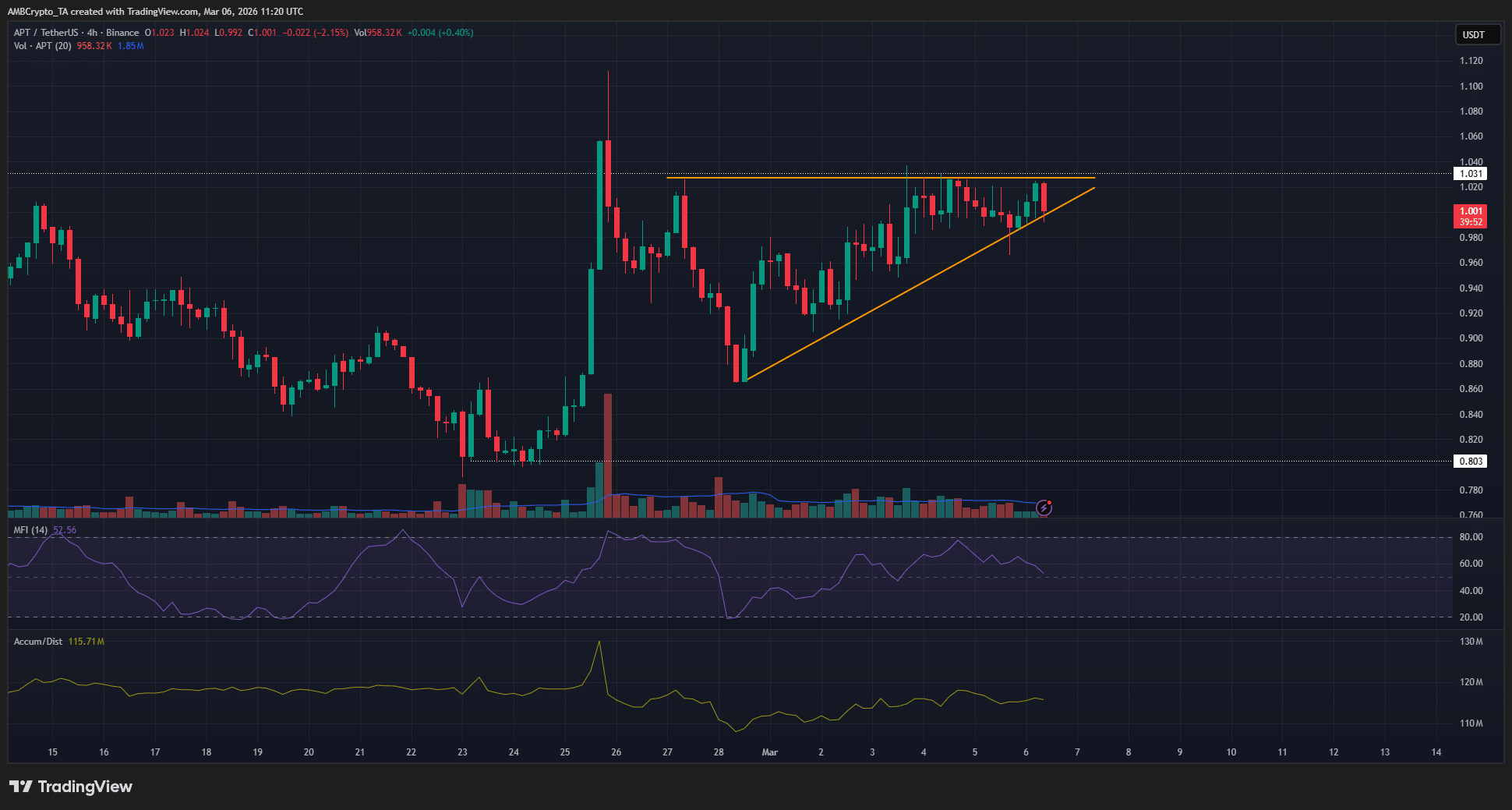
Aptos – Is a potential bullish breakout ahead for APT’s price?
Trending news
MoreCrypto prices
More





