
Federal Reserve Governor Milan: February non-farm payroll data strengthens the case for rate cuts; oil price surge is a "one-time shock" and does not pose inflationary concerns

According to Zhihu Finance, Federal Reserve Board member Milan stated on Friday that the weak nonfarm employment report for February further strengthens the case for the central bank to lower interest rates. Regarding the U.S. February nonfarm payroll data released by the Bureau of Labor Statistics on Friday, which showed a decrease of 92,000 jobs, Milan said in an interview that the Federal Reserve should focus more on supporting the labor market rather than worrying about inflation.
He said: "I don’t think we have an inflation problem. I believe the labor market needs more accommodative monetary policy. Moreover, I don't think it is appropriate to take a slightly tighter monetary stance instead of a neutral one. I think moving closer to a neutral stance is the right approach."
Currently, the Federal Reserve's key interest rate target range is 3.5% to 3.75%. Previously, the Fed had cut rates three consecutive times by 25 basis points in the second half of 2025. If Milan's view is implemented—keeping rates close to neutral—he believes the neutral level is about one percentage point lower than the current level. The consensus among Fed officials at the December meeting was that the neutral level—which neither restrains nor stimulates the economy—is about 3.1%, implying the possibility of two more rate cuts.
Milan has consistently believed that persistently high inflation data depends more on how the U.S. Department of Commerce and Department of Labor measure inflation rather than true underlying pressures.
One factor he mentioned is portfolio management fees, which have increased as the overall stock market rises. Portfolio management fees are typically charged as a percentage of assets, so when the market goes up, even if the actual service rates remain unchanged, the dollar value of these fees increases.
Milan added that the recent surge in oil prices and the corresponding rise in gas station costs linked to the Iran war are not a cause for concern. He stated: “Usually, the Federal Reserve would not react so strongly to rising oil prices. An increase in oil prices pushes up overall inflation, but it is often just a one-off shock. Core inflation (excluding energy prices) is a better predictor of medium-term inflation trends than headline inflation.”
Since President Trump nominated Milan as a Federal Open Market Committee member last September, Milan has voted against the majority at every Federal Open Market Committee meeting he attended. For the three rate cuts, he preferred a larger 50 basis-point cut instead of the 25 basis points approved by the committee. In January this year, when the FOMC voted to keep rates unchanged, Milan stated that he wished to see a 25 basis-point reduction.
When asked if he would vote against the committee again, he said: “I hope not, but that depends on my colleagues. I hope we vote to cut rates.”
Milan was appointed to fill the remaining term of Adrienne Kugler, who resigned in August 2025. The term ended in January this year, but Milan continues to serve until a successor is approved. Trump nominated Kevin Walsh as the Chair of the Federal Reserve, who will ultimately succeed the current Chair Jerome Powell when his term expires in May.
Milan said: “I will attend the meeting in a few weeks, and then take things step by step.”
Disclaimer: The content of this article solely reflects the author's opinion and does not represent the platform in any capacity. This article is not intended to serve as a reference for making investment decisions.
You may also like
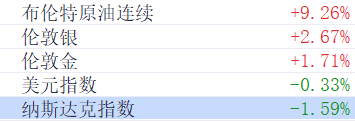
Analysis of the Reasons Behind Yesterday's Surge in Crude Oil Prices
Grocery Outlet plans to shut down numerous locations following rapid overexpansion
HELOC and home equity loan interest rates on Saturday, March 7, 2026: Responding to a Federal Reserve rate hold
Trending news
MoreCrypto prices
More





