
Macquarie warns of ‘inflationary shock’ as US-Iran War triggers oil surge

Investing.com — Global financial markets are reeling as the U.S.-Iran War sends oil prices surging and triggers a sharp flight to safety, according to a new report from Macquarie. Analysts warn that the conflict is serving as a significant negative supply shock, with Brent crude jumping more than 7% and gold prices rising 2.0% in early trading on Monday as investors abandon riskier financial assets for "hard assets".
The impact has been felt immediately across global equities, with major European stock indexes dropping by more than -2.0% on average. U.S. index futures also traded lower by more than -1% in the early hours of the morning as traders scrambled to price in the duration of the hostilities.
Macquarie strategists Thierry Wizman and Gareth Berry suggest that even without the physical destruction of productive capacity, "hoarding" and skyrocketing insurance premiums, which have already increased by 25% to 100% for transiting the Strait of Hormuz, are driving a potent inflationary cycle.
Global growth divergence and energy importers
The report highlights a stark divergence in the economic outlook for oil-importing versus oil-exporting nations. Historically, supply-driven oil spikes trigger sharp and persistent employment losses, particularly in countries like Japan, China, and across Europe, which are more dependent on Persian Gulf supplies. India is flagged as "particularly vulnerable," as it relies on the region for 85% of its imported oil.
The U.S. may see a severe but short GDP decline, but countries with large reserves and export capacity, such as Brazil, Canada, and Norway, are positioned to see robust output despite the inflationary backdrop.
Macquarie cautions that even the U.S. is not immune to a prolonged slowdown. Drawing parallels to the First Persian Gulf War of 1990-1991, analysts note that high oil prices can interact with existing "financial fragilities," such as over-leverage in private credit and poor household sentiment, to trigger a bona fide recession.
"War-driven" inflation may result in a more hawkish stance from the Federal Reserve than previously anticipated, though political sensitivities regarding policy rates remain high.
Geopolitical stakes and the U.S. dollar outlook
The trajectory of the U.S. Dollar (USD) over the next five years is tied directly to the perceived success of this military engagement. Historically, the Greenback performs well when the U.S. demonstrates clear leadership, such as the ten years of real appreciation that followed the First Persian Gulf War. Conversely, the USD struggled during the "War on Terror" in the 2000s, a period marked by a lack of broad international support and a protracted decline in the currency’s real value.
A short burst of USD strength is expected in the first half of 2026 due to its safe-haven properties. Macquarie is not optimistic about its long-term prospects. The report suggests that even a successful "regime change" in Iran may be viewed as an affront to the rules-based global order, causing reserve managers to continue divesting away from USD exposure. The global distrust could accelerate the adoption of alternative mediums of exchange, specifically the Chinese Yuan (CNY), as the U.S. dollar faces the risk of a continued loss of its reserve currency status.
Disclaimer: The content of this article solely reflects the author's opinion and does not represent the platform in any capacity. This article is not intended to serve as a reference for making investment decisions.
You may also like
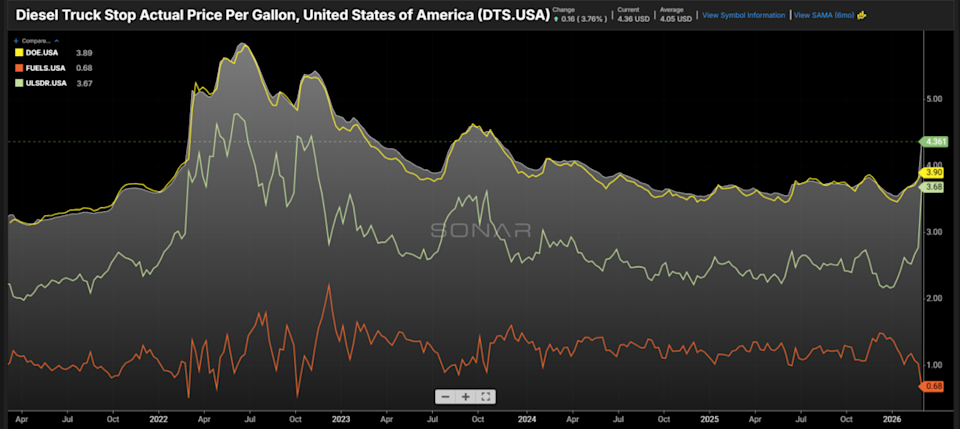
Transportation sector severely impacted by sudden surge in fuel prices
Erase the Fiat Illusion: 5 Altcoins Ready to Explode 10–25% This Week
Day One (DAWN) Soars 100% on $2.5-Billion Merger

Sable Offshore (SOC) Soars 74% on Renewed Optimism for Las Flores Pipeline
Trending news
MoreCrypto prices
More





