
Gold is outperforming stocks. Discover ways to include it in your retirement portfolio.

The Current Surge in Gold
Gold is experiencing a remarkable period of growth.
According to recent data, gold prices have climbed 74% in the last year and soared 201% over the past five years, outpacing the performance of the stock market.
Should you consider including gold in your retirement portfolio?
Financial professionals highlight that, beyond its impressive recent gains, gold serves as a valuable hedge within an investment portfolio. This is because gold and equities often move independently of each other.
As Stephen Kates, a financial analyst at Bankrate, explains, “Gold acts as a diversifier. It typically shows less correlation with stocks and bonds. Over the past year, gold’s growth has been extraordinary, making a strong case for its inclusion in a portfolio.”
However, gold’s performance hasn’t always been stellar. When adjusted for inflation, its value in late 2024 was roughly equivalent to its worth in early 1980, as shown by historical charts.
Jeff Farrar, a certified financial planner, notes, “Historically, the S&P 500 has outperformed gold. That trend shifted after COVID, especially over the last year and a half.”
Economists often refer to gold as a “store of value” because it maintains its worth over time. Its limited supply and durability set it apart from assets like currency, which can be printed, or cryptocurrencies, which can be created digitally. These characteristics help shield gold from inflation, currency fluctuations, and economic instability.
Kates adds, “Gold tends to rise when markets are troubled.”
J.P. Morgan’s analysis attributes the spike in U.S. gold prices in 2025 to factors such as international trade disputes, reduced demand for the dollar, and increased buying by central banks and investors.
Gold reached a record high of nearly $5,560 per ounce in January 2026, according to Gold Price. Since then, prices have fluctuated, with gold trading below $5,200 per ounce as of March 6.
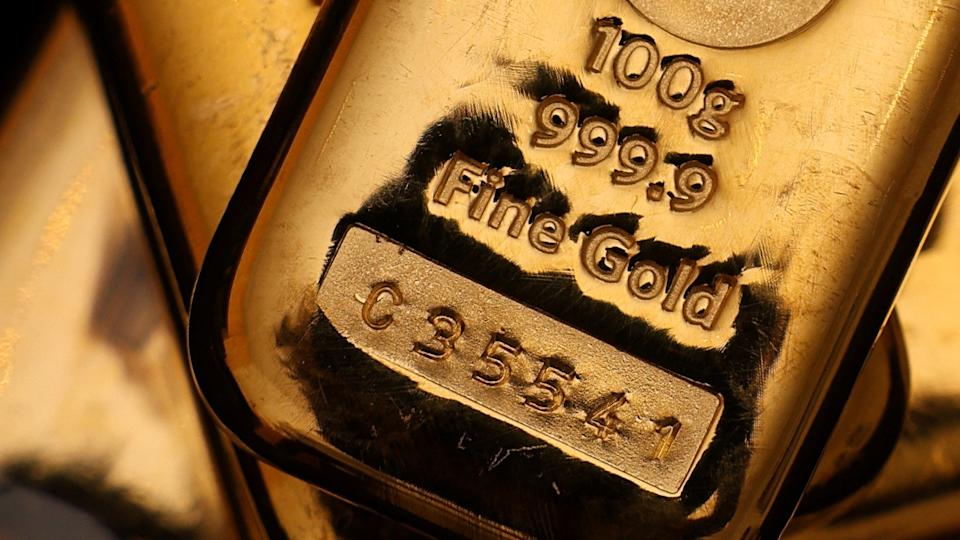
Gold prices have surged 74% in the last year and 201% over five years.
Should You Invest in Gold Now?
The general investment principle is to buy when prices are low and sell when they are high. Currently, gold is trading at elevated levels.
However, gold doesn’t always follow the same patterns as other assets. Predicting its future value is challenging, as financial experts point out, because the future itself is uncertain.
“Gold often rises during periods of fear or uncertainty,” says Kates. Yet, during the Iran conflict—a time of global instability—gold prices actually declined.
According to Investopedia, gold’s recent dip is partly due to a stronger U.S. dollar and already high gold prices, among other factors.
Kates remarks, “There’s no ideal price point for gold. But there is a sort of price floor, since gold will always retain some value.”
Financial advisers recommend gold as a useful hedge in an investment account.
How Much Gold Should You Own?
Advisers generally recommend that gold make up only a small portion of a diversified portfolio, which is usually dominated by stocks.
“I suggest allocating just 2% to 5% of your portfolio to gold,” says Melissa Cox, a certified financial planner in Dallas.
Farrar agrees: “A single-digit percentage in gold is appropriate as part of a well-rounded investment strategy.”
There are multiple ways to invest in gold, both directly and indirectly. Here, we’ll focus on options suitable for typical retirement investors.
Gold Exchange-Traded Funds (ETFs)
Anyone with a brokerage account can invest in gold through exchange-traded funds (ETFs).
Gold ETFs like SPDR Gold Shares (GLD) give investors exposure to physical gold bars stored in secure vaults, as Investopedia explains. These funds have made gold investing more accessible by removing barriers such as storage and authentication.
Additionally, ETFs typically have lower management fees compared to other gold investment options.
Cox notes, “I prefer gold ETFs because their fees and expenses are much lower.”
Gold Mutual Funds
While most 401(k) plans don’t allow direct gold purchases, there are many mutual funds related to gold, according to Investopedia.
Funds like the Fidelity Select Gold Portfolio invest in companies involved in gold mining, exploration, and processing, rather than in physical gold itself.
One drawback, as Fidelity points out, is that these mutual funds are still tied to the stock market. Their value can drop when the market declines, which is precisely the scenario gold investors hope to avoid, according to Fidelity.
Gold IRAs
For those who want to own physical gold, a Gold IRA is an option. This self-directed retirement account allows you to hold actual gold.
However, Gold IRAs come with certain disadvantages.
“Opening a Gold IRA isn’t straightforward,” Kates explains, “since major investment firms typically don’t offer gold-only IRAs.”
Additionally, these accounts often have higher fees, as investors pay extra for secure storage of their gold.
Kates adds, “Annual fees can range from 1% to 3%, which is about ten times higher than ETF fees—and these costs are ongoing.”
Tax Implications to Consider
Farrar cautions that the IRS classifies gold as a collectible. If you sell gold investments outside of a tax-advantaged account, you could face capital gains taxes of up to 28%, which is higher than the tax rate for stocks.
Adapted from USA TODAY: Gold prices are soaring. Here's how to add some to your IRA.
Disclaimer: The content of this article solely reflects the author's opinion and does not represent the platform in any capacity. This article is not intended to serve as a reference for making investment decisions.
You may also like
Bitcoin LTH Stay Calm Amid Volatile Market Swings - Details
Bernstein Maintains Hold Rating On Reddit (RDDT) Stock

TD Cowen Maintains Hold Rating and $330 Price Target On Celestica (CLS) Stock

Analysts Express Mixed Opinion on Argenx SE (ARGX) Stock

Trending news
MoreCrypto prices
More





