
Stagflation, Deficit, and Safe Haven: US Treasuries Face a Complex Trading Dilemma as Wall Street Investment Logic Shifts from Rate Cuts to Warfare

According to Zhitong Finance, as early as two weekends ago, due to the spread of tension related to artificial intelligence in the market, turbulence in private credit also triggered alarms. Daniel Ivascyn, Chief Investment Officer at Pacific Investment Management Company (Pimco) and manager of the world's largest actively managed bond fund, was making adjustments—reducing corporate credit exposure and hoarding cash equivalents to quickly sell in the event of any market dislocation, while still favoring intermediate-term US Treasuries.
In an interview, Ivascyn said, "Then war broke out in the Middle East, and now you have a few more worries."
Last month, growing concerns about corporate risk fueled a safe-haven demand for US Treasuries. Currently, the US and Israel's strikes against Iran have provoked a different market reaction. US Treasuries not only failed to serve as a safe haven but were hit by skyrocketing oil prices, causing yields to surge and inflation fears to become the focus of market attention, at a time when price levels are already above central banks’ expectations.
Ivascyn said: "This is the market tension we have seen in the past few days."
Subsequently, a report showing a surprise drop in US non-farm payrolls added another undercurrent to the situation and sparked concerns over stagflation in the US.
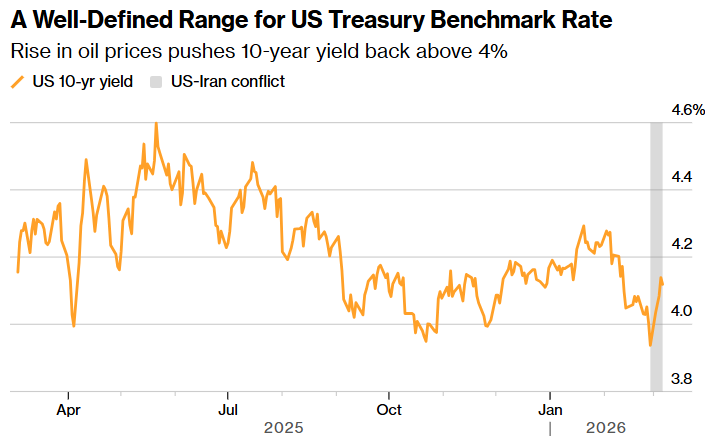
The war in the Middle East continued into its second week, and the casualties and geopolitical impacts remain the most pressing issues. However, for investors in the US bond market, which is valued at $31 trillion, this conflict has complicated what once seemed a simple key trade in 2026: investors previously expected to collect about 4% interest and then wait for the Federal Reserve to resume rate cuts under new leadership. Although this strategy still works for now, rising risks and increasing factors need to be balanced. During Asian trading on Monday, the yield on the US 10-year Treasury climbed to 4.19%, gradually rising since the start of the year.
Oil price surge impacts the outlook for interest rates
The escalating conflict has forced some of the world's largest asset management companies to reassess their assumptions and investment strategies. Investors now face the risk of oil price surges replaying history, with inflation (the nemesis of bonds) and shocks to economic growth soon to follow.
UBS Chief Strategist Bhanu Baweja stated, “The market is watching inflation, and the move in oil is significant. If the oil issue persists, it will become an economic growth problem.”
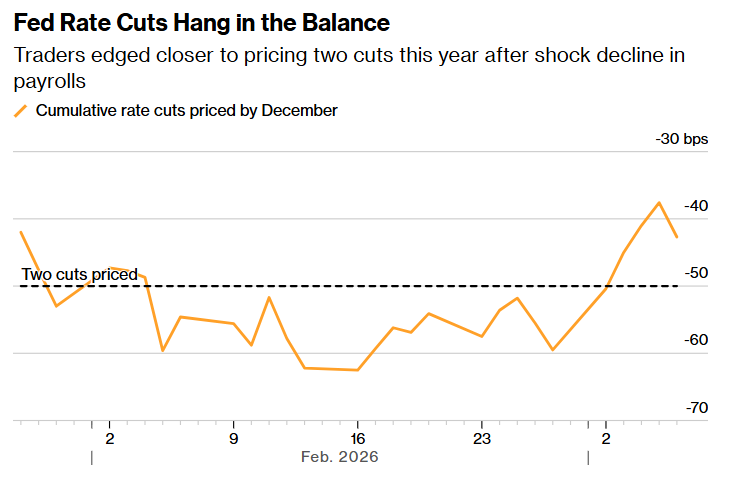
Since the inflation rate has remained above the Federal Reserve’s 2% target, traders had already lowered expectations for rate cuts this year even before the conflict erupted, while betting that the Fed would further ease monetary policy in 2027 if the economy eventually slowed. The rapidly escalating war and the threat of energy supply disruptions have led some traders to bet that there will be no rate cut in 2026, but Friday’s non-farm payroll report made the market generally expect two rate cuts this year, each by 25 basis points.
Before a ceasefire agreement is reached, the US Treasury market is likely to oscillate between short-term inflation concerns and risks of slower economic growth in the second half of the year. As the market weighs growth against inflation, the outlook is highly uncertain. This tug-of-war has led the 10-year US Treasury yield (the global benchmark for borrowing costs) to stay in a narrow range of about 4% to 4.5% for over a year.
George Catrambone, Head of Fixed Income at DWS Americas, said, "The market is now in a half-in, half-out mode, and there is a lot of risk."
Worries over war have temporarily overshadowed other issues that have piqued the market’s interest in recent weeks, such as private credit risks and the potentially disruptive (even deflationary) effects of artificial intelligence. But these issues will not disappear. The CPI report scheduled for release this week is expected to show that overall inflation slightly increased in February, even before any hostilities took place.
Catrambone stated, “The danger in all of this is that some major issues around private credit and artificial intelligence are brewing in the background. The market may not be giving them the attention they deserve.”
If signs of a US recession emerge, US Treasuries may eventually regain their safe-haven status. But for now, the greater risk is stagflation—a period of high inflation and sluggish economic growth—which would be a nightmare for central bankers and investors alike.
BlackRock Senior Portfolio Manager Jeffrey Rosenberg said in an interview: "There is a tension between a weakening labor market and the short-term inflation that comes from higher oil prices. The longer and sharper the rise in oil prices, the more demand will contract, putting the US Treasury market in a precarious position."
War costs could drive up the US fiscal deficit
WisdomTree Head of Investment Strategy Kevin Flanagan favors a “barbell strategy” of short-term floating rate US Treasuries paired with 6-year bonds, in his view, “you’re not betting on the direction of rates.”
If the war drags on, its costs could further exacerbate the US fiscal deficit, which has already worried bond investors as it could lead to more US Treasury issuance. Ian Lyngen, Head of US Rate Strategy at BMO Capital Markets, said, “Armed conflict is expensive, and the longer it lasts, the more people wonder whether the Treasury can fund it without ultimately increasing auction sizes.”
Some long-term investors are sticking to their strategies, believing geopolitics, artificial intelligence, fiscal policy, and the leadership turnover at the Federal Reserve may keep the 10-year US Treasury yield between 3.75% and 4.25%.
If prices rise to the upper end of that range, Vanguard Global Head of Rates Roger Hallam said he would consider buying. “The disruptive AI theme will stay with us,” Hallam said, noting that steady long-term inflation expectations suggest the market still sees technology as a constraint on medium-term prices.
However, Brandywine Global Investment Management Portfolio Manager Jack McIntyre stated that the risk of rising inflation combined with slower economic growth remains a "fat tail" effect that investors cannot ignore.
As for Pimco’s Ivascyn, he said the company remains “on standby” and is ready to step in and buy whenever a credit crisis emerges. He still has a slight preference for the intermediate portion of the US Treasury yield curve. In the long run, given current inflation rates, he sees value in US 10-year Treasuries at their current yield of around 4.1%.
Ivascyn said, “Despite various uncertainties, real yields remain quite attractive.”
Disclaimer: The content of this article solely reflects the author's opinion and does not represent the platform in any capacity. This article is not intended to serve as a reference for making investment decisions.
You may also like
Why Monero (XMR) Price Is Down Today: Key Drivers Explained
Crypto stocks sink, Bitcoin holds $67K: 2022 warning signs flash again
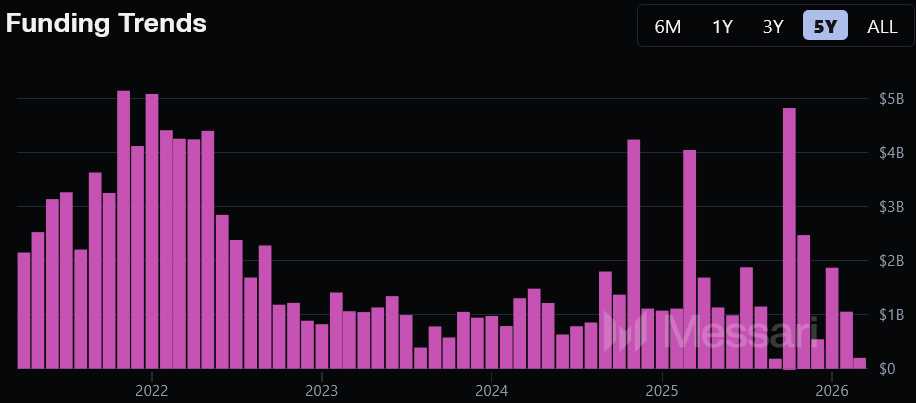
Crypto funding up 50% in 12 months as fewer, larger deals dominate
Crypto regulatory clarity matters more for banks, ex-CFTC chief says

Trending news
MoreCrypto prices
More





