
Victors And Underperformers In Q4: How Packaging Corporation of America (NYSE:PKG) Compared To Other Industrial Packaging Shares

Industrial Packaging Stocks: Q4 Performance Overview
As earnings season wraps up, it's an opportune moment to explore fresh investment opportunities and evaluate how companies are navigating the current economic landscape. Here, we examine the recent quarterly results for Packaging Corporation of America (NYSE:PKG) and its peers in the industrial packaging sector.
Industry Insights
Industrial packaging firms benefit from large-scale operations, enabling cost advantages and significant capital investments that are challenging for competitors to match. Recently, the industry has seen a shift toward sustainable packaging, with environmental concerns influencing both innovation and customer preferences. Materials like plastic are falling out of favor, even though they remain essential for many consumer products. Ultimately, these companies remain sensitive to broader economic trends, particularly consumer spending and confidence.
Q4 Results at a Glance
- Eight industrial packaging companies reported mixed fourth-quarter results.
- Collectively, their revenues surpassed analyst forecasts by 2.2%.
- Despite some outperformers, the sector as a whole saw share prices drop an average of 3.7% following earnings announcements.
Poorest Q4 Performer: Packaging Corporation of America (NYSE:PKG)
Founded in 1959, Packaging Corporation of America manufactures containerboard, corrugated packaging, displays, and protective packaging solutions.
In the fourth quarter, the company posted $2.36 billion in revenue, marking a 10.1% increase from the previous year. However, this figure missed analyst projections by 2.9%. The quarter was disappointing overall, with both revenue and adjusted operating income falling short of expectations.
Chairman and CEO Mark W. Kowlzan commented, "Corrugated shipments were slightly lower compared to record levels in 2024, and our results reflected a less favorable product mix. Strong e-commerce demand during the holidays and ongoing inventory management by customers influenced our performance. However, our order book improved as the quarter progressed, and we've observed much stronger demand across our customer base in January. The integration of the Greif business is progressing well, and we anticipate no downtime at the acquired mills in the first half of the year. Our paper division delivered higher volumes, robust pricing, and outstanding customer service. We also repurchased 760,000 shares at an average price of $201 each. Overall, we achieved solid earnings growth, excluding special items, and strong operating cash flow, thanks to our employees' efforts and strategic investments. We are well positioned for continued profitable growth."
Packaging Corporation of America Total RevenueAmong its peers, Packaging Corporation of America delivered the weakest performance relative to analyst expectations. The stock has declined 2% since the earnings release and is currently trading at $219.10.
Top Q4 Performer: Sealed Air (NYSE:SEE)
Established in 1960, Sealed Air Corporation is known for its innovative protective and food packaging solutions, serving a wide range of industries.
Sealed Air reported $1.40 billion in revenue for the quarter, a 2.1% year-over-year increase and 3.8% above analyst expectations. The company delivered a strong quarter, exceeding both revenue and adjusted operating income forecasts.
Sealed Air Total RevenueDespite the positive results, the stock price has remained relatively flat since the announcement and is currently at $41.99.
International Paper (NYSE:IP)
Founded in 1898, International Paper produces containerboard, pulp, paper, and materials for packaging and printing.
The company reported $6.01 billion in revenue, up 31.1% year over year and 1.9% above analyst estimates. However, it missed expectations for both adjusted operating income and earnings per share, resulting in a softer quarter.
Following the results, International Paper's stock has dropped 4.5% and is now trading at $39.64.
Ball (NYSE:BALL)
Ball, which began in 1880 with a $200 loan, manufactures aluminum packaging for beverages, personal care, and household products, as well as aerospace systems and related technologies.
For the quarter, Ball reported $3.35 billion in revenue, a 16.2% year-over-year increase and 7.3% above analyst expectations. The company not only surpassed revenue forecasts but also narrowly beat EBITDA estimates, making it a standout performer among its peers.
Ball achieved the largest positive surprise relative to analyst projections in the group. Its stock has risen 10.2% since the earnings release and is currently priced at $62.47.
Silgan Holdings (NYSE:SLGN)
Since its founding in 1987, Silgan Holdings has supplied rigid packaging for consumer goods, specializing in metal containers, closures, and plastic packaging.
Silgan Holdings reported $1.47 billion in revenue, a 4.1% increase from the previous year and 0.6% above analyst estimates. The company also beat expectations for adjusted operating income and EBITDA, delivering a solid quarter.
Shares have climbed 1.5% since the earnings announcement and are now at $44.41.
Looking for Strong Investment Opportunities?
If you're interested in companies with robust fundamentals, explore our 9 Best Market-Beating Stocks to add to your watchlist. These businesses are well-positioned for growth, regardless of political or economic shifts.
The StockStory analyst team—comprised of experienced professional investors—leverages quantitative analysis and automation to deliver timely, high-quality market insights.
Disclaimer: The content of this article solely reflects the author's opinion and does not represent the platform in any capacity. This article is not intended to serve as a reference for making investment decisions.
You may also like
3 Lucrative Stocks That Still Raise Some Questions
Bitway (BTW) 24-Hour Amplitude Reaches 88.0%: Speculative Rally Driven by Over $170 Million Surge in Trading Volume
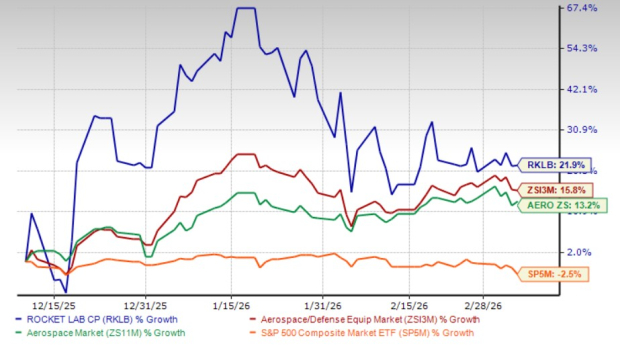
Rocket Lab Surges 21.9% Over the Last Three Months: Is Now the Time to Invest?
Trending news
MoreCrypto prices
More





