
US-Iran Conflict Oil Crisis: Could Detroit's Investment in Gas-Powered Trucks Be in Jeopardy?

Detroit Automakers Monitor U.S.-Iran Tensions and Oil Price Volatility
Major U.S. car manufacturers—Ford, General Motors, and Stellantis—are closely observing the ongoing conflict between the United States and Iran. While their direct sales in the Middle East are limited, the real concern lies in the impact of rising oil prices on consumer behavior and vehicle demand. The turmoil has disrupted global oil supplies, leading to higher crude and gasoline prices, which could soon influence what types of vehicles Americans choose to buy.
Oil Price Surge: A Key Challenge for U.S. Automakers
The recent spike in oil prices poses a significant threat to Detroit’s automotive giants. With many oil tankers unable to navigate the vital Strait of Hormuz, crude prices have climbed above $100 per barrel for the first time in years. This narrow waterway handles about 20% of the world’s seaborne oil shipments. If disruptions persist, both crude and gasoline prices are likely to rise further, increasing costs for U.S. drivers.
Ford, General Motors, and Stellantis continue to rely heavily on the sales of large trucks and SUVs—vehicles that typically consume more fuel. A prolonged period of expensive gasoline could reduce demand for these models and put downward pressure on overall sales. Historically, when fuel prices soar, consumers tend to shift toward smaller, more fuel-efficient vehicles, hybrids, and electric cars. For Detroit automakers, who generate substantial profits from gas-powered pickups and SUVs, a rapid shift in consumer preference could be challenging.
Minimal Direct Business Ties to Iran
Detroit’s direct involvement in Iran and the wider Middle East market remains modest. In 2024, the region accounted for approximately 1.8 million vehicle sales, but the combined market share of Ford, GM, and Stellantis was relatively small. According to CBT News, Ford sold about 70,000 vehicles, GM 62,000, and Stellantis 50,000 in the Middle East.
Due to longstanding sanctions, U.S. automakers have largely exited the Iranian market. Ford and GM have not sold vehicles there for years. Stellantis, through its Peugeot brand, is the only Western manufacturer with a notable presence, reportedly selling around 14,000 vehicles in Iran last year, as reported by the Detroit Free Press.
Despite limited exposure, these companies remain vigilant. Ford’s nearest operations to the conflict are its joint-venture plants in Kocaeli, Turkey, which manufacture models like the Ford Transit and the electric E-Transit for European customers. GM’s closest facility is in Egypt, and it also maintains a technology center in Israel along with dealerships throughout the Middle East.
So far, none of the automakers have reported significant disruptions to their operations. However, the broader economic fallout from the conflict could still impact the industry.
Will Elevated Gas Prices Accelerate EV Adoption?
Extended periods of high oil prices could unexpectedly boost demand for electric vehicles (EVs).
Currently, EV sales growth in the U.S. is slowing. After a strong performance in 2025, growth is projected to taper off in 2026 as federal incentives diminish. The phase-out of the $7,500 federal EV tax credit and reduced policy support have already prompted several automakers to scale back their EV investments.
However, if gasoline prices continue to climb, EVs could become more appealing despite their higher upfront costs. In January, the average price of a new EV was about $55,715, compared to $49,191 for a gasoline vehicle, according to Kelley Blue Book. As fuel costs rise, the long-term savings from driving an EV may become increasingly attractive to consumers.
Initially, hybrids are likely to see the greatest increase in demand as gas prices spike. But if high fuel costs persist, more buyers may transition to fully electric vehicles.
Among Detroit automakers, General Motors appears best positioned, offering a broad selection of electric models across its brands. Stellantis, on the other hand, could be more vulnerable if gas prices remain elevated, as its North American lineup is heavily weighted toward performance vehicles and trucks with large engines. For instance, the 2025 Ram 1500 with a standard Hemi engine achieves about 19 miles per gallon, a figure that becomes less attractive as fuel prices rise.
Ford occupies a middle ground, having recently shifted focus toward gasoline and hybrid vehicles while reducing some EV initiatives. The Mustang Mach-E remains its primary electric model following the discontinuation of the F-150 Lightning electric pickup.
Conclusion
At present, the conflict between the U.S. and Iran has only a limited direct effect on Detroit’s automakers. However, if the situation keeps oil prices high, it could significantly alter U.S. vehicle demand. Historically, higher gasoline prices have encouraged consumers to choose hybrids and EVs, benefiting some manufacturers while presenting new obstacles for others.
Disclaimer: The content of this article solely reflects the author's opinion and does not represent the platform in any capacity. This article is not intended to serve as a reference for making investment decisions.
You may also like
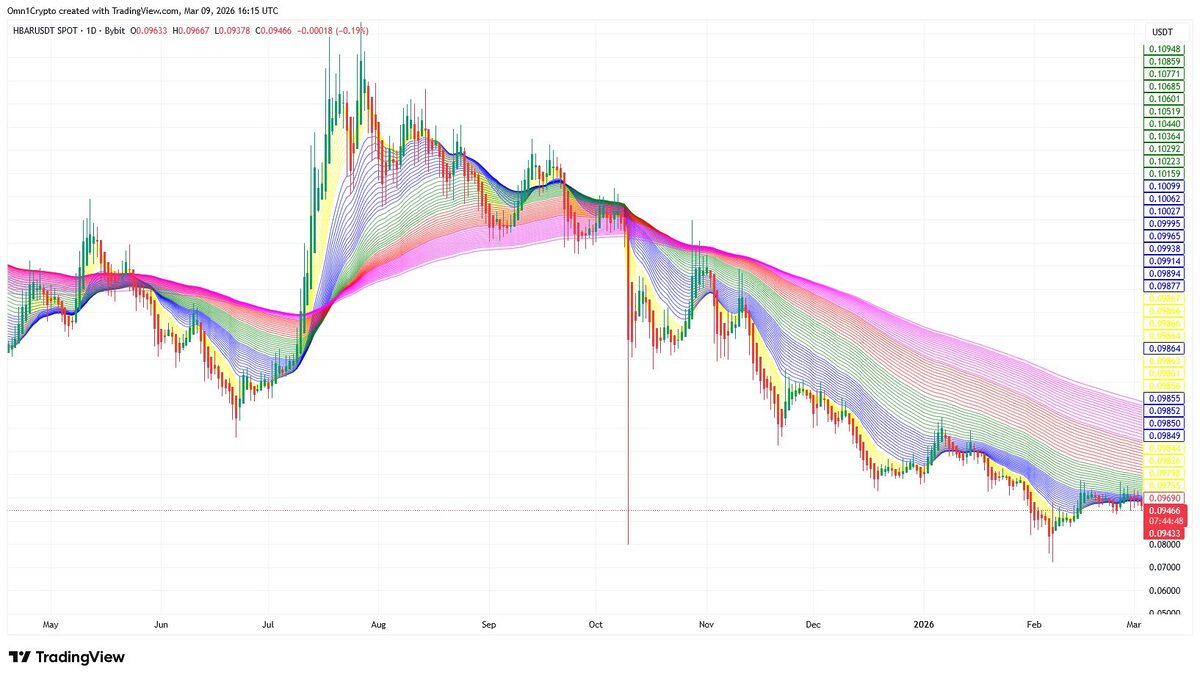
HBAR Dominates $25B RWA Buzz: Will Key Support Hold?
EOG's trading volume of $1.01B places it at 128th, with shares edging higher by 0.20%
Amgen Shares Climb 2.01% on Earnings Beat as $1.02B Volume Ranks 125th in Market Activity
50% and 61% Gains in a Single Day: Why XENE and RLMD Soared Today
Trending news
MoreCrypto prices
More





