The upcoming US inflation report, scheduled for release one hour before the New York market opens on Wednesday, March 11 (at 8:30 a.m. ET), is drawing heightened attention from global markets. With both headline and core inflation standing at 2.5% in the previous month, consensus estimates anticipate little to no change in this latest data. However, market watchers expect the impact of rising energy prices—driven by ongoing geopolitical tensions—to become more pronounced in reports to come, particularly next month.
Economists Anticipate Steady Inflation Reading
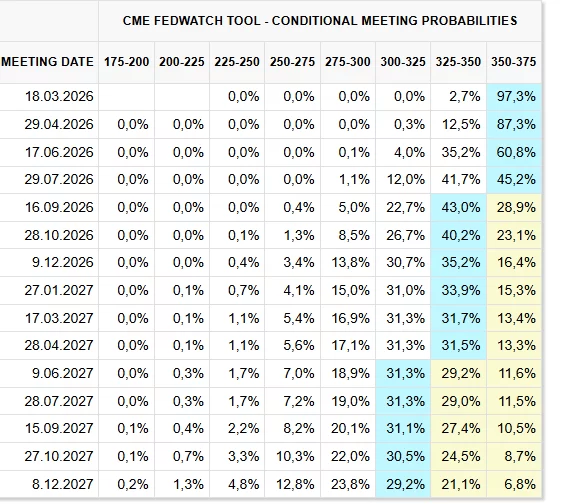
Market expectations for headline inflation range between 2.3% and 2.6%, with core inflation projections following a similar pattern. Should the Consumer Price Index (CPI) data come in weaker than anticipated, it could accelerate prospects for interest rate cuts—currently projected for September—and potentially boost risk appetite in the markets, which have struggled under the weight of delayed monetary easing.
Energy Prices and Geopolitical Uncertainty Add Complexity
In February, the prior inflation readout surprised on the downside largely due to a sharp decline in gasoline prices. This month, however, the landscape is shifting. The surge in energy costs, fueled in part by heightened tensions involving Iran, has begun to skew inflation metrics, introducing fresh uncertainty to the economic outlook.
Amid this evolving backdrop, the focus turns to how major financial institutions interpret the latest figures and what they expect for inflation going forward.
Credit Agricole
Credit Agricole forecasts that February’s inflation report might reveal a relatively soft headline number, while core prices are expected to climb roughly 0.24% month-on-month. On an annualized three-month basis, this would leave core inflation at around 3.1%, marginally below pre-government shutdown levels expected in late 2025.
The bank maintains that the most recent conflict with Iran is unlikely to have an immediate impact on inflation, supporting consensus forecasts of a 2.4% annual gain. Despite a trend toward moderation, analysts emphasize that this week’s upcoming Personal Consumption Expenditures (PCE) reading may prove more significant, as the path toward the Federal Reserve’s 2% target remains painstakingly slow—and a positive surprise could lift market sentiment.
A central issue, the bank notes, is whether the inflationary effects of the Iran standoff will prove fleeting or persistent, with Iran declaring its ability to sustain the situation indefinitely and the United States aiming to wrap up operations within four weeks.
“The conflict in the Middle East, particularly via oil prices, injects another layer of uncertainty, strengthening the likelihood that the Fed maintains steady rates as it assesses whether the energy shock proves temporary or more lasting,” Credit Agricole analysts commented.
Should these headwinds persist, even a single rate cut in 2026 may become the most optimistic scenario, the bank indicates.
Bank of America
Bank of America projects that both core and headline inflation will advance by 0.3% month-over-month—a pace that does not suggest a meaningful drop in overall inflation. This, in turn, supports the Federal Reserve’s current pause in its cycle of interest rate reductions.
“For now, the Fed will likely view the February CPI report as further evidence that inflation remains under control, while paying close attention in the coming months to whether high oil prices begin to influence inflation expectations or spill over into other parts of the economy,” Bank of America explained.
Citi
Citi sees little potential for the February data to prompt a dramatic short-term policy shift. Instead, its analysts are emphasizing developments in seasonal inflation patterns for this quarter. Core CPI is expected to rise by about 0.23% month-on-month, a notch lower than the 0.30% increase recorded in January.
“Some consumer goods categories may still see stronger price adjustments at the start of the year, but service inflation is expected to ease. Housing costs—historically the more stubborn driver of inflation—are likely to continue their gradual slowdown,” Citi noted.
If these dynamics bear out, the report will reinforce the view that core inflation pressures are abating, though headline inflation may still decline only gradually. For policymakers, the key question is whether moderation in services and housing inflation will persist as anticipated.







