
Many Investment Opportunities Emerge in the Stock Market During Times of Turmoil

Market Volatility Creates New Investment Opportunities
Recent events—ranging from geopolitical unrest, concerns about technological disruption, and turbulence in financial markets—have combined to create a landscape rich with investment potential. The ongoing conflict involving Iran, apprehensions about artificial intelligence reshaping the software sector, and notable setbacks in private credit have all contributed to market uncertainty. However, history shows that such periods of heightened anxiety often present some of the best opportunities for investors who remain disciplined and focused.
Despite these challenges, the overall global economic environment remains favorable. Economic growth worldwide is steady, productivity is rising as new technologies are adopted, and significant investments in AI infrastructure are fueling further expansion. Together, these trends provide a solid base for continued economic progress.
Geopolitical Risks and Market Resilience
The main threat to this positive outlook is the escalating situation in Iran. Tensions in the region have driven oil prices higher, raising the risk of inflation if the conflict drags on. Extended disruptions in global energy supplies could dampen economic activity and complicate decisions for policymakers. Nevertheless, the likelihood of a prolonged conflict appears low, with a near-term resolution seeming more probable.
Even with these geopolitical headwinds, equity markets have shown notable strength. Major indices remain close to their all-time highs, and market leadership is broadening, with more sectors participating in gains. This shift counters previous concerns about overconcentration in a handful of stocks and is often a hallmark of robust, enduring bull markets.
Sector Highlights and Recent Performance
Recent analysis has spotlighted opportunities in leading technology stocks and the software industry, as well as in energy and gold—sectors that have delivered strong returns. While these themes remain relevant, their rapid gains may lead to a period of consolidation, especially if investors rotate into undervalued areas of the market.
This environment has also brought new prospects in both technology and financial sectors, with companies such as Expedia (EXPE), Nvidia (NVDA), Fair Isaac (FICO), Broadcom (AVGO), Apollo Global Management (APO), and Dell Technologies (DELL) standing out as attractive options.
Market Sentiment and Technical Signals
Recent trading patterns suggest that the market may already be pricing in these risks. For instance, after a sharp overnight decline, the Nasdaq 100 e-mini futures rebounded strongly by the market open—a reversal that often signals the formation of an intermediate-term bottom.
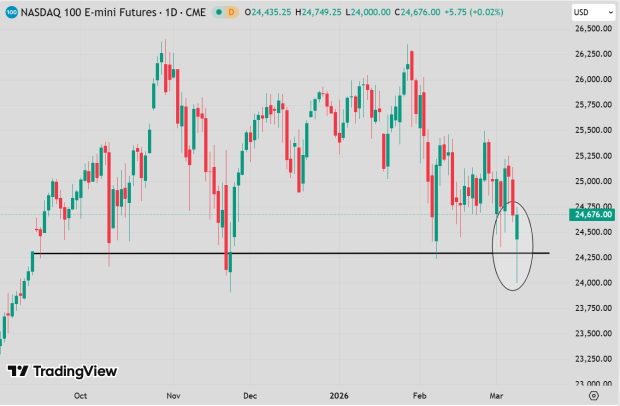
Image Source: TradingView
Assessing the Iran Conflict: Limited Long-Term Impact?
While headlines about the Iran conflict are alarming, several underlying factors suggest it may not escalate into a prolonged regional war. Iran’s military capabilities have reportedly been significantly weakened, with much of its missile infrastructure destroyed and its ability to replenish these resources severely limited. These constraints reduce the likelihood of a sustained conflict.
Strategically, Iran’s recent actions have also backfired, pushing previously neutral Gulf states closer to the US and Israel. This has unified regional governments and provided political cover for defensive and potentially offensive measures against Iran. The weakening of Iran’s proxy networks further diminishes its ability to maintain a long-term confrontation.
Most importantly, the likely outcome appears to be a negotiated settlement rather than regime change. The US and Israel may focus on degrading Iran’s military assets before reopening diplomatic channels. There is room for a resolution that imposes new military restrictions on Iran without toppling its government. While risks remain, the probability of a drawn-out regional war seems relatively low.
Crude oil futures have mirrored this uncertainty, with prices spiking sharply before pulling back—a pattern that often marks turning points and suggests the worst of the panic may be over.
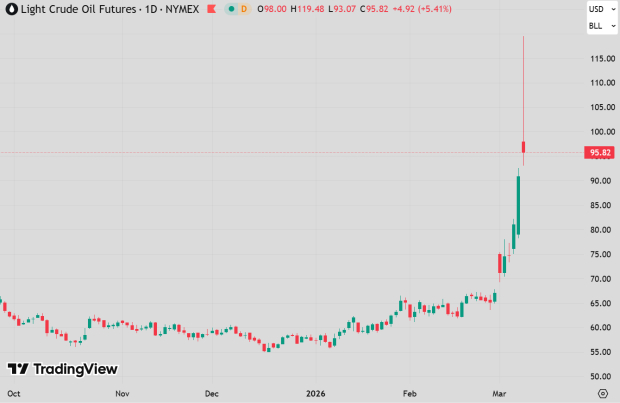
Image Source: TradingView
Financial Sector: Opportunities in Fair Isaac and Apollo Global Management
The rapid expansion of the private credit market—from $500 billion in assets under management in 2020 to about $2 trillion today—has drawn significant attention. Apollo Global Management has emerged as a leader in this space, benefiting from the sector’s growth. However, the pace of expansion has raised concerns about risk-taking among lenders, with Blue Owl Capital at the center of recent headlines.
While some have compared the situation to the 2008 financial crisis, leverage is much lower and risks appear more contained. Nevertheless, these concerns have weighed on alternative asset managers, including Apollo. This pullback has created a compelling entry point, with Apollo trading at just 11.8 times forward earnings and expected to deliver strong growth in both earnings and revenue over the next several years. The company’s diversified business model further supports its long-term prospects.
Fair Isaac, on the other hand, has faced pressure from the broader selloff in software stocks and past controversies over price increases. Despite these challenges, the company’s core business remains robust. Its shares trade at 35.2 times forward earnings—a premium, but one justified by its dominant position in credit scoring and a projected long-term earnings growth rate of nearly 29%.
Technology Stocks: Attractive Valuations and Growth Potential
Concerns about overvaluation in the technology sector have been widespread, but many leading companies now trade at more reasonable levels following recent corrections. Nvidia, Broadcom, Dell Technologies, and Expedia are among the standout opportunities.
- Nvidia (NVDA): The leader in AI infrastructure, Nvidia trades at about 22.7 times forward earnings and is expected to achieve nearly 39% annual EPS growth. The company’s revenue is forecast to surge as demand for AI computing accelerates, and its investments in AI startups broaden its exposure to the sector.
- Broadcom (AVGO): With similar growth drivers tied to AI and data centers, Broadcom trades at around 31.9 times forward earnings. Analysts expect earnings to grow nearly 49% annually, with revenue growth also projected to remain strong.
- Dell Technologies (DELL): Dell has benefited from rising demand for AI servers and data center hardware. The stock trades at a modest 11.5 times forward earnings, with analysts forecasting 18% annual earnings growth over the next few years.
- Expedia (EXPE): Expedia is a value play in the tech sector, trading at roughly 13 times forward earnings. The company’s B2B travel platform has become a significant growth driver, expanding by 24% in the past year.
Capitalizing on Uncertainty
Periods of market turbulence often set the stage for the most rewarding investments. Although short-term fears have unsettled markets, the broader economic outlook remains positive, and many high-quality companies are now available at more attractive valuations than a year ago.
Investors who can look beyond current uncertainties may find compelling opportunities across various sectors. Should the macro environment remain stable and current anxieties subside, these stocks could be well positioned for the next phase of market growth.
Featured Stock Picks
Discover five stocks selected by Zacks experts that are projected to potentially double in value over the next year. While not every pick will be a winner, previous recommendations have achieved gains of 112%, 171%, 209%, and even 232%.
Many of these stocks are still under Wall Street’s radar, offering early investors a unique opportunity.
Disclaimer: The content of this article solely reflects the author's opinion and does not represent the platform in any capacity. This article is not intended to serve as a reference for making investment decisions.
You may also like
Illinois community bank terminates its chief financial officer
What’s a ‘Network State’ and are there real-life examples? Big Questions

Bitcoin Enthusiast Jack Dorsey Is Not a Fan of Stablecoins, Yet Block Plans to Adopt Them
Trending news
MoreCrypto prices
More





