
Small Businesses Take Legal Action Against Tariffs—Desperate Move or Savvy Financial Indicator?

Legal Battles Over Tariffs: Who Fights, Who Pays
Businesses facing immediate financial strain are turning to the courts as a defensive tactic. Although the road to securing refunds is filled with legal obstacles, the mere act of filing a lawsuit highlights which companies are most affected. Major corporations such as FedEx and Costco are actively pursuing refunds, but smaller firms are also stepping up, albeit with greater vulnerability.
A group of 24 states, led by Democratic attorneys general, is challenging the new 15% global tariffs in court. This legal action comes in response to a Supreme Court decision that invalidated the previous tariff approach, leaving a gap the current administration is trying to fill. The states argue that the administration is overstepping its authority and attempting to bypass the Supreme Court's ruling. These lawsuits are significant undertakings, requiring substantial resources to pursue.
The plight of small businesses is exemplified by Basic Fun, the company behind Tonka Trucks. Last year, $7 million in tariffs slashed their expected profits by 65%. Faced with such losses, companies must decide whether to absorb the blow or take legal action. Basic Fun, represented by the same nonprofit that previously won at the Supreme Court, has filed a new lawsuit to block the tariffs and seek refunds. When a business’s core earnings are devastated by policy, going to court becomes a necessity.
Absolute Momentum Long-Only Strategy: Backtest Overview
- Entry Criteria: Buy SPY when the 252-day rate of change is positive and the closing price is above the 200-day simple moving average (SMA).
- Exit Criteria: Sell when the price falls below the 200-day SMA, after 20 trading days, or if a gain of 8% or a loss of 4% is reached.
- Asset: SPY
- Risk Controls:
- Take-Profit: 8%
- Stop-Loss: 4%
- Maximum Holding Period: 20 days
Backtest Results
- Total Return: 8.86%
- Annualized Return: 4.52%
- Maximum Drawdown: 5.29%
- Profit-Loss Ratio: 1.34
Trade Statistics
- Total Trades: 12
- Winning Trades: 7
- Losing Trades: 5
- Win Rate: 58.33%
- Average Holding Period: 16.08 days
- Maximum Consecutive Losses: 2
- Average Gain: 2.59%
- Average Loss: 1.84%
- Largest Single Gain: 3.91%
- Largest Single Loss: 4.46%
Ultimately, the landscape is divided: those with the resources to pursue legal action and those forced to shoulder the costs. While lawsuits offer a potential path to relief, they are expensive and only accessible to those most at risk. For many small businesses, the issue is no longer about profits—it's about staying afloat.
The Reality of Refunds: A Difficult and Expensive Journey
Although the Supreme Court’s decision was a legal victory, actually recovering money is a slow and costly process. A federal judge has determined that companies that paid the now-invalidated tariffs are eligible for refunds, but the process is not streamlined for mass payouts. With the judge personally overseeing the case, claims could be delayed for years. Even former President Trump has acknowledged that the issue may remain unresolved in the courts for up to five years.
The potential refund amount is enormous. The government collected over $130 billion from these tariffs, and estimates suggest total refund obligations could reach $175 billion. While this is a massive figure, individual importers may find that the legal expenses and uncertainty outweigh any possible refund. The judge’s ruling confirms the right to a refund but does not guarantee a timely or successful outcome. The government is expected to appeal, further prolonging the process.
This situation has led to a clear divide in strategies. Large corporations with ample resources are willing to sue for refunds, treating legal costs as a necessary business expense. Companies like FedEx and Dyson have filed lawsuits, seeing the legal battle as essential. For smaller businesses, however, the cost of litigation often exceeds the potential benefit. One small business owner noted that unexpected tariffs forced them to divert funds from planned renovations and payroll. For these firms, it may be wiser to accept the loss rather than risk an expensive and uncertain legal fight.
Company Snapshot: Innovative Eyewear
| Ticker | Last Price ($) | Last Change (%) | Company Description |
|---|---|---|---|
| LUCY | 1.07 | 0 | A company specializing in advanced eyewear and sunglasses |
Some companies are opting for a more straightforward solution. Dame Products, a wellness brand, is automatically refunding customers for the tariff surcharge. CEO Alexandra Fine describes this as simply correcting an unjust charge—just a matter of "clicking a button." This approach works for businesses with direct customer relationships and manageable refund volumes, but it’s not feasible for most small firms that lack the necessary infrastructure and capital. In the end, while the legal path to refunds is technically open, the process is slow, expensive, and tends to benefit larger companies over smaller ones.
Smart Money Watchlist: Key Signals for Refund Prospects
Winning in court is only the beginning. The actual return of funds will depend on several critical developments. The first major indicator is how the Justice Department responds. Although a federal court has affirmed the right to refunds, the government is likely to appeal and seek to delay payments. The speed of administrative processing will reveal how quickly, or slowly, refunds might be distributed. President Trump has already warned that the process could drag on for years, favoring the government’s strategy of delay.
Another important signal is which companies follow the lead of Basic Fun, which is waiting for further clarity before taking action. Meanwhile, Dame Products is already issuing automatic refunds to customers, demonstrating confidence in the refund process and a desire to avoid lengthy legal battles. In contrast, the lawsuits filed by large corporations like FedEx and Dyson reflect skepticism about the government’s willingness to pay out quickly. When companies with significant tariff exposure choose litigation over waiting, it signals an expectation of prolonged resistance from the government.
The underlying risk is that this legal struggle may only provide temporary relief. While the Supreme Court struck down one set of tariffs, the administration can still use other trade laws to impose new ones. As some analysts point out, Trump retains numerous tools under the Trade Act of 1974 to enact targeted tariffs. This sets up a recurring cycle of legal challenges and new tariffs. For many small businesses, the pragmatic choice may be to accept the initial loss and focus on daily operations, knowing that another round of tariffs could be just around the corner. While lawsuits offer a defensive strategy, the power to impose new tariffs remains with the administration.
Disclaimer: The content of this article solely reflects the author's opinion and does not represent the platform in any capacity. This article is not intended to serve as a reference for making investment decisions.
You may also like
French exports see slight increase as Trump tariff concerns loom
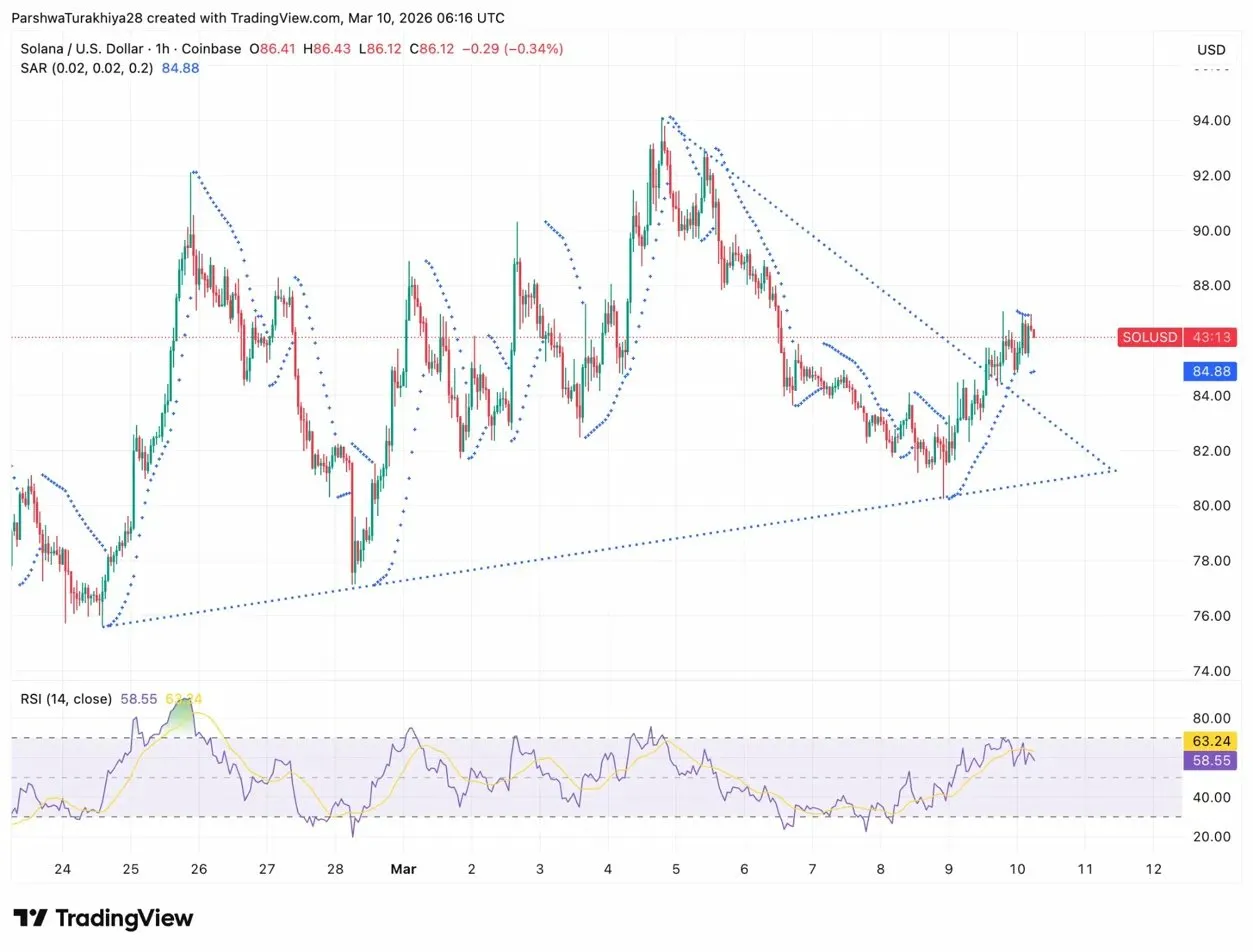
Solana Price Prediction: Bulls Target $94 Supertrend as ETFs Hold $1.5B
Cosan: Overview of Fourth Quarter Financial Results
Barclays Retains an Equal Weight Rating on Acadia Healthcare Company, Inc. (ACHC)

Trending news
MoreCrypto prices
More





