
Vessel Groupings and Rapid Tankers Suggest Jamming Activity Near Hormuz

Electronic Disruptions Create Chaos for Shipping Near Strait of Hormuz
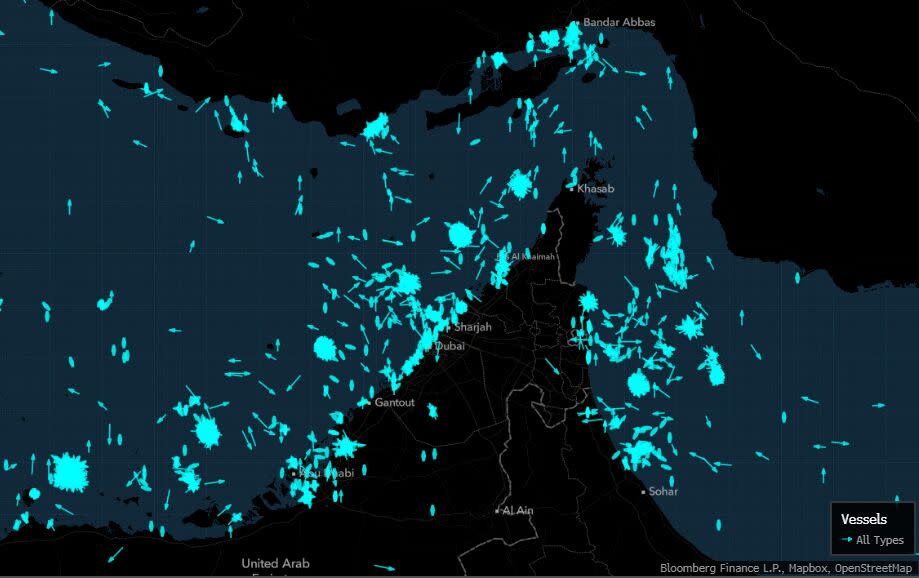
Clusters of ships—at least a dozen—have been detected gathering near the Strait of Hormuz, a development that points to significant electronic interference in the region. This critical waterway, now largely closed due to ongoing hostilities involving the US, Israel, and Iran, has seen most maritime activity come to a halt.
Some of these clusters contain over 200 vessels, spanning a wide range of ship types. Tracking data reveals that certain ships appear to be moving at speeds exceeding 100 knots, an anomaly likely caused by signal disruptions.
Top Stories from Bloomberg
The emergence of these ship formations is heightening anxiety among shipowners and charterers, as navigating the area becomes increasingly hazardous. With the conflict dragging on, insurance costs for war risks have soared, and several ships have already been struck by missiles and other attacks.
Mark Douglas, an analyst at Starboard Maritime Intelligence, notes that tracking ship positions has become nearly impossible. Over the last two days, he describes the situation as “impenetrable.”
The Strait of Hormuz is under intense scrutiny because its near-total shutdown has sent shockwaves through the global energy market. Oil producers in the Persian Gulf are being forced to store their output as storage facilities reach capacity. The initial stoppage of regular shipments pushed Brent crude prices close to $120 per barrel, though prices dipped after US President Donald Trump suggested the conflict might soon be resolved.
These unusual ship groupings suggest that electronic jamming is distorting navigation systems, causing vessels to appear on tracking maps far from their true locations. Such interference tends to increase during periods of heightened geopolitical tension, as militaries deploy electronic warfare tactics.
Some clusters have formed recognizable patterns, such as a circle of ships inland near Abu Dhabi and a reversed “Z” shape off the coast of Ruwais in the UAE. Other groups are waiting in the Gulf of Oman, possibly holding out for safer conditions or confirmed loading schedules before attempting to transit Hormuz.
Electronic jamming is also causing ships to report implausible speeds. For example, the Asprouda, a tanker built in 2013, was shown traveling at 102.2 knots near Jebel Ali—almost 190 kilometers per hour—far above its typical maximum speed of 16 knots.
Escalating Disruptions and Industry Response
According to maritime intelligence firm Windward, electronic jamming began as soon as the conflict erupted and has affected over 1,100 ships in the Persian Gulf. On March 4, only five vessels passed through Hormuz, compared to 120 crossings just a week earlier.
President Trump has proposed that the US might provide insurance and naval escorts to help restore shipping through the strait, which is a vital link between the Persian Gulf and global markets. He also mentioned to CBS that he was considering “taking it over,” though he did not specify what actions that would entail.
Mark Douglas of Starboard Maritime warns that ships in the region can no longer depend on GPS, further complicating security as vessels have already been targeted in attacks.
More from Bloomberg Businessweek
©2026 Bloomberg L.P.
Disclaimer: The content of this article solely reflects the author's opinion and does not represent the platform in any capacity. This article is not intended to serve as a reference for making investment decisions.
You may also like
Meta purchased Moltbook, the AI-driven social platform that gained widespread attention due to fabricated posts

Here’s Why The PNC Financial Services Group (PNC) Is an Excellent Choice for ‘Buying the Dip’ Right Now
Crescent Capital BDC (CCAP) May Soon Establish Support—Reasons to Consider Purchasing the Stock Now
BankUnited (BKU) Displays 'Hammer Chart Pattern': Is It an Opportunity to Buy at the Bottom?
Trending news
MoreCrypto prices
More





