
Why releasing oil reserves in emergencies won't resolve this situation

Oil Prices Surge as Strait of Hormuz Remains Blocked
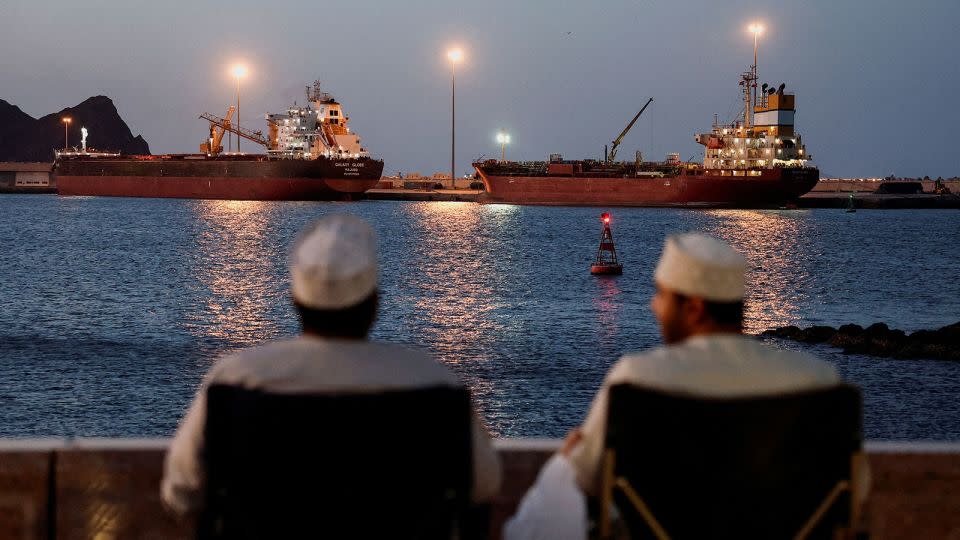
On March 9, the Galaxy Globe bulk carrier and the Luojiashan tanker were anchored off the coast of Muscat, Oman. Due to Iran's effective closure of the nearby Strait of Hormuz—a critical passageway for nearly a fifth of the world's oil shipments—traffic in and out of the Persian Gulf has nearly stopped. This disruption has caused oil prices to spike dramatically. (Photo: Benoit Tessier/Reuters)
Global Response to Soaring Oil Prices
The ongoing conflict involving Iran has unsettled investors, resulting in a sharp rise in oil prices. In response, major economies around the world are weighing the possibility of releasing millions of barrels of oil from emergency reserves to stabilize the market.
However, energy analysts caution that even the release of tens of millions of barrels would have a limited effect on meeting the world's vast oil demand.
Why Emergency Oil Releases May Not Be Enough
Both the United States and the global community consume enormous quantities of oil daily. As a result, a one-time release—even a large one—cannot compensate for the ongoing closure of the Strait of Hormuz, a vital route for international oil transport that has been largely blocked by the conflict.
Daniel Raimi, an energy policy expert at Resources for the Future, explained, “While a coordinated release from strategic reserves isn’t insignificant, its impact will likely be modest. Considering the world trades about 100 million barrels of oil each day, even a joint effort to release reserves would only slightly influence global prices.”
G7 Considers Action, But No Commitments Yet
The G7 nations have indicated they might intervene by releasing oil from their reserves, but have not made any firm promises.
- “We are prepared to take necessary steps, including releasing stockpiles to support global energy supply,” the G7—which includes Canada, France, Germany, Italy, Japan, the UK, and the US—stated after a recent meeting.
On Monday, Brent crude oil, the global benchmark, rose nearly 7% to close at $98.96 per barrel, marking its highest price since 2022.
President Donald Trump also refrained from making any guarantees, saying, “We’re working to keep oil prices down. Prices rose artificially due to this situation. I expected an increase, and while prices have gone up, it’s less than I anticipated.”
Lessons from Previous Oil Releases
Following Russia’s invasion of Ukraine in 2022, the G7 coordinated a release of 240 million barrels from their reserves, with the US contributing 180 million barrels from its Strategic Petroleum Reserve (SPR).
This move helped lower gas prices from their peak of $5 per gallon in June 2022, but the effect was limited. According to a Treasury Department analysis in July 2022, the release reduced gas prices by only 17 to 42 cents per gallon.
Independent oil analyst Tom Kloza noted, “Without the SPR releases, gas prices likely would have stayed above $5 per gallon for weeks, rather than just a few days.”
Storage and Supply Challenges
Storage tanks at the Phillips 66 Bayway Refinery in Linden, New Jersey, illustrate the scale of the oil supply chain. Since the US and Israeli military actions against Iran began, oil prices have continued to climb. (Photo: Bing Guan/Bloomberg/Getty Images)
The Critical Role of the Strait of Hormuz
The most effective way to bring oil prices down is to reopen the Strait of Hormuz, which currently remains closed to most tanker traffic. This narrow passage is responsible for transporting 20% of the world’s oil supply.
Short-Term Relief, Long-Term Risks
Bob McNally, president of Rapidan Energy Group, warned, “If the Strait of Hormuz doesn’t reopen soon, releasing oil from reserves will only temporarily slow the rise in crude prices.”
With global oil consumption at roughly 100 million barrels per day, no single release can offset the impact of a prolonged closure of this vital route.
Moreover, using strategic reserves now could limit future options if the conflict continues. The US SPR held about 600 million barrels before the Ukraine war; today, that number has dropped to 415 million barrels.
Neil Atkinson, a visiting fellow at the National Center for Energy Analytics, emphasized, “Emergency reserves are a one-time resource. Once depleted, they’re gone unless replenished.”
Reporting by Matt Egan and David Goldman
Disclaimer: The content of this article solely reflects the author's opinion and does not represent the platform in any capacity. This article is not intended to serve as a reference for making investment decisions.
You may also like
Bull of the Day: The Hershey Company (HSY)
GMV Minerals signs drilling contract for Mexican Hat gold project
Morgan Stanley technicals see $134/$150 upside risk for oil prices
Sei price prediction as L1’s financial stack accelerates
Trending news
MoreCrypto prices
More





