
How rising fuel costs are impacting California’s electric vehicle market

Surging Gas Prices May Revitalize Electric Vehicle Market
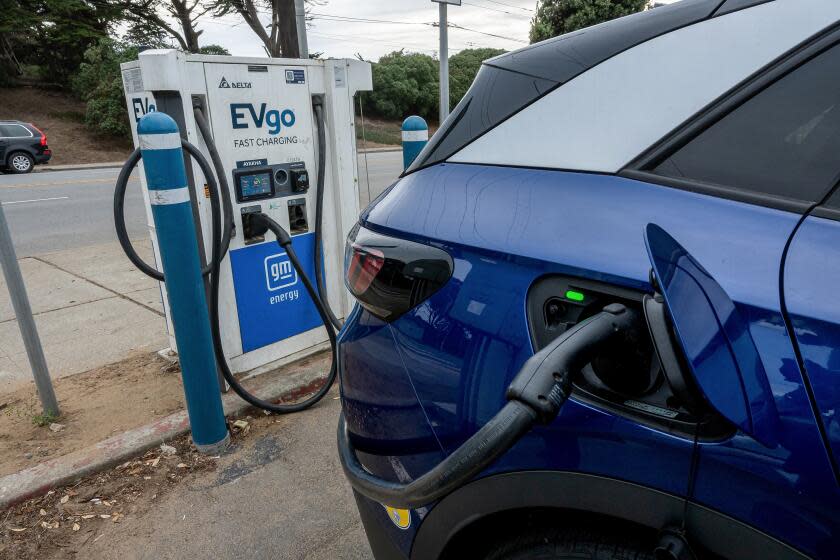
Image: Bloomberg
The electric vehicle (EV) industry has faced significant challenges recently, with reduced federal incentives and waning consumer enthusiasm leading to slower sales. However, a new factor could soon shift the landscape: escalating gas prices driven by the conflict in Iran.
As fuel costs climb, more Americans may be motivated to consider electric or hybrid vehicles to cut down on expenses at the pump. Since February 28, the national average price for gasoline has jumped nearly 17%, reaching $3.48 per gallon, while Californians are paying an average of $5.20 per gallon.
Although EVs typically have higher upfront costs and charging them can be expensive given current electricity rates, soaring gas prices may encourage buyers to opt for electric or hybrid models when choosing their next vehicle.
"If gas prices remain elevated, we’ll likely see increased interest in both electric and hybrid vehicles," said Sam Abuelsamid, an automotive analyst at Telemetry Agency. "The last significant surge in oil prices in early 2022 coincided with a notable uptick in EV sales across the U.S."
Related Reading
According to a 2022 AAA survey, 77% of participants cited saving on fuel as their main reason for considering an electric vehicle. That year, a quarter of respondents said they were likely or very likely to purchase an EV. However, as oil prices stabilized, this figure dropped to 16% in 2025.
California saw a 43% surge in new zero-emission light-duty vehicle sales in 2022, with their market share rising from 12% in 2021 to 19% in 2022, according to the state’s Energy Commission.
"Before 2022, EVs weren’t widely available during previous oil price spikes," Abuelsamid noted. "But each time fuel prices soared, consumers gravitated toward more efficient vehicles."
Dealerships are preparing for a potential increase in demand. Brian Maas, president of the California New Car Dealers Association, expects renewed interest in EVs if oil prices remain high.
"Historically, spikes in gasoline prices have led to greater demand for fuel-efficient vehicles," Maas explained.
Further Reading
For EV manufacturers, rising gasoline prices could provide much-needed relief as government incentives for green vehicles have diminished. In September, the federal government under President Trump eliminated a $7,500 tax credit for new EVs and a $4,000 credit for used ones.
In California, the share of zero-emission vehicles among new car sales reached 22% in the first ten months of 2025, but dropped sharply to 12% in the final two months, according to California Auto Outlook.
Industry Headwinds and Shifting Policies
Tesla, the nation’s most recognized EV brand, has seen its public image take a hit after CEO Elon Musk became a prominent supporter of former President Trump and took a controversial government role.
Meanwhile, major automakers like Ford, General Motors, and Stellantis have scaled back their EV plans, and companies such as Nissan have announced they will discontinue some of their more affordable electric models.
The Trump administration has also relaxed federal fuel economy standards and revoked California’s authority to ban new gasoline-powered vehicle sales by 2035.
David Reichmuth, a researcher at the Union of Concerned Scientists, warned that these production cutbacks could limit EV availability, even if consumer demand rebounds due to high gas prices.
"This transition is essential for public health and to mitigate climate change, regardless of whether gasoline costs $3, $5, or $6 per gallon," Reichmuth emphasized.
Recent data from Cox Automotive shows that new EV sales across the U.S. were down 41% in November compared to the previous year, while used EV sales dropped 14% year over year.
Oil prices are known for their volatility, especially during periods of global uncertainty, and it may take time for consumers to adjust their purchasing decisions accordingly.
Brian Kim, who oversees used car sales at Ford of Downtown LA, reported that he has not yet observed a significant increase in interest for EVs, hybrids, or more efficient gasoline vehicles. However, he believes that if gas prices remain high, consumer behavior could shift soon.
"If gas prices reach six dollars a gallon or more and people start to feel the financial strain, we might see a change in the market," Kim said.
Disclaimer: The content of this article solely reflects the author's opinion and does not represent the platform in any capacity. This article is not intended to serve as a reference for making investment decisions.
You may also like
Wall Street Turns Bullish on HIMS, TDOC and ALEC as Partnerships Reshape Risk Profiles
Cardano Targets Compliance With Broad Governance Overhaul
Cardano Targets Compliance With Broad Governance Overhaul
National Vision Surges 129.5% Over the Past Year: What Factors Are Fueling This Uptrend?
Trending news
MoreCrypto prices
More





