
Paychex Shares Plummets 3.23% as Mixed Earnings and Talent Woes See Stock Rank 393rd in Trading Volume

Market Snapshot
Paychex (PAYX) closed March 10, 2026, with a 3.23% decline, marking a significant drop for the day. Trading volume totaled $0.33 billion, a 25.93% decline from the previous day’s volume, ranking the stock 393rd in trading activity among listed equities. The selloff occurred despite the company reporting Q2 fiscal 2026 adjusted earnings per share (EPS) of $1.26, which exceeded the $1.23 forecast, and revenue of $1.56 billion, slightly above the projected $1.55 billion. The stock’s performance contrasted with its year-over-year revenue growth of 18% to $1.6 billion, driven by a 21% increase in its management solutions segment to $1.2 billion.
Key Drivers
The primary catalyst for Paychex’s stock decline appears to stem from mixed signals in its recent financial performance and forward guidance. While the company surpassed Q2 EPS and revenue estimates, the magnitude of the beat—2.44% for EPS and 0.65% for revenue—was relatively modest compared to its historical performance. For instance, in Q1 2026, PaychexPAYX-3.23% reported a 5.34% price increase following a 0.68% EPS beat and matched revenue forecasts. The current quarter’s narrower outperformance may have left investors underwhelmed, particularly given the company’s ambitious 10–11% adjusted diluted EPS growth forecast for fiscal 2026.
A critical challenge highlighted in the earnings report was the management solutions segment’s growth amid “talent sourcing challenges.” While the segment rose 21% year-over-year, the mention of operational headwinds suggests ongoing labor market pressures, which could constrain future scalability. This concern is compounded by recent quarterly volatility: in Q3 2025, Paychex’s EPS fell 42.8% year-over-year to $0.82, and its net income margin dropped to 20.8% from 34.6% in the same period in 2024. These fluctuations indicate vulnerability to external factors, such as hiring difficulties and shifting client demand.
Paychex’s strategic pivot toward AI-driven platforms, as emphasized by CEO John Gibson, represents a forward-looking initiative to enhance service delivery. However, the market’s reaction suggests skepticism about the immediate impact of these investments. The company’s operating cash flow of $445 million and shareholder returns of $514 million through dividends and buybacks underscore financial discipline, yet these figures must be weighed against a backdrop of inconsistent quarterly performance. For example, Q2 2025 saw a 31.09% EPS shortfall, while Q1 2025 delivered a 1.67% beat. Such variability raises questions about the sustainability of its growth trajectory.
The stock’s decline also reflects broader market dynamics. Paychex’s revenue growth forecast of 18% for Q3 2026, coupled with an adjusted operating margin target of 47–48%, signals confidence in operational efficiency. However, investors may be discounting these projections due to macroeconomic uncertainties, such as rising interest rates or a potential slowdown in small business demand, which constitutes a significant portion of Paychex’s client base. Additionally, the company’s gross profit margin of 73.1% in Q2 2025, while robust, masks a 13.1% decline in operating income year-over-year for Q3 2025, highlighting the fragility of its profit structure.
Finally, the stock’s performance appears to be influenced by a divergence between short-term results and long-term potential. Paychex’s AI initiatives and strong cash flow generation are positives, but the market may be pricing in risks associated with its talent challenges and the competitive landscape in the payroll and HR services sector. The 3.23% drop suggests that investors are recalibrating expectations, balancing the company’s strategic strengths against recent operational volatility and macroeconomic headwinds.
Disclaimer: The content of this article solely reflects the author's opinion and does not represent the platform in any capacity. This article is not intended to serve as a reference for making investment decisions.
You may also like
Transcontinental's Newly Appointed CEO Indicates a Strategic Move Toward Focusing on Core Printing Efficiency
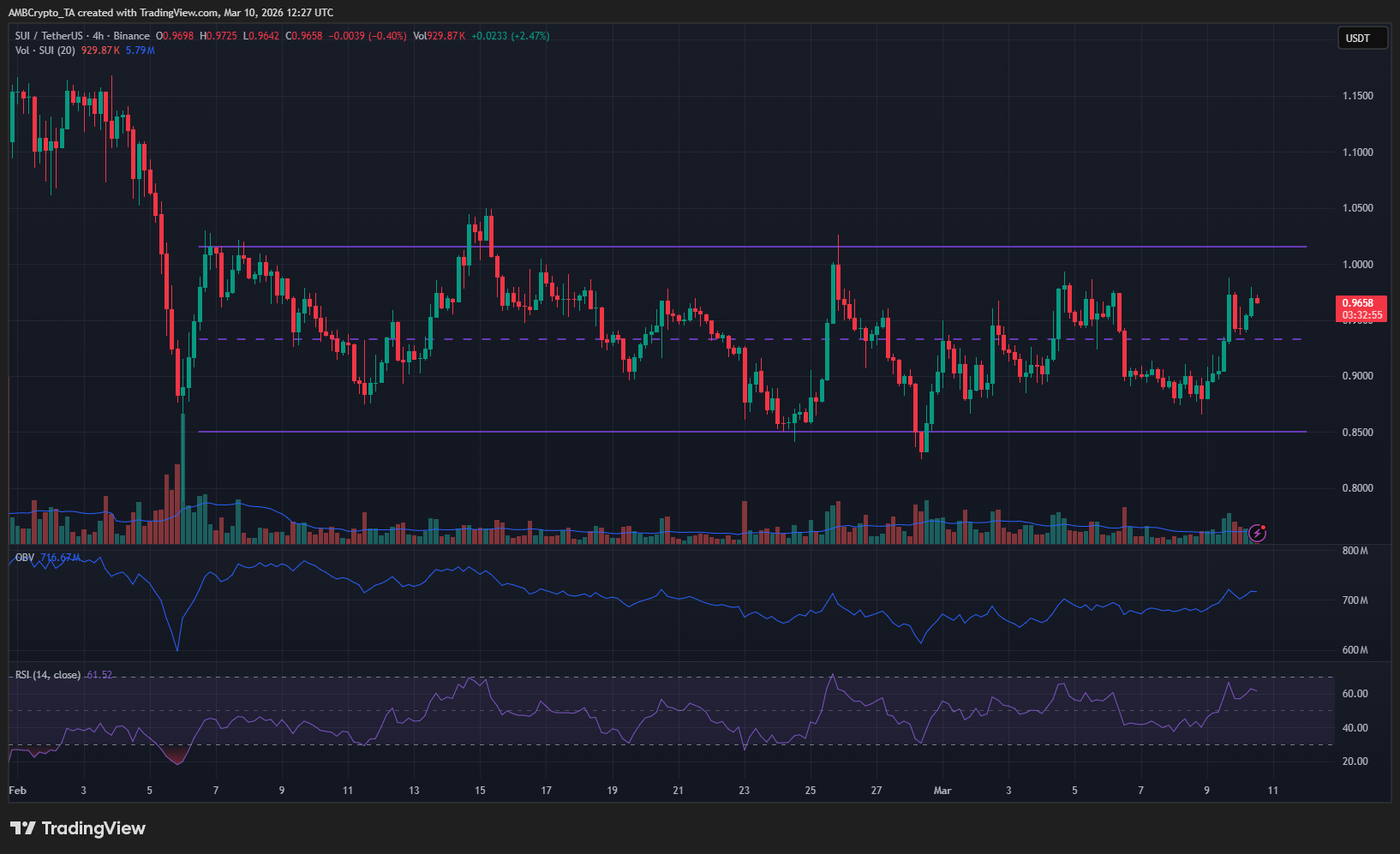
All about SUI’s next challenge after altcoin’s latest 7% hike
Micron's Momentum: The $400,000 Bullish Bet and Rising AI Demand
Bank of America’s Trading Surge Faces Test as Volatility Wanes and Margins Come Under Scrutiny
Trending news
MoreCrypto prices
More





