Global headlines were dominated today by escalating geopolitical events and economic developments. Japan announced subsidies for gasoline prices soaring above 170 yen per liter, Qatar intercepted a missile in a recent attack, and Iran struck a Thailand-flagged cargo vessel in the Strait of Hormuz just minutes ago. With major news breaking from around the world—including renewed scrutiny of Wall Street Journal—all eyes have also turned to the release of the US inflation report for February.
Fresh Inflation Figures Out of the US
For the Federal Reserve to consider rate cuts, inflation must show a sustained downward trend. But with oil prices climbing toward triple-digit territory, prospects for a meaningful drop in inflation remain slim. While the impact of these surging prices will be felt more acutely in next month’s March inflation report, today’s numbers still provide crucial context. The key figures, released earlier, were as follows:
- US Inflation (headline): 2.4% (Forecast and previous: 2.4%)
- US Core Inflation: 2.5% (Forecast and previous: 2.5%)
Markets React as Expectations Hold Steady
Although the reported inflation figures matched market expectations, coming closer to the targeted 2% level did little to assuage broader concerns. Volatile oil prices and mounting geopolitical risks are expected to exert more pressure on next month’s inflation report, fueling speculation in financial circles. The cryptocurrency market also remained subdued, with Bitcoin notably failing to post significant gains amidst heightened anticipation surrounding the forthcoming April numbers.
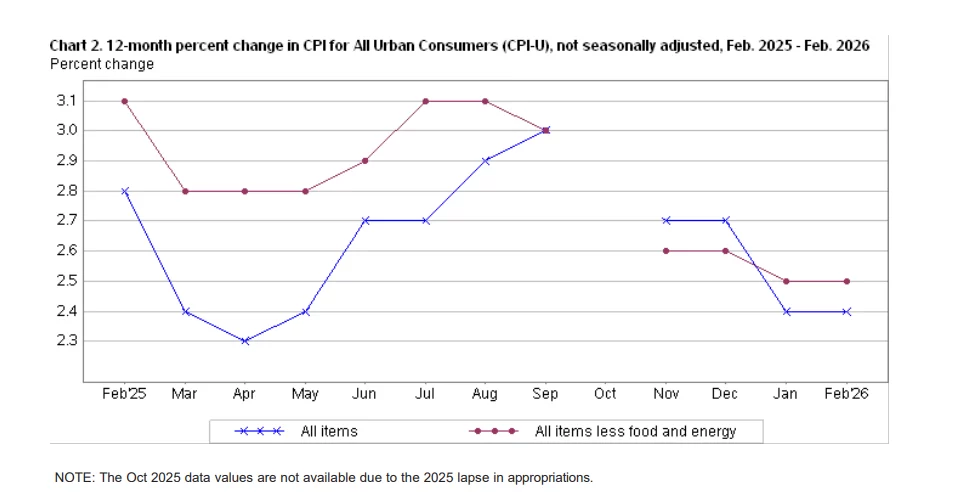
US Inflation Data
The Federal Reserve has been clear about its policy: it will need convincing evidence of easing inflation before it considers lowering interest rates. The latest data, while reassuring in its consistency, falls short of signaling an imminent policy shift. Geopolitical instability, particularly in energy-producing regions, risks pushing prices higher, making it ever more challenging for inflation to align with official targets.
Recent developments in energy markets, driven by supply concerns and uncertainty in the Middle East, further complicate the inflation outlook. With the price of oil edging higher, both consumers and policymakers are bracing for the likelihood that inflationary pressures could persist into the coming months.
Financial markets, including equities and cryptocurrencies, have shown restraint in response to today’s report. Expectation management appears to be at play, as traders and analysts alike prepare for a potentially more turbulent period in the months ahead. The anticipated impact of higher energy costs on inflation figures is already being priced into market forecasts.
Meanwhile, cryptocurrencies have exhibited high sensitivity to macroeconomic indicators. Despite hopes that cooling inflation might spur rallies in digital assets like Bitcoin, today’s numbers provided little cause for celebration. Uncertainty surrounding future reports continues to temper enthusiasm within the crypto space.
While the US inflation reading met expectations this month, it does not yet bring sufficient relief to trigger a significant upward move in cryptocurrency markets, according to financial observers tracking the sector.
Looking ahead, the market’s attention will undoubtedly shift to the next inflation report for March. As analysts weigh the effects of ongoing geopolitical tensions and volatile commodity prices, upcoming data releases are likely to play a pivotal role in shaping both policy decisions and investor sentiment across asset classes.