
Oil is behaving similarly to a meme stock — but here’s why it doesn’t actually qualify as one

Crude Oil's Wild Ride: Lessons Beyond Meme Stock Mania
Recently, crude oil experienced a dramatic surge reminiscent of the meme-stock frenzy. In less than a week, prices soared by nearly 80%, briefly reaching close to $120 per barrel before plunging back to the mid-$70s as traders reacted to shifting news from the Middle East.
For those who remember the speculative trading of 2021, these swings may seem familiar. However, oil operates under a different set of rules compared to stocks driven by social media hype—treating it as just another momentum play can lead to costly errors.
Oil: A Market Driven by Fundamentals
Unlike meme stocks, oil is a classic commodity with cyclical patterns. While speculation can influence short-term moves, the price of crude is ultimately determined by tangible factors such as supply and demand, inventory levels, transportation logistics, geopolitical events, and refining capabilities. When prices climb, producers may increase output, consumers might reduce usage, and stockpiles can grow—helping the market self-correct.
This is a stark contrast to meme stocks, where excitement and trading volume can push prices far from their underlying value for extended periods.
Historical Perspective: Oil's Cycles
Looking at long-term trends, oil prices have seen sharp peaks, but the overall movement is cyclical. There were major surges in 2008 before the financial crisis and again in 2022 following Russia’s invasion of Ukraine. The most recent spike, triggered by conflict, is notable but still smaller than past rallies. While another run toward the 2008 highs near $150 is possible, oil prices typically oscillate rather than climb indefinitely.
Further reading: How oil price shocks ripple through your wallet, from gas to groceries
Trading Oil: Not for the Long Haul
Legendary macro investor Paul Tudor Jones made his mark by capitalizing on major trends and momentum in futures markets, including commodities like oil. However, even top traders don’t view oil as a buy-and-hold asset—they follow trends when they emerge and exit when momentum fades.
This approach reflects another truth about oil: price spikes driven by geopolitical events often reverse more quickly than anticipated. When a crisis threatens supply, markets react instantly, but as the situation clarifies, prices may fall back just as fast if the disruption is less severe than feared.

Oil prices jumped nearly 80% in six days after US-Israeli strikes on Iran, briefly reaching $120 per barrel before dropping back to the mid-$70s. (AP Photo/Nic Coury) · ASSOCIATED PRESS
Investing in Oil: Understanding the Details
For those looking to gain exposure to oil, there are important nuances to consider. Many retail investors turn to ETFs like the United States Oil Fund, which aims to mirror crude oil prices. However, USO doesn’t hold physical oil—it invests in futures contracts that must be regularly rolled over as they expire.
The Impact of Rolling Futures
This rolling process can either benefit or hurt returns, depending on market conditions. In a scenario called contango, future contracts are priced higher than the current spot price, which can erode gains when funds roll their positions. Conversely, in backwardation, rolling can enhance returns—a pattern seen after the pandemic.
This is why ETF performance and crude oil prices don’t always move in lockstep.
Key Takeaway
Before investing in oil, it’s crucial to understand both the mechanics of the market and the specific investment vehicle you choose.
Disclaimer: The content of this article solely reflects the author's opinion and does not represent the platform in any capacity. This article is not intended to serve as a reference for making investment decisions.
You may also like
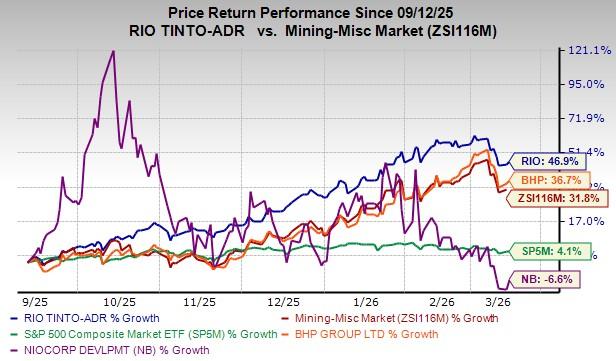
Should You Consider Investing in Rio Tinto Shares Following a 64.9% Surge Over the Past Six Months?
Chubb to serve as lead US insurer for Gulf shipping amid Iran war
US February budget deficit flat at $308 billion as tariff revenues not yet hit by court ruling
5 Best Crypto Presale Projects to Buy Before April’s Market Turn: #1 Leads the Market With 190% Rally Ahead of March Launch

Trending news
MoreCrypto prices
More





