
4 HMO Shares Worth Watching Amid Rising Expenses and Ongoing Nurse Shortages

U.S. Health Insurers: Trends, Challenges, and Key Stocks to Watch
The American health insurance sector, known as Health Maintenance Organizations (HMOs), is actively embracing new technologies and pursuing mergers and acquisitions to enhance their services, enter untapped markets, and grow their membership. With the Federal Reserve expected to cut interest rates three times in 2025 and borrowing costs likely to stay low, insurers may find it easier to fund acquisitions, potentially accelerating industry consolidation. However, evolving regulations could restrict Medicaid eligibility and decrease Affordable Care Act (ACA) enrollments, which may impact both membership numbers and reimbursement rates.
Rising Medical Costs and Industry Pressures
Healthcare spending continues to climb as patients return for postponed treatments, chronic disease management intensifies, and specialty drug prices—such as those for biologics and cancer medications—soar. These increasing expenses are affecting not only HMOs but also other companies in the broader medical sector, including Universal Health Services, Inc. Despite these obstacles, leading HMO firms like UnitedHealth Group, The Cigna Group, Humana, and Centene are strategically positioned to navigate these challenges.
Understanding the HMO Industry
The HMO industry is made up of both public and private organizations that provide essential and supplemental healthcare services to their members. These companies primarily manage risk and set premiums for health and medical insurance plans. They also offer administrative and managed-care services for self-insured plans. Care is typically delivered through a network of approved providers—such as primary care doctors, hospitals, and specialists—though out-of-network care is available in emergencies or when necessary. Health insurance coverage can be obtained privately, through social insurance, or via government welfare programs.
Key Trends Shaping the HMO Sector
- Mounting Healthcare Expenses: U.S. health insurers are facing higher costs due to the resumption of delayed medical procedures, increased demand for routine screenings, and the ongoing management of chronic illnesses. The use of costly prescription drugs and an aging population are also driving up expenses. The growing prevalence of chronic conditions like diabetes, obesity, and heart disease adds to long-term costs, putting pressure on the Health Benefit Ratio and squeezing profit margins.
- Regulatory Challenges: Insurers are operating in an environment of regulatory uncertainty. Legislative proposals such as the One Big Beautiful Bill Act could introduce stricter Medicaid work requirements, tighter eligibility checks, and reduced federal funding for certain programs. These changes may lead to lower enrollment and reimbursement rates, especially for Medicaid and Medicare plans, prompting insurers to focus more on higher-margin commercial products. However, anticipated increases in Medicare Advantage rates in 2026 may provide some relief.
- Shortage of Healthcare Professionals: A nationwide lack of nurses and other healthcare workers is straining hospital operations, especially as patient numbers rise. Factors such as an aging nursing workforce, burnout, and uneven staffing across regions contribute to this shortage. HMOs rely on strong partnerships with hospitals and providers to deliver quality, cost-effective care, but workforce shortages can threaten service quality and member retention.
- Focus on Mergers and Acquisitions: In addition to adopting new technologies, HMOs are actively pursuing mergers and acquisitions to expand their capabilities, enter new markets, and strengthen their national presence. These strategies help diversify their offerings and maintain a competitive edge. With interest rates expected to fall, financing for M&A activity should become more accessible, likely fueling further consolidation in the industry.
Industry Outlook and Performance
According to Zacks Industry Rank, which averages the Zacks Rank of all companies in the group, the Medical-HMO sector currently sits in the bottom 8% of all Zacks industries, ranking at #224 out of 243. Historically, the top half of Zacks-ranked industries outperforms the bottom half by more than two to one. The current low ranking reflects a generally negative earnings outlook for the sector as a whole.
Despite these headwinds, there are select stocks within the industry that show promise for long-term growth. Before highlighting these companies, it's important to review recent market performance and valuation metrics.
Industry Performance vs. S&P 500 and Medical Sector
Over the past year, the Zacks Medical-HMO industry has fallen by 35.6%, while the S&P 500 has gained 24.4%. The broader medical sector saw a modest increase of 1.6% during the same period.
One-Year Price Performance

Source: Zacks Investment Research
Valuation Snapshot
The industry currently trades at a forward 12-month price-to-earnings (P/E) ratio of 13.71, compared to 22.01 for the S&P 500 and 20.66 for the broader medical sector. Over the past five years, the industry's P/E ratio has ranged from a low of 11.58 to a high of 19.57, with a median of 16.19.
Forward 12-Month P/E Ratio
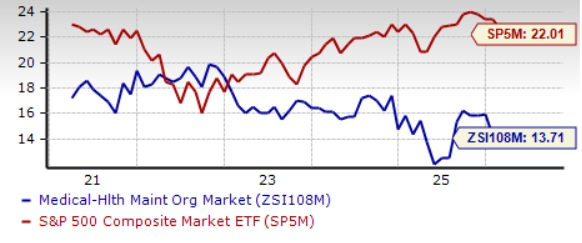

Source: Zacks Investment Research
Four HMO Stocks Worth Watching
Here are four HMO stocks currently rated as "Hold" by Zacks (Rank #3). Given the current industry landscape, these companies are well-positioned for potential long-term growth and may be worth keeping in your portfolio.
UnitedHealth Group (UNH)
Based in Minnesota, UnitedHealth Group's revenue growth is fueled by strong results from its UnitedHealthcare and Optum divisions. UnitedHealthcare benefits from expanded Medicare and Medicaid offerings, which attract new members and boost premium income. Optum's growth is driven by strategic acquisitions and advanced, data-driven healthcare solutions.
The consensus estimate for UnitedHealth Group's 2026 earnings stands at $17.70 per share, representing an 8.3% increase over the previous year. The company has exceeded earnings expectations in two of the last four quarters, with an average negative surprise of 2.38%.
Price & Consensus: UNH

Source: Zacks Investment Research
Cigna (CI)
Headquartered in Connecticut, Cigna's growth is anchored by its Evernorth and Cigna Healthcare platforms. Evernorth excels in specialty pharmacy solutions, while Cigna Healthcare serves a broad customer base through its government and commercial divisions. The company continues to expand through strategic acquisitions and partnerships.
The 2026 earnings estimate for Cigna is $30.29 per share, a 1.5% increase from the prior year. Cigna has beaten earnings estimates in each of the last four quarters, with an average surprise of 2.67%.
Price & Consensus: CI

Source: Zacks Investment Research
Humana (HUM)
Kentucky-based Humana has achieved steady growth through increased premium revenues and a robust membership base in its Medicare and Medicaid segments. The company's CenterWell brand focuses on meeting the healthcare needs of older adults, and recent acquisitions—including Family Physicians Group, iCare, and Inclusa—have further strengthened its position.
The consensus estimate for Humana's 2026 earnings is $9.82 per share, with projected 2026 revenues up 22.8% from 2025. Humana has surpassed earnings estimates in three of the last four quarters, with an average surprise of 6.96%.
Price & Consensus: HUM

Source: Zacks Investment Research
Centene (CNC)
Centene, based in Missouri, has seen revenue growth driven by strong Medicare and Medicaid performance, resulting in more contracts and a growing membership. The company's focus on Medicare Advantage plans for the aging U.S. population continues to drive demand. Centene also pursues growth through acquisitions and partnerships to diversify its services and expand nationwide.
The 2026 earnings estimate for Centene is $3.01 per share, a 44.7% increase from the previous year. The company has exceeded earnings expectations in three of the last four quarters, with an average surprise of 60.56%.
Price & Consensus: CNC

Source: Zacks Investment Research
Quantum Computing: The Next Big Investment Opportunity
Quantum computing is emerging as a transformative technology, potentially outpacing even artificial intelligence in its impact. Major tech companies like Microsoft, Google, Amazon, Oracle, Meta, and Tesla are racing to integrate quantum computing into their operations.
Senior Stock Strategist Kevin Cook has identified seven stocks poised to lead in the quantum computing revolution in his report, Beyond AI: The Quantum Leap in Computing Power. Cook, who recognized NVIDIA's potential early on, now highlights quantum computing as the next major investment frontier. Investors have a unique opportunity to position themselves ahead of this trend.
Additional Resources
Disclaimer: The content of this article solely reflects the author's opinion and does not represent the platform in any capacity. This article is not intended to serve as a reference for making investment decisions.
You may also like
Compelling Arguments for Including AngioDynamics Shares in Your Investment Portfolio at This Time
Will Signet (SIG) Surpass Expectations in Its Upcoming Earnings Announcement?
Hollywood star-turned-skeptic releases trailer for anti-crypto doc
McDonald's to launch $3 value meals in US starting April, WSJ reports
Trending news
MoreCrypto prices
More





