
The Trump administration explores alternative methods to implement tariffs

US Launches Broad Trade Investigations Covering 60 Nations
The US government has announced two major trade investigations that span 60 countries, potentially leading to new tariffs or other measures if unfair trade practices are found.
These formal inquiries, conducted by federal agencies, are being carried out under Section 301 of the Trade Act of 1974. This provision empowers the president to impose tariffs on countries that engage in discriminatory practices against American businesses or trade. The Office of the US Trade Representative (USTR) is leading the probes, which focus on whether foreign nations are producing more than necessary in certain manufacturing sectors and whether they, like the US, prohibit imports of goods made with forced labor.
US Trade Representative Jamieson Greer commented, "We anticipate that this investigation will reveal a range of unfair trade behaviors related to excessive manufacturing capacity and output. These issues have been on our radar for quite some time."
The announcement follows a Supreme Court decision that blocked President Trump's use of emergency economic authority to impose tariffs. Despite this, the president has enacted a 10% global tariff—set to rise to 15%—under Section 122, which will remain in effect for 150 days. Greer aims to complete the new investigations before these tariffs expire, though the president retains the ability to renew them.
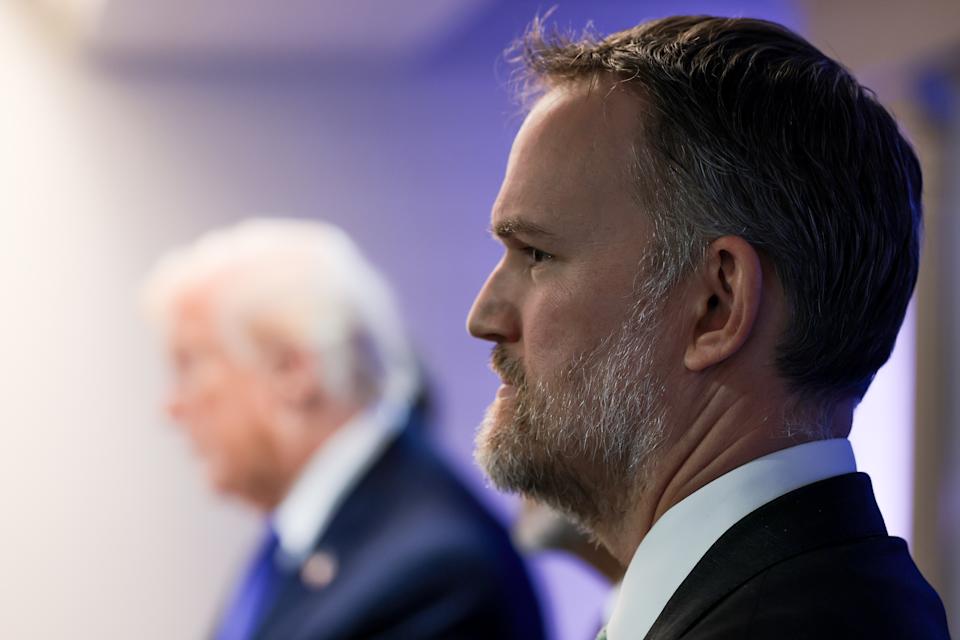
US Trade Representative Jamieson Greer listens as President Trump addresses the press at the White House on February 20, 2026, following the Supreme Court's ruling on emergency tariff powers. (Anna Moneymaker/Getty Images)
Focus of the Investigations
Excess production capacity can manifest as ongoing trade surpluses, idle manufacturing resources, overproduction, or a surplus in trade specifically with the US.
According to Greer, several factors contribute to excess capacity in some countries, such as government policies that encourage production regardless of actual demand, financial subsidies, artificially low wages, subsidized loans, and barriers that restrict market access.
- Countries under review include: China, the European Union, Singapore, Switzerland, Norway, Indonesia, Malaysia, Cambodia, Thailand, South Korea, Vietnam, Taiwan, Bangladesh, Mexico, Japan, and India.
Greer stated, "We believe that many of our major trading partners have built up manufacturing capacity that is disconnected from both domestic and global market demand."
While Greer declined to predict the outcome, he referenced the previous Section 301 investigation into China during Trump's first term, which resulted not only in tariffs but also in enhanced export controls by the Commerce Department and increased scrutiny of foreign investments by the Treasury to safeguard national security.
Second Investigation: Forced Labor Imports
The second Section 301 investigation, which focuses on banning imports produced with forced labor, is expected to be announced on Thursday and will cover approximately 60 countries.
Roughly a decade ago, Congress strengthened relevant laws, and enforcement has intensified over the past several years, regardless of the administration in power.
Greer clarified, "This isn't about the internal conditions of any specific country. The focus is on whether nations have enacted laws to prevent the import of goods made with forced labor."
The investigation into excess production capacity is expected to be submitted for public hearings later this month. The deadline for public comments is April 15, with hearings scheduled for May 5. By late May or early June, the USTR is expected to present its findings and may recommend actions such as tariffs or other trade remedies.
Greer added, "We see these as two widespread challenges affecting the global economy. Addressing them is a crucial step toward tackling unfair trade practices and the broader issues in the international trading system."
These new investigations are separate from trade agreements negotiated last year, which remain in effect. Greer noted that all countries involved have expressed a commitment to upholding those agreements.
Additional Section 301 investigations are anticipated in the near future.
About the Author
Jennifer Schonberger is an experienced financial journalist reporting on markets, the economy, and investment trends. At Yahoo Finance, she covers the Federal Reserve, Congress, the White House, the Treasury, the SEC, economic developments, cryptocurrencies, and the intersection of government policy and finance.
Disclaimer: The content of this article solely reflects the author's opinion and does not represent the platform in any capacity. This article is not intended to serve as a reference for making investment decisions.
You may also like
First Majestic Silver Plummets 3.78% Despite Analyst Upgrades and Strong Earnings as $450M Volume Ranks 256th
Parker-Hannifin Stock Drops to 231st in Trading Volume Amid Robust Profits and Varied Institutional Actions
Trending news
MoreCrypto prices
More





