
The Gap experienced a 1.77% unexplained surge, reaching $260 million in trading volume and placing 459th on March 11

Overview of Market Activity
On March 11, 2026, Gap (GAP+1.77%) experienced a 1.77% uptick in its share price, with trading volume reaching $260 million. This placed the stock at 459th in daily trading activity. Although the price increase hints at some investor confidence, the comparatively low volume suggests that few traders were actively involved. This outcome diverges from Gap’s usual pattern, where notable news or earnings announcements typically drive both volatility and volume. Analysts might view the modest rise as a technical adjustment or a response to broader retail sector movements, especially since no direct company news was reported.
Main Influencing Factors
With no fresh news or corporate updates linked to Gap’s business on March 11, the reasons behind the stock’s 1.77% gain remain unclear. The lack of earnings reports, management changes, or strategic announcements points to external influences, such as overall retail sector momentum or shifts in investor sentiment toward cyclical stocks. It’s possible that the price movement was shaped by algorithmic trading or institutional portfolio adjustments, particularly given the subdued trading volume.
The $260 million in trading volume, ranking 459th for the day, suggests that neither retail nor institutional investors drove the price change through heavy buying. Under normal circumstances, such volume would be associated with minimal price fluctuations, making the 1.77% increase somewhat unusual. This may indicate that traders lacked strong conviction, and the movement could be attributed to automated trading systems or liquidity providers rather than fundamental shifts. The data also reflects Gap’s status as a mid-sized retail company with few immediate catalysts, as evidenced by the absence of news coverage.
Gap’s limited presence in market headlines further highlights its current low profile. With no recent product launches, store openings or closures, or major partnerships, the stock’s performance appears disconnected from typical retail industry drivers. This could signal a phase of stability or waiting for clearer strategic direction, as investors monitor the company’s long-term plans. The recent price action mirrors a broader retail trend, where companies without imminent earnings or transformative events often see muted or erratic trading. The 1.77% rise may therefore be a slight overreaction to positive macroeconomic signals, rather than a reflection of Gap’s underlying fundamentals.
To fully understand Gap’s stock movement, it’s important to consider the wider retail sector’s performance on the same day. While no company-specific developments were reported, factors such as improved consumer spending forecasts or lower oil prices may have indirectly affected the stock. Technical trading triggers, like breaking a resistance level or chart reversal patterns, could also have played a role in amplifying the upward move. However, without supporting news or data, these explanations remain speculative. Gap’s trading results illustrate the difficulty of pinpointing stock drivers in the absence of news, as broader economic and technical factors often shape short-term price changes.
Disclaimer: The content of this article solely reflects the author's opinion and does not represent the platform in any capacity. This article is not intended to serve as a reference for making investment decisions.
You may also like
On-Chain Bitcoin Data Reveals Signs Of Fatigue In Prolonged Sideways Phase
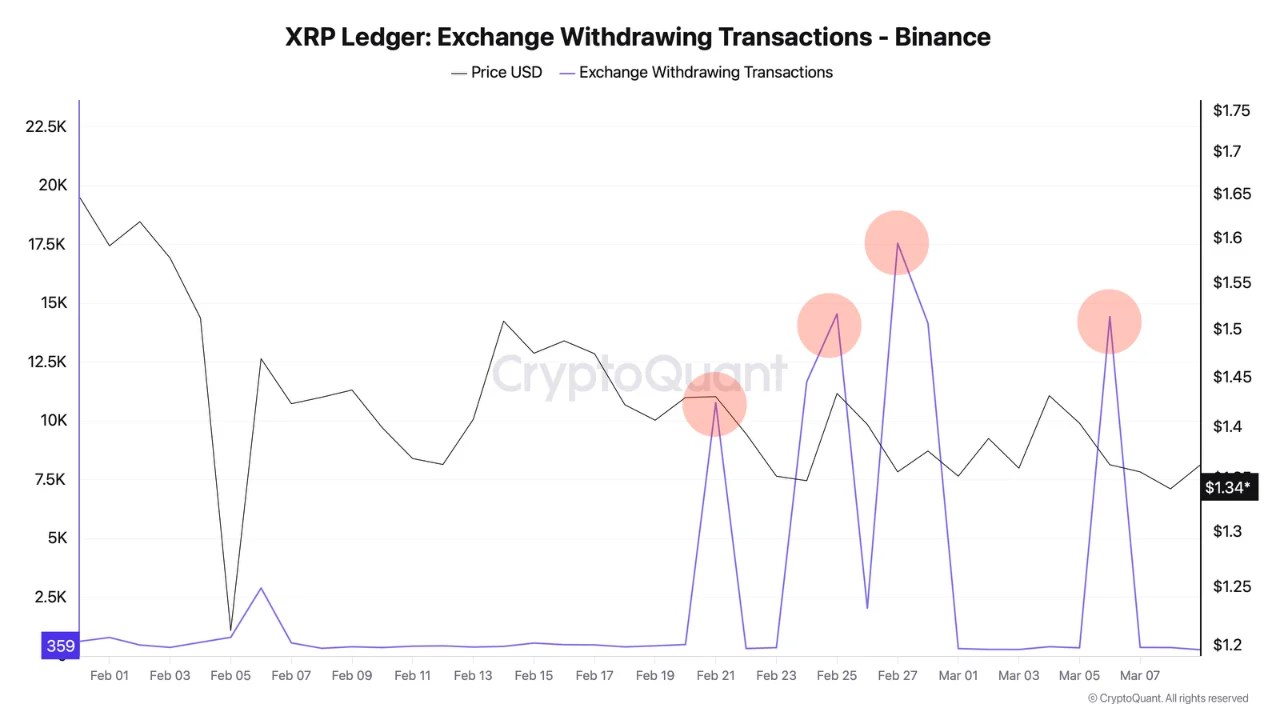
XRP Withdrawal Surge Meets $1.4B ETF Inflows as Capital Returns to Select Altcoins
Russia Becomes The Primary Beneficiary In The Middle East Conflict
HIMS 1W: Subscription growth meets corrective math
Trending news
MoreCrypto prices
More





