
HSA's ML4 Classification Positions Singapore as the Leading Hub for Medtech Innovation—Regulatory Framework Now Accelerates Market Entry and Early-Mover Benefits

Singapore Sets New Global Benchmark in Medical Device Regulation
Singapore’s Health Sciences Authority (HSA) has established a new global standard by attaining the World Health Organization’s highest level of maturity for medical device regulation. This accomplishment not only marks a significant endorsement of HSA’s capabilities but also positions Singapore as a pioneering reference point for the evolving landscape of biomedical innovation. Rather than being a mere accolade, this move is a calculated step to serve as the foundational infrastructure for future advancements in the sector.
Reaching this milestone is a major achievement. HSA has secured Maturity Level 4 (ML4), the top tier in the WHO’s regulatory framework, after a comprehensive evaluation. This status affirms that Singapore’s regulatory system operates at a sophisticated level, ensuring medical devices meet stringent safety and quality standards throughout their lifecycle. As highlighted by Minister for Health Ong Ye Kung at the International Medical Device Regulators Forum, this recognition underscores HSA’s expertise and sets it as a trusted authority for regulators worldwide.
The real impact of this achievement lies in HSA’s new role as a global reference. Countries such as Australia, the UK, Malaysia, and Switzerland can now leverage HSA’s approvals to streamline their own regulatory pathways. This effectively transforms Singapore’s relatively small domestic market into a launchpad for reaching vast international patient populations. For innovators, a single high-standard approval from HSA can open doors to multiple markets, significantly speeding up product launches and lowering the costs of global expansion—a classic example of first-mover advantage in the infrastructure underpinning a new technological wave.
This leap forward is backed by substantial, forward-thinking investment. The government’s commitment of S$37 billion (about US$29.3 billion) over five years through the RIE 2030 plan lays a robust technological foundation. This funding is not just for incremental progress but is a strategic wager on transformative technologies like quantum computing and artificial intelligence. Hosting Quantinuum’s Helios quantum computer is a direct result of this vision, aiming to establish Singapore as a leader in areas such as drug discovery. This financial and technological infrastructure ensures that Singapore’s regulatory prowess is matched by the scientific and computational resources needed to drive the next wave of biomedical breakthroughs.
In summary, HSA’s attainment of ML4 status is a pivotal development. It provides a reliable, standardized framework that enables Singapore’s deep investments in technology to be translated into globally impactful health solutions. As Singapore lays the groundwork for the next era in biomedical innovation, its regulatory system is setting the pace for the world.
Sector Momentum: Adoption, Output, and Economic Impact
While the infrastructure is firmly in place, the question remains: is the sector embracing it at scale? Recent figures reveal a dynamic, though sometimes unpredictable, resurgence. After a sharp 22.4% decline in biomedical output between January and August 2024, the industry rebounded with a remarkable 62% year-on-year increase in September. This volatility, driven by the batch-oriented nature of biopharmaceutical manufacturing, highlights the sector’s ability to scale rapidly in response to global demand, but also underscores the cyclical nature of its production cycles.
Absolute Momentum (Long-only) Strategy: SPY Backtest Summary
- Entry Criteria: Enter when the 252-day rate of change is positive and the price closes above the 200-day simple moving average (SMA).
- Exit Criteria: Exit when the price closes below the 200-day SMA, after 20 trading days, or upon reaching a take-profit of +8% or a stop-loss of −4%.
- Backtest Highlights:
- Strategy Return: 8.86%
- Annualized Return: 4.52%
- Maximum Drawdown: 5.29%
- Profit-Loss Ratio: 1.34
- Total Trades: 12 (7 wins, 5 losses)
- Win Rate: 58.33%
- Average Hold: 16.08 days
- Max Consecutive Losses: 2
- Average Win: 2.59%
- Average Loss: 1.84%
- Largest Gain: 3.91%
- Largest Loss: 4.46%
The sector’s economic significance is substantial. In 2023 alone, the biopharmaceutical industry generated over S$19 billion in exports and provided employment for more than 9,000 people. With seven of the world’s top ten biopharmaceutical companies operating in Singapore, the country has cultivated a thriving ecosystem that attracts suppliers, skilled professionals, and additional investment. The government’s Manufacturing 2030 initiative aims to boost the sector’s value-add by 50% from 2020 levels—a goal that appears achievable given the current scale and recent influx of investments.
However, a key challenge remains: converting this robust infrastructure and manufacturing strength into globally recognized innovation. Despite decades of development, the sector has yet to fully realize its ambition of becoming a cornerstone of Singapore’s economy. As some analysts point out, few homegrown biomedical innovations have reached commercial success. The cancer drug Vonjo stands out as a rare example, but its limited market presence highlights the need for more breakthrough products. Without a strong innovation pipeline, the sector risks being confined to contract manufacturing rather than driving global impact.
In essence, the sector stands at a pivotal juncture. With world-class regulation, significant funding, and a dense network of industry leaders, the foundation is solid. Output is rising and job creation is on the horizon, but the commercialization of innovation remains the next critical step. To unlock exponential growth, Singapore must now focus on accelerating the journey from research to market, filling its infrastructure with transformative biomedical products.
Three Strategic Pillars: Integration, Global Reference, and Future-Readiness
Minister Ong Ye Kung’s three-pronged approach is now bringing Singapore’s biomedical infrastructure to life, creating a unified value proposition that connects research, manufacturing, and regulation. The first pillar emphasizes integration. HSA is working closely with A*STAR, the Economic Development Board (EDB), and EnterpriseSG to present a comprehensive offering to the biomedical industry. This coordinated effort aims to anchor translational research, attract manufacturing investment, and maintain a robust yet efficient regulatory environment. The objective is to transform Singapore’s collection of world-class assets into a seamless, end-to-end innovation ecosystem, directly supporting the Manufacturing 2030 vision.
The second pillar builds on HSA’s new status as a global reference authority, validated by its WHO Maturity Level 4 recognition. This enables other regulators to confidently rely on HSA’s decisions, fundamentally changing the dynamics of market access. Countries like Australia and the UK can now use Singapore as a gateway to expedite their own regulatory processes, turning the regulatory function into a strategic economic driver and accelerating the adoption of new products.
The third pillar focuses on staying ahead of technological change. HSA is updating its regulatory framework to accommodate emerging technologies, including new AI healthcare guidelines and the acceptance of AI-developed drug applications. The agency applies rigorous, technology-neutral standards to these innovations and uses regulatory sandboxes to test AI solutions in real-world healthcare environments. This proactive approach ensures Singapore is not just keeping pace with the future but actively shaping it, paving the way for AI-driven drug discovery and next-generation diagnostics.
Together, these three pillars are creating a dynamic system: integrated industry support attracts more investment and talent, global reference status eases market entry, and forward-looking regulation accelerates the development of breakthrough products. This is the realization of Singapore’s infrastructure vision, turning strategy into a self-sustaining engine for growth.
Key Drivers, Challenges, and Future Outlook
Singapore’s future success now depends on effective execution. With the infrastructure and value proposition in place, the next major milestone is the full rollout of the RIE 2030 plan. The unprecedented S$37 billion investment over five years is expected to fuel exponential growth, but its impact will be measured by concrete achievements. The imminent deployment of Singapore’s first international quantum computer, Quantinuum’s Helios system, by late 2026 will provide local access to advanced quantum computing, targeting breakthroughs in drug discovery and materials science. This is a tangible, near-term event that will test Singapore’s ability to turn investment into operational results.
To gauge progress, two indicators are crucial. First, monitor how often international regulators reference HSA approvals. As more countries use Singapore’s regulatory decisions to speed up their own processes, Singapore’s influence could extend from its 6-million population to hundreds of millions globally. A rising number of such references will signal that the global reference authority model is working. Second, track new investments in advanced manufacturing. While contract manufacturing has been a historical strength, the next leap requires expanding capabilities for cutting-edge therapies and diagnostics. Announcements of new advanced manufacturing facilities will indicate that Singapore’s integrated value proposition is attracting the necessary capital to drive innovation.
Nonetheless, a persistent challenge remains: translating research and development into globally successful commercial products. Despite years of nurturing, few local biomedical innovations have reached the market. The example of Vonjo, a cancer drug with limited brand recognition, illustrates this bottleneck. The RIE 2030 plan and the quantum computing initiative aim to address this, but the real test will be the emergence of new drug candidates—especially those leveraging AI and quantum technologies—and their progress through regulatory milestones.
In conclusion, Singapore’s biomedical sector is poised at a critical inflection point. The infrastructure is robust, and the catalysts for growth are in motion, but the ultimate measure of success will be the sector’s ability to bring innovative products to the global market. For stakeholders and investors, the focus should be on tracking adoption rates, quantum technology deployment, and the development of a vibrant innovation pipeline. The groundwork is laid; the next chapter will be defined by the breakthroughs that emerge from this foundation.
Disclaimer: The content of this article solely reflects the author's opinion and does not represent the platform in any capacity. This article is not intended to serve as a reference for making investment decisions.
You may also like
Brent crude oil jumps above $100 a barrel as Iran's attacks on shipping worsen supply concerns
Security Flaw in Android WebView Lets Malware Steal Crypto Wallet Seeds in Seconds
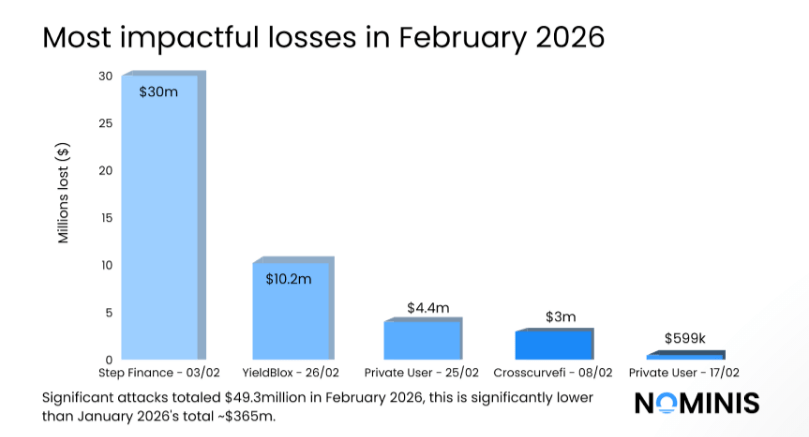
Crypto Thieves Pivot To Phishing As Hacks Decline In February
Samsung Display CEO warns of higher costs due to Middle East conflict, media say
Trending news
MoreCrypto prices
More





