
Oil Surges to $100: Examining Market Reactions and Supply Interruptions Through Flow Analysis

Oil Prices Surge Following Attacks on Tankers and Terminals
Recent confirmed assaults have led to a sharp increase in oil prices. Earlier this week, two oil tankers were set ablaze off the coast of Iraq, resulting in the suspension of all oil terminal activities by Iraqi officials. These vessels, which were transporting Iraqi oil, were attacked in a ship-to-ship transfer zone. Notably, one of the ships was registered under the Marshall Islands and owned by a U.S.-based company. The incident, which resulted in at least one fatality, is suspected to have Iranian involvement.
The impact of these disruptions is not limited to Iraq. In Oman, operations at the Port of Salalah have also been halted after drone strikes damaged fuel storage tanks. Although other ports in Oman remain operational, this incident adds further strain to the region’s supply network. The ongoing danger to the Strait of Hormuz—a vital passageway for about one-fifth of the world’s oil shipments—continues to elevate risk in the market, keeping prices high even as some terminals resume activity.
Whether these elevated prices persist depends entirely on how long these closures last. For now, the combination of confirmed attacks and the ongoing threat to a crucial shipping route has caused a significant supply shock, with markets reacting to an immediate drop in available export capacity.
Market Response: Strategic Reserves and Price Movements
In response to the crisis, the market saw a significant countermeasure. Member countries of the International Energy Agency (IEA) jointly agreed to release an unprecedented 400 million barrels of oil from emergency reserves into the global supply. This massive release aims to cushion the blow of the supply disruption and stabilize prices.
Despite this extraordinary intervention, crude oil prices still soared above $100 per barrel. This reaction underscores the market’s belief that the physical loss of supply outweighs the effect of the emergency release. The price movement reflects a genuine and immediate reduction in export capacity, rather than a short-term inventory adjustment.
Markets are also factoring in a substantial risk premium due to ongoing hostilities. According to Goldman Sachs, there is already an $18-per-barrel geopolitical risk premium built into current prices. This premium reflects the persistent threat to the Strait of Hormuz and the increasing frequency of attacks on maritime shipping—risks that cannot be neutralized by reserve releases alone.
Outlook: Geopolitical Uncertainty and Price Drivers
Current price trends are closely tied to how long these physical disruptions last. J.P. Morgan offers a more pessimistic outlook, predicting Brent crude will average around $60 per barrel in 2026 due to expectations of ample supply and a likely surplus. This forecast assumes that supply growth will outstrip demand, pushing prices well below today’s elevated levels.
The most significant factor that could trigger a rapid decline in prices is the reopening of the Strait of Hormuz. The current $18-per-barrel risk premium is not expected to last; it would quickly disappear if the threat to this strategic passage diminishes. While the market is currently bracing for prolonged conflict, any sign of easing tensions would remove the main justification for the price surge.
In the short term, the crucial development to watch is official confirmation regarding how long the Iraqi and Omani terminals will remain closed. The recent price rally reflects investor bets on extended shutdowns. If authorities announce that these closures will persist, it would reinforce the supply shock and keep prices high. On the other hand, any indication of a quick resolution would likely cause prices to drop sharply as the geopolitical risk premium fades.
Disclaimer: The content of this article solely reflects the author's opinion and does not represent the platform in any capacity. This article is not intended to serve as a reference for making investment decisions.
You may also like
2 Undervalued Stocks Poised for a Rebound and 1 We’re Skeptical About
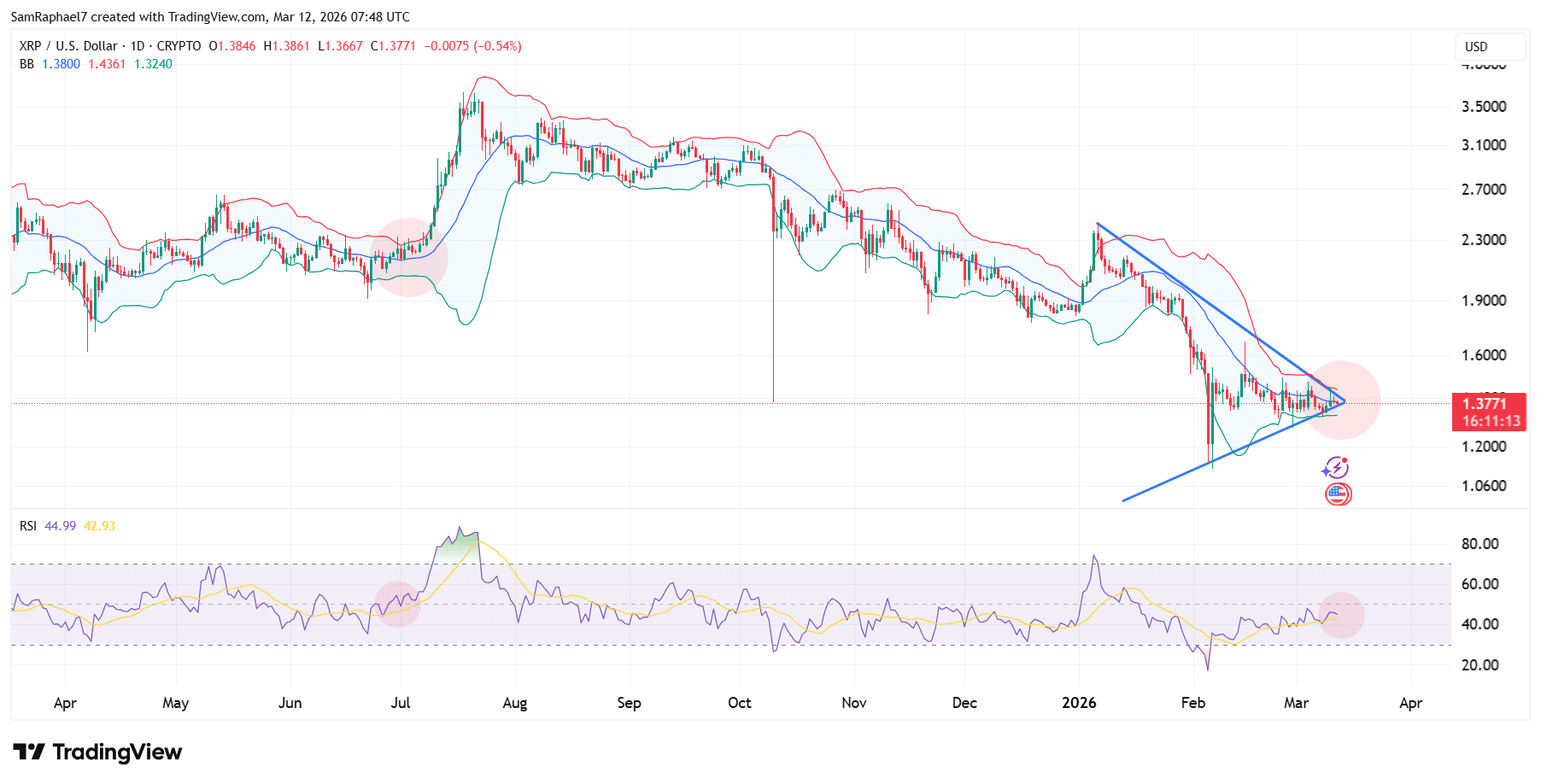
XRP Bollinger Bands Reach Their Tightest Level Since Before the Rally to $3.6 in July
Why Goldman Sachs Owning the XRP ETF Is Not the Bullish Signal Most People Think It Is

Hyperliquid Sets New Records in RWA Trading Volume
Trending news
MoreCrypto prices
More





