
Alibaba's Flow Analysis: $180 Price Goal, $325 Billion Valuation, 15 Million Share Surge

Morgan Stanley Adjusts Alibaba Price Target Amid E-Commerce Challenges
Last week, Morgan Stanley revised its price target for Alibaba BABA-0.41%, lowering it from $200 to $180. This change, announced on January 8, reflects growing concerns about Alibaba's core e-commerce business, which has been impacted by sluggish consumer spending. The 10% reduction signals a shift in the company's short-term valuation and highlights worries about its fundamental operations.
One key indicator of this strain is customer management revenue (CMR) growth. Analyst Gary Yu predicts that CMR will slow dramatically, dropping to 3% year-over-year from 10% in the previous quarter. This sharp decline, which is the main reason for the reduced earnings outlook, points to mounting competition and weaker retail activity putting pressure on Alibaba's main business.
Although the cloud division's AI initiatives offer long-term promise, the lowered price target underscores that Alibaba's recent stock drop is tied to immediate profitability concerns. Morgan Stanley expects consolidated adjusted EBITA to decrease by 45% compared to last year, highlighting how difficulties in the core business are affecting the company's overall financial health.
Volatility and Liquidity: Recent Trading Patterns
Alibaba's shares have been experiencing heightened volatility, with notable trading activity. On Tuesday, the stock climbed 3.2% midday to $136.86, accompanied by a surge in volume to approximately 15.1 million shares—about 20% higher than its typical daily average of 10.2 million shares. Such volume spikes often indicate institutional involvement or shifts in market positioning, contributing to the stock's unpredictable movements.
From a technical perspective, Alibaba remains under downward pressure, trading well below its recent peaks. The stock is down 10.7% since the start of the year and sits 30% above its 52-week low of $95.73. While the average daily trading volume above 10 million shares ensures steady liquidity, recent increases in volume suggest periods of greater uncertainty and the possibility of larger price fluctuations.
Alibaba's valuation has dropped significantly from its previous highs. The company's market capitalization is now $325.5 billion, a notable decline from the 12-month peak of $459.7 billion reached last October. This reduction reflects the market's reassessment of Alibaba's growth prospects, as evidenced by the recent downward revisions in price targets.
Upcoming Earnings and External Risks
The next major event for Alibaba is its earnings report, which could trigger further declines. Analysts expect earnings per share of $1.91, representing a 34.81% drop year-over-year. This steep fall in profitability, despite modest revenue gains, sets a low bar for expectations. If management offers weak guidance, it could confirm institutional investors' concerns, who have already shown significant selling activity ahead of the announcement.
Geopolitical factors continue to pose risks. Alibaba's recent volatility was exacerbated by the US government's decision on February 15, 2026, to add the company to a government watchlist, increasing regulatory scrutiny and uncertainty around its American operations. This, combined with ongoing domestic regulatory challenges, creates a complex environment for the company.
The future direction of Alibaba's stock depends on shifts in institutional trading. Recent volume surges, such as the 20% above-average session with a 3.2% gain, suggest active participation by large investors. The key question is whether this activity will transition from selling to buying. A positive re-rating will require the cloud segment's momentum to offset the slowdown in e-commerce, convincing the market that increased trading volume signals a potential bottom rather than further declines.
Disclaimer: The content of this article solely reflects the author's opinion and does not represent the platform in any capacity. This article is not intended to serve as a reference for making investment decisions.
You may also like
G-III (NASDAQ:GIII) Misses Q4 CY2025 Revenue Estimates, Stock Drops 12.3%
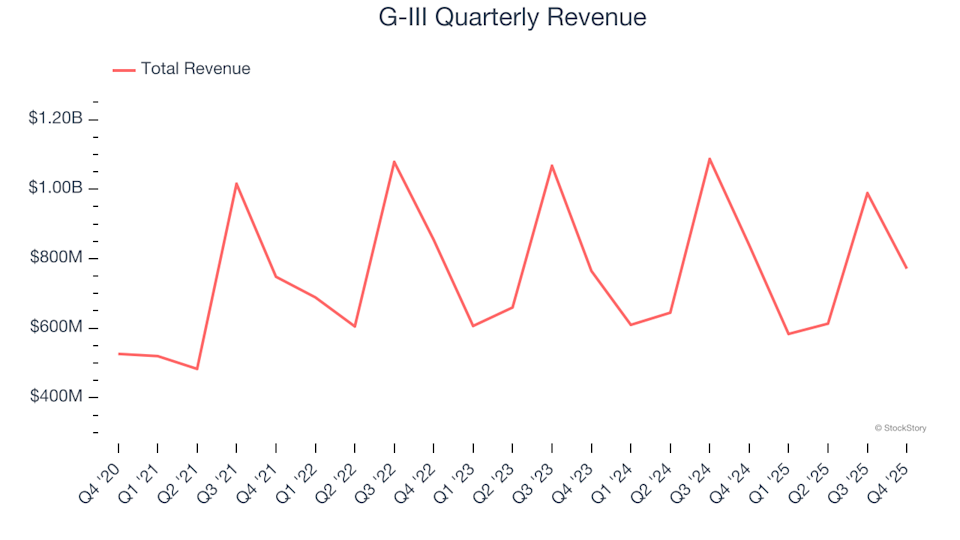
G-III (NASDAQ:GIII) Falls Short of Q4 CY2025 Revenue Expectations, Shares Decline by 12.3%
G-III (NASDAQ:GIII) Falls Short of Q4 CY2025 Revenue Expectations, Shares Decline 12.3%
Chinese fraud victims challenge UK redress plan for 61,000 seized Bitcoin: FT

Trending news
MoreCrypto prices
More





