
Trump Threatens Strong Action Against Iran Next Week—Will the Gold Pulse Trap Come to an End?

Huitong Network, March 13—— On Friday, March 13, U.S. President Trump stated bluntly that he would take tough action against Iran next week and mentioned that, if necessary, he would carry out escort operations in the Strait of Hormuz. This statement directly continues the escalation of the U.S.-Iran conflict since the end of February, keeping crude oil and precious metals markets in a defensive stance, especially as the weekend approaches.
On Friday, March 13, U.S. President Trump stated bluntly that he would take tough action against Iran next week and mentioned that, if necessary, he would carry out escort operations in the Strait of Hormuz. This statement directly continues the escalation of the U.S.-Iran conflict since the end of February, keeping crude oil and precious metals markets in a defensive stance, especially as the weekend approaches.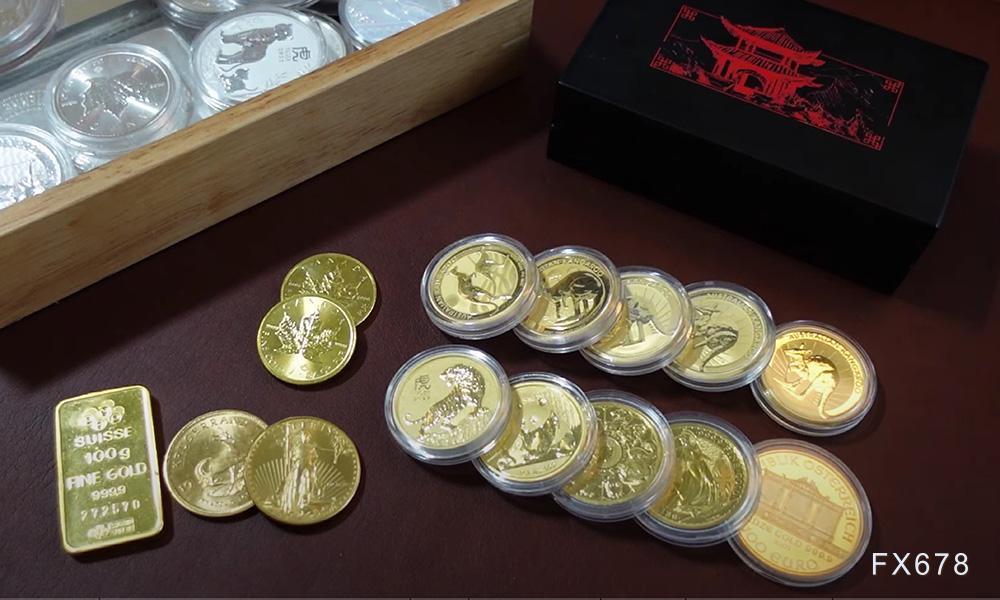
Brent crude oil prices are stable near $100 per barrel, having recently recorded the biggest single-day gain in six years due to the U.S.-Iran conflict; spot gold, after rebounding from a low of $5,054, is currently consolidating in a narrow range near $5,100. On a fundamental level, uncertainty in Middle East supply is pushing up the energy risk premium, lifting inflation expectations. As a traditional safe-haven asset, gold’s performance is being restrained by both a stronger U.S. dollar and rising yields, resulting in pulse-like volatility.
Trump’s Statements Intensify Geopolitical Risk Premium, Market Fully Activates Defense Mode
The core of Trump’s interview is the explicit escalation timeline and the possibility of escort operations, contrasting with the market’s earlier expectation of a “controllable” conflict. The Strait of Hormuz is a chokepoint for about 20% of the world’s oil transportation, and its potential disruption directly amplifies the oil supply gap. Historical data shows that similar geopolitical events often boost oil’s risk premium by 10% to 15% in the first week, which then transmits to global inflation. The current conflict has entered a critical window: if Iran joins forces regionally in retaliation, energy price volatility will intensify further. The gold market’s response is more complex: safe-haven demand drives initial buying, but the dollar index strengthens as risk assets come under pressure, offsetting some support. Overall, the market has entered a “short risk or neutral” defensive range, and capital flows show that institutions prefer locking in current positions rather than aggressive additions.
Crude Oil-Gold Linkage Mechanism: Risk Premium, Inflation Expectations, and Monetary Policy Interactions
The linkage between crude oil and gold is not a simple positive correlation but realized via multilayered transmission. Since the conflict escalated, Brent crude oil has gained more than 45% monthly, directly raising global energy costs and lifting inflation expectations. This forces the Federal Reserve to shift its policy focus from the labor market to price stability, pushing back expectations of rate cuts, while rising U.S. Treasury yields suppress gold’s carrying cost. However, the persistence of geopolitical risk premium provides a floor for gold prices. Analysis suggests that the impact of geopolitical conflict on precious metals is “pulse-like”—i.e., safe-haven trading surges in the early stage of the conflict, with subsequent developments depending on its actual spread.
Spot Gold 30-Minute Technical Features: Range Bound and Neutral Indicator Signals
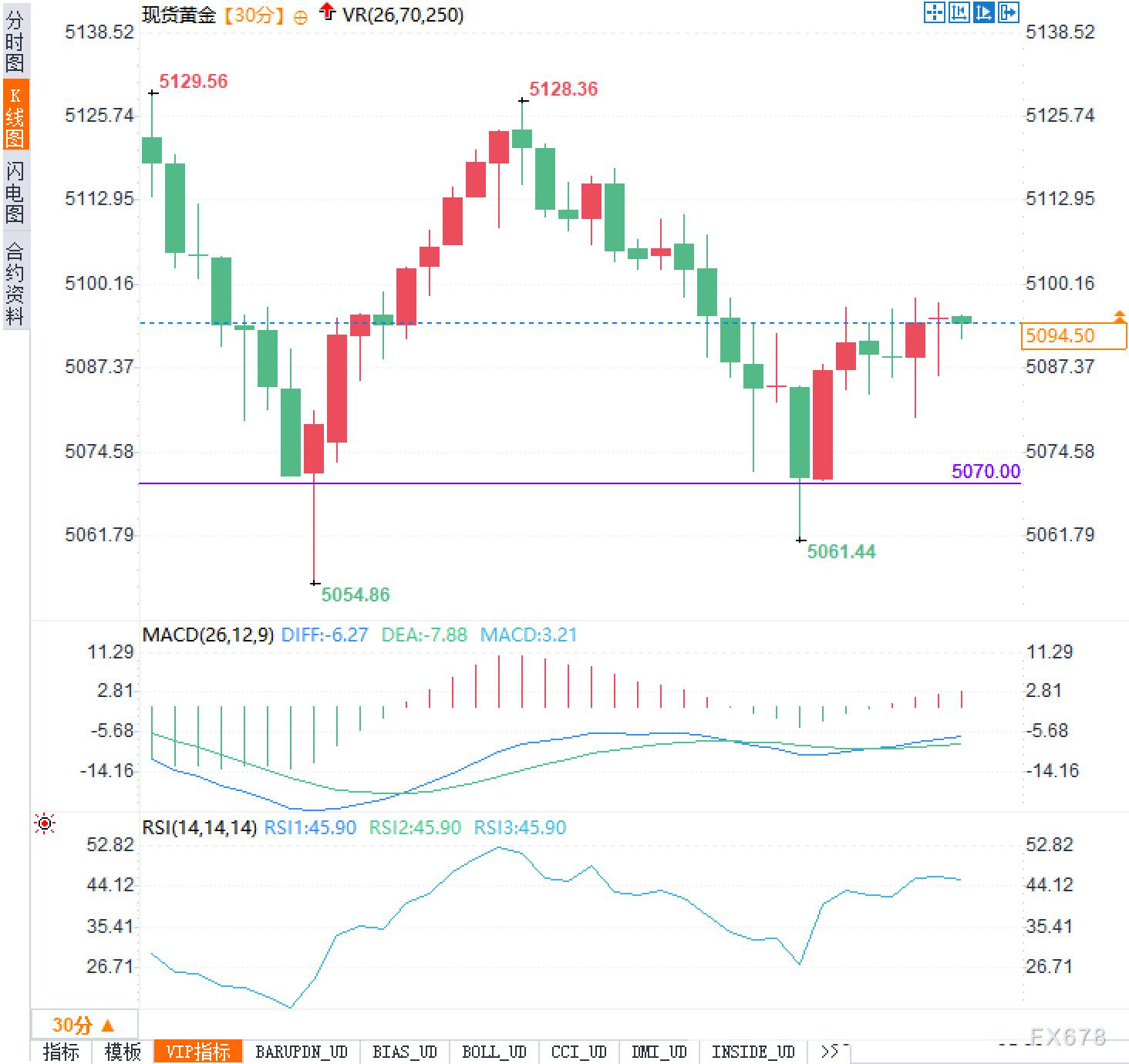
From the 30-minute candlestick chart, spot gold has recently been oscillating between the $5,054.86 low and the $5,129.56 high, forming a box pattern. The MACD indicator shows a DIFF line at -6.27, DEA line at -7.88, and MACD histogram at 3.21, suggesting short-term momentum is balanced. Overall technicals match the pattern of high volatility but low trend in a geopolitically driven market, with capital positioning focused at the top and bottom of the range.
Macro Environment and Risk Outlook
The current macro environment overlaps multiple variables: inflationary pressure caused by high oil prices could prolong the high interest rate environment, weakening gold’s attractiveness; at the same time, uncertainty over regional conflicts preserves room for safe-haven asset premiums. The general market assessment is that, in the short term, without further military escalation or diplomatic breakthroughs, gold prices will remain in a narrow range; in the long term, prices depend on the speed of energy supply recovery and the revival of global risk appetite. Traders should closely monitor developments in the Strait of Hormuz and the latest statements from Federal Reserve officials to assess changes at the margin of the risk premium. In general, a defensive stance remains the dominant logic, and any unexpected event could disrupt the current balance.
Frequently Asked Questions
Question 1: What is the core impact of Trump’s statement regarding strong action against Iran next week on gold and oil markets?
Answer: The core lies in amplifying the risk of supply disruption in the Strait of Hormuz, with the oil risk premium rising more than 10% in the short term, directly pushing up inflation expectations. Gold benefits from safe-haven demand but faces counteracting forces from a stronger dollar and rising yields, leading to pulse-like, not sustained, price rises; overall, the market shifts into defensive mode.
Question 2: Why has the 30-minute spot gold chart formed a range, and what do technical indicators suggest?
Answer: The $5,050–$5,130 range is the result of a post-geopolitical event tug of war between bulls and bears. A narrowing MACD histogram and a neutral RSI reading of 45.90 indicate balanced momentum and no clear direction; this reflects traders waiting for further clarity on the conflict, with the top and bottom of the box as key short-term levels.
Question 3: If the Middle East conflict continues to escalate, how will the linkage between gold and oil evolve?
Answer: Dual drivers of oil and inflation will reinforce gold’s inflation-hedge properties and push its price higher; but if the conflict quickly de-escalates, safe-haven premiums fade and the Federal Reserve’s policy path clarifies, gold is likely to retrace gains, exhibiting the classic “buy the rumor, sell the fact” pattern.
Disclaimer: The content of this article solely reflects the author's opinion and does not represent the platform in any capacity. This article is not intended to serve as a reference for making investment decisions.
You may also like
Saudi Aramco's 4% Jump Signals Energy-Led Outperformance in the Face of Regional Uncertainty
Is SoundHound's Agentic AI Platform Capable of Driving the Next Stage of Expansion?
Is the Options Market Signaling a Surge in Accendra Health Shares?
UK central bank is warming up to stablecoins, but says industry input is lacking
Trending news
MoreCrypto prices
More





