
Oil’s Chokepoint: TotalEnergies Faces the Heart of the Supply Crisis

Oil Crisis in the Middle East: Unprecedented Market Turmoil
Global financial markets are gripped by the escalating conflict in the Middle East, which has triggered the most significant oil supply interruption ever recorded. This development is not only a geopolitical flashpoint but also a powerful force shaping investor sentiment and driving dramatic shifts in capital allocation. The International Energy Agency (IEA) has underscored the severity of the disruption, and markets have responded with soaring oil prices and a widespread retreat from riskier assets.
The magnitude of the crisis is extraordinary. The Strait of Hormuz, a critical passageway for over one-fifth of the world's daily energy shipments, has seen shipping activity dwindle to a near standstill, according to the IEA. Major energy companies, such as TotalEnergies, have been compelled to suspend operations in the area, impacting about 15% of their total production. The immediate financial repercussions are stark: Brent crude has surged past $100 a barrel, while U.S. crude has climbed above $95. Both Brent and West Texas Intermediate futures are on pace for their largest weekly gains since early 2022, with Brent up by more than 10% this week alone.
This spike in oil prices is sending shockwaves across broader markets. On Thursday, equities suffered sharp declines as the energy shock took hold—the S&P 500 dropped over 1.1%, the Nasdaq lost 1.5%, and the Dow Jones Industrial Average fell by 500 points. For the second week in a row, equity funds have experienced substantial outflows, with investors withdrawing $21.92 billion last week—the largest weekly sell-off in two months.
The pattern is unmistakable: as oil prices climb on intense sentiment, investors are scaling back risk, selling stocks to safeguard their portfolios. The oil supply crisis has become the dominant force shaping financial headlines and dictating the movement of capital. When oil becomes the market’s focal point, both attention and money follow suit.
The Ripple Effect: Oil Prices, Inflation, and Market Rotation
The surge in oil prices is no longer just a headline—it’s directly impacting consumers and influencing central bank decisions. As Brent crude broke the $100 mark, gasoline prices quickly followed. Since the conflict began, U.S. crude has soared by over 40%, and average gas prices at the pump have risen nearly 70 cents, reaching $3.59 per gallon. This squeeze on consumer spending is the first domino in a broader inflationary trend.
Rising inflation is now the primary concern in the bond market. Investors are rapidly adjusting their expectations for Federal Reserve policy. After two days of declines, gold prices stabilized as the jump in oil and inflation fears diminished hopes for imminent interest rate cuts from the Fed or other central banks. Current market data shows that traders see almost no possibility of a rate reduction at the upcoming Fed meeting. This shift signals that higher borrowing costs are likely to persist, posing a direct challenge to riskier investments.
These expectations are prompting a dramatic reallocation of capital. Investors are pulling out of growth stocks and seeking safer havens. In the most recent week, U.S. growth funds saw $11.15 billion in outflows, marking the largest weekly withdrawal since late 2025. Meanwhile, money market funds attracted $22.51 billion, the highest inflow in eight weeks, as investors flocked to safety. This classic flight to quality reflects mounting concerns about prolonged economic challenges triggered by the oil shock.
The mechanics are clear: higher oil prices fuel inflation, prompting the Fed to keep rates elevated. This environment weighs on stock valuations, particularly for growth companies dependent on low-cost future earnings. At the same time, a stronger U.S. dollar—bolstered by higher yields and safe-haven demand—can hurt multinational profits and further reduce risk appetite. The oil price rally is now the key driver reshaping investment strategies across asset classes.
Looking Ahead: Key Risks and Market Triggers
The market is now in a wait-and-see mode. The initial surge in oil prices and the resulting sell-off in equities have set the stage, but investors are searching for the next major development that could either reinforce or reverse the current narrative. The immediate focus is on whether the prevailing sentiment will persist or if policy actions can shift the outlook.
A potential turning point has emerged: oil prices briefly retreated after news broke that G7 finance ministers are considering a coordinated emergency release of oil reserves. This policy move aims to stabilize markets and could help cap prices if implemented, signaling that global leaders are responding decisively. However, the fact that oil still spiked to $119.50 before easing underscores the deep-seated supply fears. Investors will be closely monitoring any concrete details regarding the scale and timing of such a release.
The greatest threat, however, is the possibility of a prolonged or escalating conflict. The Strait of Hormuz remains the critical vulnerability. Iran’s commitment to keeping the strait closed, including laying mines, could create a sustained supply bottleneck. As one analyst put it, no amount of rhetoric will normalize oil prices; only reopening the strait will restore balance. If U.S. forces are unable to secure the passage for an extended period, the supply crunch and elevated prices are likely to continue, reinforcing the oil-driven market narrative and extending equity outflows.
Another risk lies in the political messaging. The White House has characterized the price spike as temporary, assuring the public that prices will drop quickly once the conflict ends. This creates a potential "headline risk"—if the situation drags on and the strait remains closed longer than anticipated, the gap between official optimism and economic reality could undermine confidence in the administration’s crisis management.
For investors, the critical question is whether the current wave of risk aversion will persist or if coordinated policy action, such as a G7 reserve release, will be enough to stabilize markets and encourage a return to equities. The coming days will reveal whether this is a short-lived shock or the beginning of a more challenging adjustment period for global markets.
Disclaimer: The content of this article solely reflects the author's opinion and does not represent the platform in any capacity. This article is not intended to serve as a reference for making investment decisions.
You may also like

3 Best Crypto Investments for March 2026: This New Altcoin Just Hit 3x
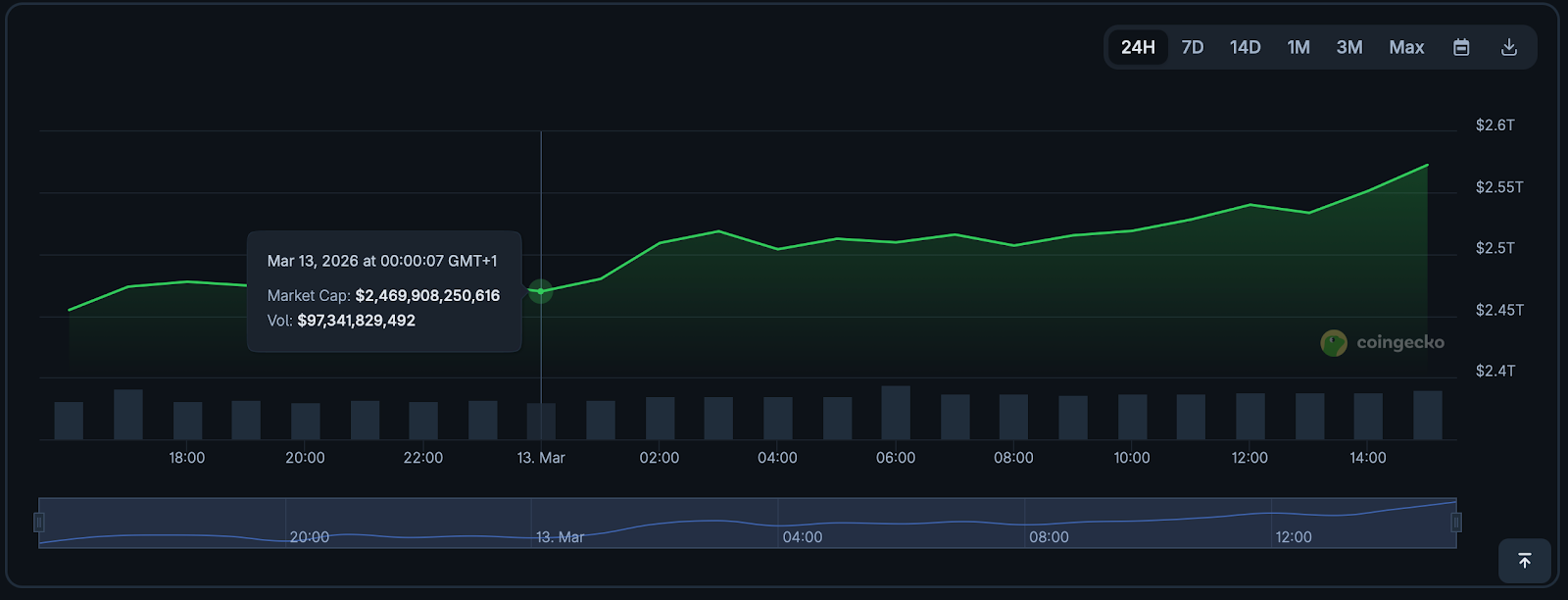
Crypto market cap surges over $100 billion in less than 24 hours
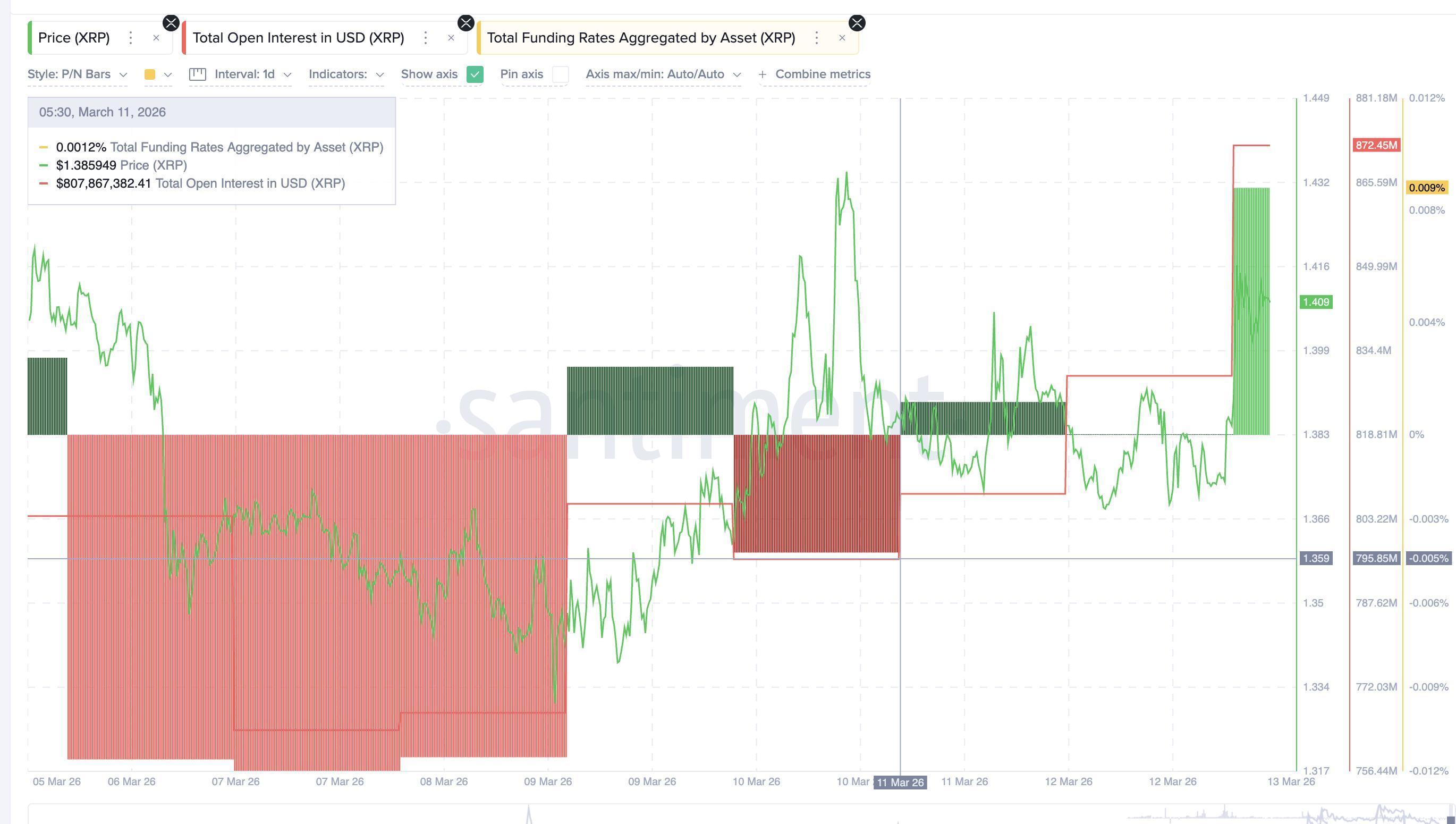
XRP Price Bounce Triggers 10% Leverage Surge: Is Bullish Optimism Turning Risky?
Trending news
MoreCrypto prices
More





