
NYSE Supports On-Chain Credit as Institutional Alpha Disparities Grow

Institutional On-Chain Credit: From Niche to Mainstream
On-chain credit markets for institutions have evolved beyond speculative beginnings, now representing a scalable and rapidly growing infrastructure with a clear trajectory toward integration in investment portfolios. The central investment premise is simple: blockchain technology is establishing a new credit layer, and institutional funds are increasingly moving into this space. The growth is notable—tokenized private credit has surged from $4.1 billion in December 2022 to over $17 billion today. This marks a shift from experimental status to becoming a foundational asset class.
Institutional participation is accelerating. Currently, average allocations to digital assets are at 7 percent, but projections show this figure could more than double to 16 percent within three years, according to State Street. This is not merely a pursuit of higher yields; it reflects a strategic reallocation driven by the search for new sources of alpha and improved operational efficiency. Supporting infrastructure is emerging, highlighted by the New York Stock Exchange's (NYSE) launch of a tokenized securities platform in January 2026. By integrating its Pillar matching engine with blockchain settlement, the NYSE is validating tokenization as a core element of capital markets. Combined with SEC guidance on tokenized securities, this development creates a compliant and scalable environment for institutional investors.
For portfolio strategists, these changes offer a systematic opportunity to access a new, high-growth credit infrastructure with the potential for strong risk-adjusted returns, especially as liquidity and secondary markets expand. Yet, challenges remain—primarily the complexity of due diligence. Traditional risk assessment methods are inadequate for assets involving smart contracts, innovative custody solutions, and offshore legal structures. This complexity presents an alpha opportunity for those who develop specialized evaluation frameworks. The momentum is clear: growth metrics, allocation projections, and infrastructure advancements signal the emergence of a scalable credit layer. The question for institutions is not whether to participate, but how to navigate the due diligence hurdles to capture value.
Neo-Bank Integration: Streamlining Institutional Access
The acceleration of institutional on-chain credit is fueled not only by infrastructure advancements but also by the rise of digital-native banks. These neo-banks serve as vital intermediaries, merging traditional financial services with blockchain capabilities to deliver integrated custody, lending, and settlement. This approach directly addresses the challenge of due diligence complexity, offering institutions a ready-made solution that eliminates the need to build proprietary systems.
For portfolio managers, this development reduces operational friction and enables more efficient capital deployment. Neo-banks provide bundled services that traditional financial firms can adopt with minimal integration risk, bridging credibility and knowledge gaps that have hindered adoption. Institutions can rely on regulated partners who have already mastered the complexities of smart contracts and custody models, streamlining access to new asset classes.
This convergence is giving rise to hybrid financial products. Platforms that combine custody and lending unlock liquidity in ways previously unattainable. For example, crypto loan platforms allow users to access liquidity without liquidating their crypto holdings, maintaining market exposure while obtaining capital. Institutions benefit from greater flexibility in portfolio construction, deploying funds into tokenized assets with operational efficiency comparable to traditional securities, thanks to integrated settlement and custody from neo-banks.
Ultimately, neo-bank integration is transforming access to on-chain credit from a fragmented, high-friction process into a standardized service. This lowers entry barriers and accelerates the shift in institutional allocations from 7 percent toward the projected 16 percent. By offering plug-and-play solutions, these banks are not only facilitating adoption—they are setting the operational benchmark for a hybrid financial landscape.
Portfolio Integration: Managing Exposure, Correlation, and Returns
Incorporating on-chain credit into traditional portfolios requires careful management of exposure and risk. Institutions typically follow a core-satellite structure, with 60-80% allocated to Bitcoin, 15-25% to Ethereum, and 5-10% to altcoins. This model balances stability and growth. Strategists should consider tokenized private credit as either a satellite or potentially a core component within a crypto allocation, depending on the fund's objectives and risk appetite.
The main obstacle is the complexity of due diligence. This challenge complicates all other aspects of integration. Conventional risk models are not suited for assets involving smart contracts, unique custody arrangements, and offshore legal frameworks. This gap offers alpha to institutions that develop tailored evaluation processes. As a result, initial allocations to on-chain credit should be modest and thoroughly vetted, aligned with the firm's capacity for due diligence.
From a diversification standpoint, digital assets—including tokenized private credit—are expected to show low correlation with traditional equities. This feature is attractive for portfolio construction, promising reduced volatility and improved risk-adjusted returns. However, these benefits must be balanced against concerns about volatility and liquidity. The market is still developing, and secondary market depth for many tokenized assets is limited, leading to wider bid-ask spreads and increased execution risk during market stress.
In summary, on-chain credit offers a compelling, low-correlation opportunity. Integration should follow established crypto allocation models, with careful sizing based on due diligence capabilities. The real alpha comes from disciplined evaluation and capital allocation that fits the fund's risk and return goals.
Key Drivers, Risks, and Portfolio Safeguards
Portfolio strategists must identify the catalysts that could drive adoption, recognize risks that could impede progress, and set clear guidelines for capital deployment. The opportunity is significant, but it requires a methodical, phased approach.
- Regulatory clarity: The SEC's guidance on tokenized securities is essential, providing the legal certainty needed for large institutions to move from pilot projects to full-scale integration.
- Hybrid finance adoption: Major banks embracing hybrid models, as seen with the NYSE, will help systematize access and reduce operational friction.
- Cross-chain interoperability: The development of standards, such as the Chainlink oracle platform, will enable seamless data and value transfer across blockchains, unlocking deeper liquidity and more efficient pricing.
The main downside risk is a regulatory clampdown or a significant security failure in blockchain infrastructure. A regulatory reversal could halt innovation and sharply reprice risk, while a major exploit in a core protocol or custody solution could erode confidence and trigger substantial losses. This risk is central to the due diligence challenge, as a single failure could disproportionately affect the asset class.
- Start small: Limit initial allocations to tokenized private credit or other on-chain credit products to 0.5-1% of the total portfolio, minimizing potential losses while gaining experience.
- Use established vehicles: Favor tokenized treasury products or regulated ETFs tracking the broader digital asset market for initial exposure, as these offer greater liquidity, clearer oversight, and lower operational risk.
- Integrate within existing frameworks: Apply the core-satellite allocation model, treating tokenized credit as a satellite position within a larger crypto allocation for conservative funds.
Ultimately, this is a strategic opportunity. While catalysts are building, risks remain significant. By adhering to safeguards—small allocations, established vehicles, and disciplined integration—institutions can convert potential alpha into tangible, risk-adjusted returns.
Disclaimer: The content of this article solely reflects the author's opinion and does not represent the platform in any capacity. This article is not intended to serve as a reference for making investment decisions.
You may also like
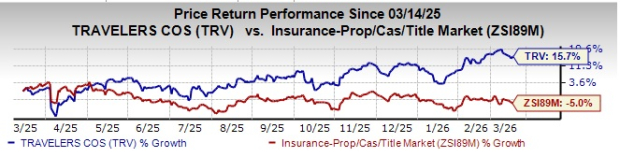
TRV Shares Rise 4% Year-to-Date, Currently Valued at 2.05 Times Book Value: What Does This Mean for Investors?


Trending news
MoreCrypto prices
More





