
A persistent result in the Fed’s preferred inflation gauge is likely to prompt the central bank to maintain its current stance

Fed Faces Persistent Inflation as Core Prices Climb
Fresh data released for January, prior to the escalation of conflict in Iran, indicates that inflation remains stubbornly high, supporting the Federal Reserve’s decision to keep interest rates unchanged for the time being.
The Personal Consumption Expenditures (PCE) index, which the Fed closely monitors, showed core inflation—excluding food and energy—reaching 3.1% in January. This marks the highest level in two years, edging up from December’s 3% and staying a full percentage point above the central bank’s 2% target.
Publication of January’s inflation figures was postponed by over two weeks due to last autumn’s government shutdown.
“Continued evidence of sticky inflation only reinforces the expectation that the Fed will remain cautious,” commented Ellen Zentner, chief economic strategist at Morgan Stanley Wealth Management.
The report highlights that service prices are not only persistent but also increasing, which is likely to draw the Fed’s attention.
“Service costs are the main force behind core inflation, which is the most reliable indicator for long-term price trends,” explained Joseph Brusuelas, chief economist at RSM.
Core service inflation, excluding housing, accelerated to 3.5%—the fastest pace since February 2025—driven largely by healthcare and financial services. However, these sectors may see some relief later in the year.
While the Fed has observed rising goods prices due to tariffs, these are considered temporary increases and are not expected to impact service prices. Meanwhile, the ongoing conflict in Iran has led to higher oil prices, which analysts say could push overall inflation to between 3.5% and 4% this spring.
This raises key questions for the Fed: How will these developments shape inflation expectations? Will increased oil prices spill over into core inflation? And how will policymakers react?
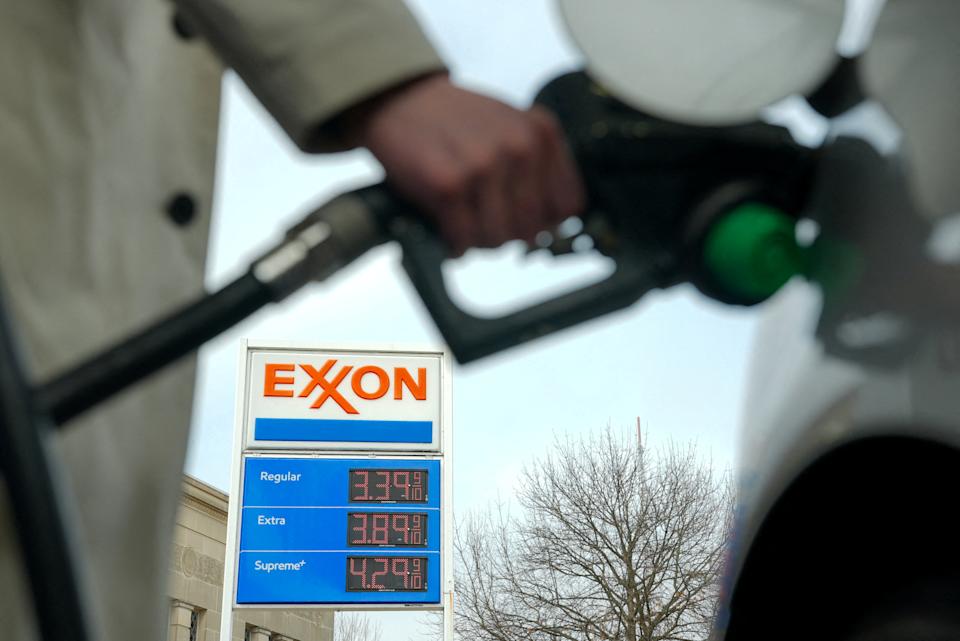
A customer fills up at an Exxon station in Washington, D.C., on March 5, 2006, amid rising oil and gas prices linked to the US-Israeli conflict with Iran. (REUTERS/Ken Cedeno)
If energy costs begin to influence core inflation, upcoming core PCE readings could surpass current projections.
Jim Bullard, former president of the St. Louis Fed and now dean at Purdue University’s Mitch Daniels School of Business, anticipates a rise in headline inflation but does not foresee a significant increase in core inflation.
The recent surge in oil prices will keep the Fed focused on inflation, but it also strengthens the argument that this is a short-term supply disruption.
Brusuelas expects the Fed to temporarily overlook the volatility in energy prices.
“If inflation expectations begin to rise, the Fed will be hesitant to repeat the policy mistakes made during the pandemic, when an energy shock followed Russia’s invasion of Ukraine,” Brusuelas noted.
Looking Ahead: Inflation and Fed Policy
Analysts predict that inflation will likely remain around 3% or could even accelerate in February.
Persistently high inflation data may prompt more hawkish members of the Federal Open Market Committee (FOMC) to advocate for keeping rates elevated, unless there is significant weakness in the labor market.
Currently, traders do not anticipate a rate cut before December, and the Fed is widely expected to maintain rates in the 3.5% to 3.75% range at its upcoming meeting.
Another consideration is whether the latest inflation numbers could prompt the Fed to consider raising rates.
Matthew Luzzetti, chief US economist at Deutsche Bank Securities, believes core PCE would need to rise well above 3% for the Fed to contemplate a hike. He notes that while temporary shocks such as tariffs or oil price spikes can push inflation higher, these are unlikely to lead to tighter policy unless service prices are the main driver.
“For the Fed to consider rate increases, it would have to abandon its current view that disinflation is underway and that inflation will return near 2% once temporary shocks subside,” Luzzetti wrote.
Disclaimer: The content of this article solely reflects the author's opinion and does not represent the platform in any capacity. This article is not intended to serve as a reference for making investment decisions.
You may also like
The Notion of an Oil Surplus Has Been Debunked
Are Asian ETFs Facing Risks Due to the Combined Impact of War and Tariffs?
Is USA Rare Earth Stock the Key to Becoming a Millionaire?

UiPath and Unified Automation: Key Factors Behind ARR Expansion
Trending news
MoreCrypto prices
More





