
Will Increasing Gas Prices Truly Lead to a Rise in EV Purchases?

Do Rising Gas Prices Really Drive EV Adoption?
The concept that soaring fuel costs will speed up the shift to electric vehicles (EVs) is not a new one. However, whether this idea will turn into reality during the current period of high gas prices remains uncertain.
On the surface, the reasoning is clear: as gasoline becomes more expensive, consumers are likely to consider alternatives. Electric vehicles, which are generally cheaper to operate per mile, seem like an obvious choice. Yet, the link between oil prices and EV sales is more complex than it appears.
The recent jump in fuel prices, fueled by renewed instability in the Middle East, has once again sparked investor curiosity. Could this be the catalyst that propels EVs into a new era of growth?
The reality is more complicated than headlines might suggest.
Looking Beyond the Surface
For most buyers, the choice to go electric involves more than just the price at the pump. Several other elements influence this decision.
Current Gasoline Price Trends
| Regular | Mid-Grade | Premium | Diesel | |
|---|---|---|---|---|
| March 13 | $3.630 | $4.133 | $4.496 | $4.892 |
| Month-ago | $2.940 | $3.455 | $3.817 | $3.665 |
| Year-ago | $3.079 | $3.555 | $3.908 | $3.619 |
Source: AAA
- EVs generally require a larger initial investment compared to similar gas-powered cars, even though their long-term running costs are lower.
- Charging infrastructure is still inconsistent. While big cities are improving their charging networks, rural and smaller communities often lag behind.
- The variety of EV models available in the U.S. is still much smaller than the selection of traditional gasoline vehicles.
These factors combined mean that while higher gas prices may make consumers more curious about EVs, they don't necessarily lead to immediate purchases.
However, if fuel costs remain high for an extended period, interest in electric vehicles could rise. For example, after Russia invaded Ukraine in early 2022, there was a noticeable uptick in EV-related searches and test drives.
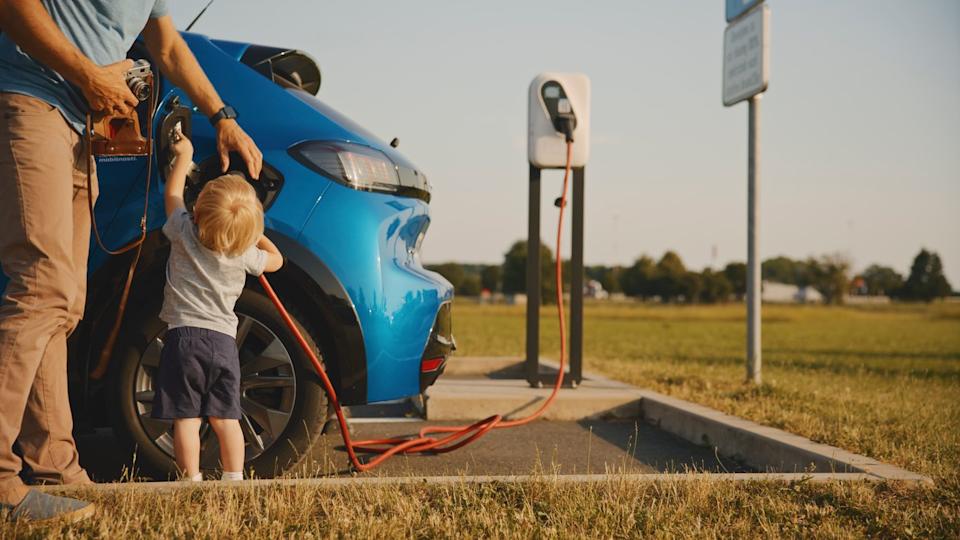
In the second quarter of 2021, EVs made up 2.7% of new car sales in the U.S. By the same period in 2022, that figure had doubled to 5.6%. While the $7,500 federal tax credit was still available at that time, data from CarMax showed that both online searches and test drives for EVs more than doubled between February and March 2022, indicating that consumers were actively exploring EV options as gas prices climbed.
Which Automakers Stand to Gain?
It's difficult to predict how long current geopolitical tensions—and high gas prices—will last. But if the pattern holds that sustained high fuel costs drive EV adoption, certain automakers are poised to benefit. In the U.S., companies with established electric lineups like Tesla (NASDAQ: TSLA), Rivian (NASDAQ: RIVN), and Ford Motor Company (NYSE: F) are likely to see increased demand.
Meanwhile, Chinese EV manufacturers have surged ahead thanks to robust government backing, strong domestic demand, and control over key battery materials. Firms such as BYD Company (OTC: BYDDY), Nio (NYSE: NIO), and XPeng (NYSE: XPEV) have expanded rapidly and are now exporting vehicles to Europe and beyond.
Chinese automakers have also built highly integrated supply chains, especially in battery production, allowing them to manufacture EVs at lower costs than many Western rivals.
If global demand for electric vehicles accelerates as oil prices rise, Chinese companies are likely to remain major players, even if the U.S. market grows at a slower pace.
What Really Drives the Shift?
The central issue isn't just whether gas prices will go up, but whether those increases will last long enough to significantly influence buying habits.
Short-lived spikes in fuel costs may grab attention, but it's long-term trends that typically drive major changes in technology. While EVs are steadily gaining ground worldwide, and higher gas prices may provide a boost, they are rarely the only factor at play.
The move toward electrification is being fueled by a mix of factors: improvements in battery technology, supportive government policies, declining production costs, and shifting consumer preferences.
High fuel prices are certainly part of the equation—but they're not the whole story.
Disclaimer: The content of this article solely reflects the author's opinion and does not represent the platform in any capacity. This article is not intended to serve as a reference for making investment decisions.
You may also like
Pepeto News Today: Listing Chatter Is Cheap, but DeepSnitch AI’s Live Utility and 300X Launch Are What Degens Are Actually Buying

U.S. Jan Core PCE Rises 3.1% On Year, Falling Inside Historical WSJ Forecasting Range
Flash Crash: Bitcoin (BTC) Suddenly Drops After Hitting $74,000
Trending news
MoreCrypto prices
More





