
Algoma Steel’s Shift to EAF: Short-Term Challenges for Sustained Viability Amid a Declining Canadian Market

Algoma Steel’s Q4 2025: Navigating the Tariff Shock
The final quarter of 2025 marked a dramatic turning point for Algoma Steel (ASTL-6.23%), as the company faced the full impact of US-imposed tariffs. Key financial indicators reveal a market in freefall and a cost structure unable to adapt to the new reality.
Shipments plummeted by 31% year-over-year, reaching just 378,000 net tons. This sharp decline wasn’t due to weak Canadian demand, but rather Algoma’s strategic withdrawal from the US market, a direct response to the 50% Section 232 tariff. The CEO described this tariff as having “dismantled the cross-border business model,” leaving a significant gap in sales volume that the company’s fixed costs could not absorb.
Production costs soared as output dropped. The average cost per ton rose to $1,332—an increase of $300 from the previous year—driven by $225 million in direct tariff expenses and poor fixed cost absorption due to lower production. Even though Algoma shifted toward higher-value products, operating well below capacity proved financially unsustainable.
The outcome was a substantial financial setback. Lower shipments combined with higher costs resulted in an adjusted EBITDA loss of $95.2 million for the quarter, with a negative margin of 20.9%. Although operational cash flow improved by $74 million year-over-year, the company still used $3 million in cash during the quarter, highlighting ongoing financial strain.
In summary, the fourth quarter’s results laid bare the immediate fallout from the tariff shock: volumes collapsed, costs surged, and the company’s cross-border business model unraveled.
The Strategic Shift: Embracing Electric Arc Furnace Technology
Algoma Steel has now fully transitioned to electric arc furnace (EAF) steelmaking, abandoning its blast furnace and coke oven operations. This move, hastened by the economic pressure of US tariffs, marks a permanent exit from the traditional, high-emission iron-ore-based process. The transition is not just a reaction to trade policy—it’s a core part of Algoma’s decarbonization plan. By adopting EAF technology and recycling scrap, the company aims to cut carbon emissions by up to 70% and boost production capacity by one-third.
This transformation is supported by a $500 million government liquidity facility, which helps stabilize the balance sheet during this ramp-up period. Additionally, a joint venture to secure scrap supply is progressing, ensuring a steady input for the new EAF operations. For Algoma, this is a necessary evolution to meet both climate and trade challenges.
Short-Term Financial Pressures
The transition has brought significant short-term cost and margin challenges. Operating a new, capital-intensive EAF platform means higher per-ton costs during the initial ramp-up. The closure of the blast furnace left a gap in production volume that the EAF is still working to fill. The latest financials reflect this difficult adjustment, with an adjusted EBITDA margin of -20.9%. While tariffs created major obstacles, the company’s strategic pivot is intended to set a stronger course for the future.
Ultimately, Algoma faces a trade-off: immediate financial pain in exchange for long-term sustainability and competitiveness. The shift to EAF is essential for survival and decarbonization, but it has intensified near-term financial pressures. The next few quarters will reveal whether the new platform can deliver the cost savings and production volumes needed to turn things around.
Canadian Market Challenges: Oversupply, Falling Prices, and Policy Response
With the US market closed, Algoma must now rebuild in a Canadian market facing its own crisis. The domestic steel industry is dealing with severe oversupply, a problem made worse by US tariffs. Although Canada remained the largest steel exporter to the US last year, exports of Canadian steel dropped 32% year-over-year. This decline signals a broader contraction across the industry, resulting in a market flooded with unsold steel.
Oversupply has sparked a fierce price war, with Canadian steel prices falling 40% due to tariffs and global overcapacity. This price compression has severely squeezed profit margins for domestic producers. Even as Algoma shifted toward higher-value products, its average net sales realization was just $1,077 per ton—still under heavy downward pressure. The company’s adjusted EBITDA margin remained deeply negative at -20.9% for the quarter.
The Canadian government has responded with a series of countermeasures and is considering a Tariff Rate Quota (TRQ) policy to cap imports from non-free trade partners. However, industry experts argue these steps are inadequate, as the TRQ may leave much of the market unprotected and fail to shield domestic producers from unfair competition. The government’s focus appears to be on persuading the US to lift tariffs rather than building a resilient Canadian market.
The human impact is significant. As Algoma restructures and exits the US market, it has announced 1,000 layoffs, a direct result of lower volumes and high operating costs. These job losses highlight the difficult choices between preserving employment and keeping the business viable in an oversupplied market. Algoma’s future now depends on navigating a domestic landscape where government support is limited and price pressures persist.
Recovery Prospects: Volume Growth, Pricing, and EAF Expansion
Algoma’s recovery depends on rebuilding shipment volumes and stabilizing prices in a challenging domestic market. Management expects 2026 shipments to reach 1 to 1.2 million tons, split evenly between plate and sheet products. However, first-quarter shipments are projected to be lower than Q4, reflecting seasonal trends and ongoing operational challenges.
Increasing volume is crucial for two reasons: it helps spread fixed costs over more output, lowering the per-ton cost, and it’s essential for rebuilding the business in a market where supply still exceeds demand. The cost per ton remains high at $1,332, including $225 million in annual tariff expenses and the burden of fixed costs. Meanwhile, the average net sales price is $1,077 per ton, meaning Algoma is still selling at a loss.
The company’s strategy focuses on its strength in plate products, where pricing is more resilient than in sheet. Management anticipates sequential growth in plate production, signaling that the EAF platform is gaining traction in higher-value segments. However, financial improvement will require not just better pricing, but also higher volumes and the full ramp-up of EAF operations to achieve cost efficiencies.
Survival now hinges on flawless execution in the Canadian market. With limited government intervention, Algoma must rebuild from the ground up, leveraging its new EAF platform and strategic partnerships to capture domestic demand. While the target of 1-1.2 million tons provides a goal, the reality of weak pricing and lower initial shipments means losses are likely to persist in the near term. The next few quarters will determine whether the EAF ramp can deliver the necessary turnaround.
Key Factors and Risks for 2026
The year ahead will be shaped by Algoma’s ability to execute on a handful of critical priorities. Success depends on scaling up the EAF platform, securing a reliable and cost-effective scrap supply, and managing through a volatile market and policy environment.
The main catalyst is the efficient ramp-up of the EAF and securing competitive scrap feedstock. The company’s 24-hour EAF operations and a $250 million USD supply agreement with Hanwa Ocean Company Limited are positive steps. Without a stable, low-cost supply chain, the EAF cannot deliver the cost reductions needed for recovery.
Major risks include ongoing global steel price weakness and the potential for further changes in US trade policy. Oversupply—largely attributed to China—has pushed Canadian steel prices down 40%, making margin improvement difficult. The US administration’s willingness to use new tariff tools adds further uncertainty. Any escalation could destabilize the already fragile Canadian market.
Operational discipline will be critical. Algoma reduced inventory by $221 million in Q4, a positive sign, but year-end inventory remains high at $569 million. Cash flow from operations was negative $3 million in the quarter, underscoring the need for tight liquidity management. The coming months will show whether the EAF ramp can generate enough cash to support the business without further balance sheet strain.
In conclusion, Algoma’s path to stability relies on flawless execution, not external relief. The key watchpoints are volume growth, a secure scrap supply, and effective cash management in a tough pricing environment. Any misstep could prolong financial difficulties.
Disclaimer: The content of this article solely reflects the author's opinion and does not represent the platform in any capacity. This article is not intended to serve as a reference for making investment decisions.
You may also like
ELUT Earnings Soar on Debt Cut and Divestiture Shares Still Tumble
Ondo Broadens Tokenized Equity Market Through Collaboration with Oracle
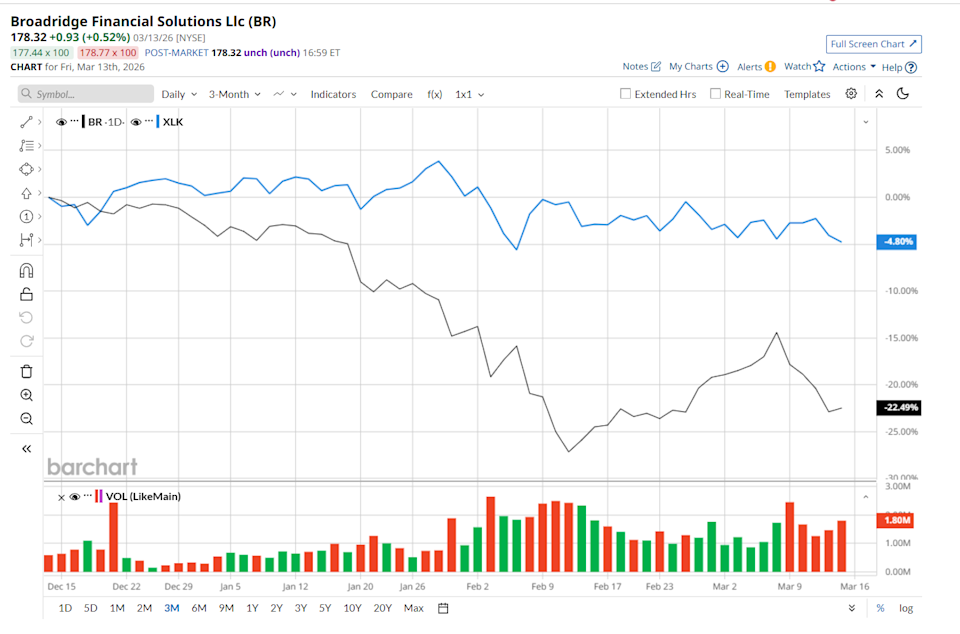
Broadridge Financial Solutions Shares: Is BR Lagging Behind the Technology Industry?
Trending news
MoreCrypto prices
More





