
Walmart vs. Costco: Which Company Offers Superior Dividend Potential in 2026?

Comparing Shopping Preferences: Walmart vs. Costco
Shopping behaviors reveal much about both customers and retailers. While some shoppers value the convenience of picking up everything they need in a single visit, others are drawn to bulk purchases for the savings they offer.
This distinction highlights the contrast between those who frequent Walmart and those loyal to Costco. Although both companies are leaders in the retail sector, they employ very different strategies to attract and retain customers.
For investors, the differences between these retail giants raise an important question: with such distinct business models, which stock is the better choice for a dividend-focused portfolio?
To answer this, let's examine Walmart and Costco in detail, comparing their operations, financial health, dividend performance, and current analyst opinions.
Walmart (WMT): The Global Retail Powerhouse
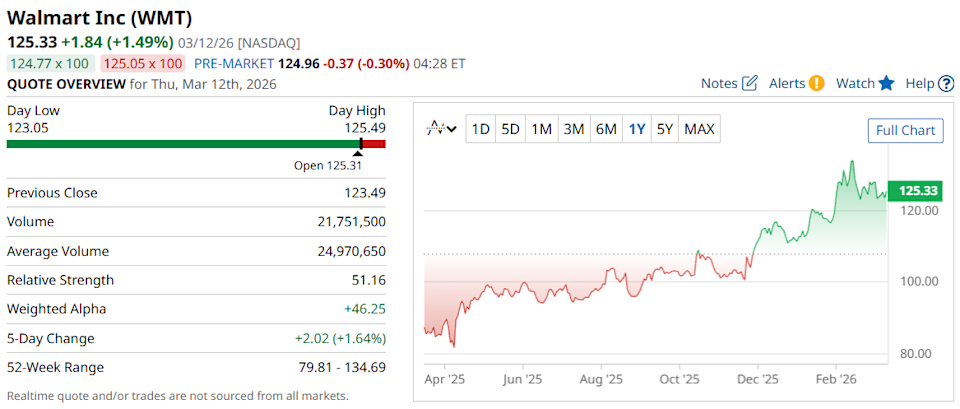
Walmart stands as the largest retailer worldwide, renowned for its commitment to low prices every day. With a vast network of stores spanning the globe, Walmart offers a comprehensive selection of products, from groceries and household goods to clothing and electronics. The company boasts a market capitalization approaching $1 trillion.
Currently, Walmart shares are trading near $125, reflecting an approximate 12% increase since the start of the year.
Costco (COST): The Membership Warehouse Giant
Costco, another major player, also provides a wide array of products, including food, home essentials, and electronics. What differentiates Costco is its membership-based model, which fosters strong customer loyalty.
With a market cap of $440 billion, Costco is less than half the size of Walmart, but this does not diminish its investment appeal.
At present, Costco shares are valued around $1,003, up 16% year-to-date.
Business Models: How Walmart and Costco Generate Revenue
Let’s explore the distinct ways these companies operate.
Walmart leverages its enormous product range and scale, focusing on high sales volume at low prices. Its highly efficient supply chain enables the company to keep costs down across thousands of items. By purchasing in bulk, Walmart secures favorable terms from suppliers, passing savings on to customers and driving significant sales volume.
In contrast, Costco operates as a membership-based warehouse club, offering a more limited selection of products, typically in larger quantities. Shoppers at Costco often buy in bulk, securing competitive prices but purchasing more than they might elsewhere. Membership fees provide Costco with a steady income stream and help maintain low product markups.
In summary, Walmart relies on scale and convenience, while Costco’s strength lies in bulk pricing and member loyalty.
Financial Comparison: Which Company Offers Better Value?
Reviewing the most recent quarterly results:
| Metric | Walmart | Costco |
|---|---|---|
| Sales | $179.5 billion | $69.6 billion |
| Net Income | $6.1 billion | $2 billion |
| Price/Sales | 1.40 | 1.61 |
| Price/Earnings (Forward) | 43.28 | 49.16 |
Walmart clearly leads in both revenue and net income. When it comes to valuation, the price-to-sales (P/S) ratio helps determine how much investors are paying for each dollar of revenue—a lower number is generally preferred. Both Walmart and Costco trade above the Consumer Staples sector median P/S of 1.04.
The forward price-to-earnings (P/E) ratio, which compares the stock price to projected earnings, is also higher for both companies than the sector median of 21. Walmart’s forward P/E is 43.28, while Costco’s is 49.16. This suggests investors are willing to pay a premium for these industry leaders, likely due to their dominant market positions and perceived stability.
For those seeking a value-oriented investment, Walmart’s slightly lower forward P/E may be more attractive.
Dividend Performance: Walmart vs. Costco
Now, let’s examine how each company rewards shareholders through dividends:
| Metric | Walmart | Costco | Notes |
|---|---|---|---|
| Annual Dividend | $0.94 | $5.20 | Costco pays a higher dividend per share, but its share price is also much higher. |
| Dividend Yield (Forward) | 0.75% | 0.52% | Walmart’s yield is slightly higher, offering more income relative to share price. |
| Dividend Payout Ratio | 35.43% | 27.22% | Costco’s lower payout ratio leaves more room for future increases. |
| Years of Dividend Growth | 53 years | 20+ years | Walmart is recognized as a Dividend King, with over five decades of annual increases. |
Walmart stands out for its long history of dividend growth and a higher yield, while Costco’s lower payout ratio suggests greater potential for future dividend hikes. Both companies offer compelling reasons for income investors to consider them.
Analyst Opinions
Let’s see how Wall Street views these stocks.
Among 39 analysts, Walmart is rated as a “Strong Buy,” with projections indicating up to 20% upside if the stock reaches its high target of $150.
Costco, on the other hand, receives a “Moderate Buy” consensus from 35 analysts. However, its potential upside is greater, with estimates suggesting a 31% increase if the stock hits its high target of $1,315.
Which Stock Is the Better Choice?
Ultimately, both Walmart and Costco are robust companies with unique advantages. The right pick depends on your investment objectives and risk appetite.
- If you prefer a larger, well-established company with a long dividend history and a slightly higher yield, Walmart may be more suitable.
- If you’re seeking growth potential in both share price and dividends, Costco could be the better long-term investment.
In summary, Walmart may be more appealing to those focused on income, while Costco could attract investors willing to trade some yield for efficiency and future growth prospects.
Disclaimer: The content of this article solely reflects the author's opinion and does not represent the platform in any capacity. This article is not intended to serve as a reference for making investment decisions.
You may also like
OPEC+ Production Cuts and Rising Strait of Hormuz Tensions Pose Dual Challenge to Oil Market
BNRs Losses Narrow, Yet Achieving Profitability Still Elusive
Bitcoin $80K Odds Hit 27% on Polymarket
Raajmarg InvIT Surges on Institutional Yield Hunt—Flight-to-Quality Trade Gains Momentum in Volatile Market
Trending news
MoreCrypto prices
More





