
Intel Q4 Earnings Preview: CPU Shortages Fuel Upside Potential Amid Capacity Challenges?
1. Investment Highlights Overview
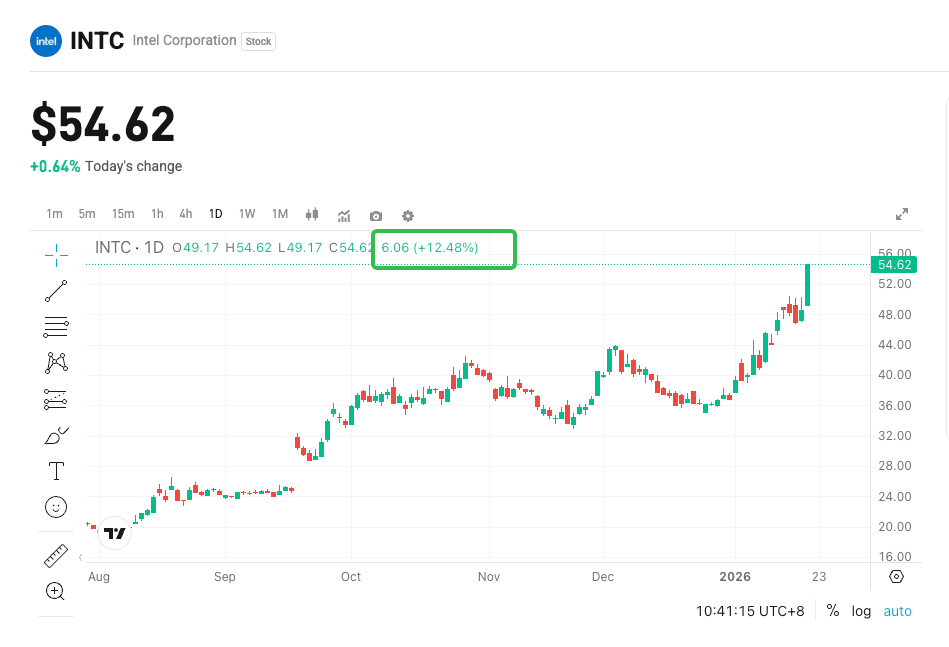
Intel is set to report its Q4 2025 earnings after the US market close on January 23, 2026, with market consensus forecasting revenue of $13.39 billion (-6% YoY) and EPS of $0.08 (-38.5% YoY). Key investor focus lies on how server CPU shortages could deliver short-term revenue surprises, while broader capacity constraints risk eroding market share in a booming AI-driven environment. Amid strong data center demand, this report could highlight Intel's resilience, though PC headwinds from rising memory costs add caution to the outlook.
2. Key Focus Areas
Focus 1: Server CPU Supply Tightness Tight supply in the server CPU market, driven by AI's shift from generative to agent-based applications, is boosting demand for general computing power. This dynamic enhances Intel's pricing leverage and inventory efficiency in the near term, potentially offsetting operational hurdles and leading to better-than-expected results. Key metrics: Data center and AI segment revenue projected at $4.43 billion (+30% YoY or more). Positive outcomes could spark short-term stock gains, but prolonged shortages without capacity ramps might allow AMD to capture more market growth, pressuring Intel's dominance.
Focus 2: Data Center Segment Rebound Major tech firms' increased AI infrastructure spending is revitalizing Intel's traditional server chip sales, serving as a pivotal driver for Q4 performance. This uptick could bolster gross margins and fund strategic shifts, yet reliance on external foundries may introduce cost vulnerabilities. Key metrics: Overall Intel Products Group revenue expected at $12.68 billion (-2.7% YoY), with rising data center contributions. Stronger-than-anticipated growth might rebuild investor trust and support valuation rerating; however, any slowdown could amplify doubts about Intel's AI positioning.
Focus 3: PC Segment Headwinds Surging memory chip prices, accounting for 25%-30% of PC build costs, are likely curbing end-user demand and weighing on Intel's client computing group. While designs like Lunar Lake with integrated memory could gain from higher ASPs, broader share losses to AMD and Arm architectures remain a concern. Key metrics: PC revenue anticipated at $8.21 billion (+2.5% YoY). If prices stay elevated, shipment declines could undercut quarterly totals, but strategic pricing tweaks by Intel might mitigate some impacts and offer upside surprises.
3. Opportunities and Risks Balanced
Upside Catalysts:
- Accelerated AI agent applications could drive server CPU demand 15%-20% higher in 2026 (exceeding consensus 4%-6%), potentially surpassing Q4 guidance and fueling stock rebounds.
- DRAM price hikes may unexpectedly lift margins for Lunar Lake processors via elevated ASPs, enhancing overall profitability.
- Foundry business validation, such as new client wins, could boost confidence in Intel's transformation efforts.
Downside Risks:
- Persistent capacity limits might enable AMD to expand server share, undermining Intel's long-term pricing and revenue stability.
- Elevated memory costs could further suppress PC volumes, leading to subpar client performance and heightened execution scrutiny.
- Volatility in semiconductor cycles, including softer data center capex, may expose over-reliance on AI trends.
4. Trading Strategy Insights
Bullish Case: Outperformance in revenue and data center metrics, especially if CPU shortages translate to EPS beats, could extend recent stock momentum amid AI valuation tailwinds.
Bearish Risks: Guidance misses, such as downward revenue revisions or margin squeezes, might signal stalled progress, triggering swift pullbacks given elevated valuations.
Key Metrics to Watch: Total revenue, EPS, data center and AI revenue, and gross margin shifts—these directly gauge operational health and competitive edge.
In upside scenarios where earnings exceed expectations, consider establishing short-term long positions. If risk factors prevail, it is advisable to implement stop-loss orders to safeguard short exposures and avoid excessive chasing of highs. Overall, adopt a wait-and-see stance, adjusting holdings only after the earnings clarity emerges to manage potential volatility.
Disclaimer: The content of this article solely reflects the author's opinion and does not represent the platform in any capacity. This article is not intended to serve as a reference for making investment decisions.
You may also like
Cloudflare Jumps 4.3% as Streaming Industry Sees Major Shifts: What’s Driving the Uptrend?
Margin Debt and Private Credit: Signals from Capital Flows
Pundit: XRP Is About to Be Unleashed. I Hope Everyone Is Ready for What’s Coming
Bitcoin’s hedge test begins as oil surges – Here’s what analysts say!
Trending news
MoreCrypto prices
More





