
Texas Instruments Shares Dip as Profit Falls Short and Reduced Capital Spending Impacts Trading Volume, Now Ranked 85th

Market Overview
On February 27, 2026, Texas Instruments (TXN) ended the trading session down 0.24%, closing at $212.63 per share. The day saw a notable surge in trading activity, with turnover reaching $1.75 billion—a 36.09% increase from the prior session—placing the stock 85th in overall market volume. Despite the slight decline, TXN continues to trade above both its 50-day moving average of $200.78 and its 200-day moving average of $186.15, remaining close to its 52-week peak of $231.32. The company’s market value is $192.97 billion, with a price-to-earnings ratio of 39.09 and a beta of 1.01, reflecting moderate market volatility exposure.
Main Influences on Performance
Several factors contributed to the recent dip in Texas Instruments’ share price, including disappointing earnings, reduced capital expenditures, and ongoing geopolitical uncertainty impacting the semiconductor industry. In the fourth quarter of 2025, TXN posted earnings per share of $1.27, falling short of the Zacks Consensus Estimate by $0.02. Revenue climbed 10% year-over-year to $4.42 billion but still missed the consensus forecast of $4.44 billion. The Analog division, responsible for 81.7% of total revenue, exceeded expectations with $3.62 billion in sales. However, the Embedded Processing segment generated $662 million (an 8% annual increase), and the “Other” category saw a 34% year-over-year decline to $146 million, highlighting uneven results across business units.
A major driver behind the stock’s retreat was the company’s decision to significantly reduce capital expenditures for 2026. Texas Instruments announced plans to lower its 2026 capex to a range of $2 billion to $3 billion, down from $4.6 billion in 2025, citing the need to adapt to current market conditions while still pursuing long-term objectives in technology advancement and cost-effective manufacturing. This move, however, has raised concerns about the company’s short-term growth prospects and operational agility, leading to increased investor caution.
Geopolitical tensions have also heightened market volatility. Reports of possible Chinese military action against Taiwan by 2027—allegedly communicated to industry leaders such as Tim Cook and Jensen Huang—have intensified worries about supply chain stability for semiconductor companies. As a global supplier of analog chips, TXN is particularly vulnerable to disruptions in international markets and manufacturing. Analysts warn that these macro risks could further increase the stock’s volatility and risk premium in the near future.
Financial indicators present a mixed picture. In the fourth quarter of 2025, TXN generated $2.25 billion in operating cash flow and maintained a robust balance sheet, holding $4.88 billion in cash and short-term investments. The company’s debt-to-equity ratio stands at 0.83, with a current ratio of 4.35, indicating a balanced yet leveraged financial position. The recent announcement of a $1.42 quarterly dividend—representing a payout ratio of 104.41%—has sparked questions about the sustainability of such returns if earnings come under further pressure.
Outlook and Sector Context
For the first quarter of 2026, Texas Instruments projects earnings per share between $1.22 and $1.48 and revenue in the range of $4.32 billion to $4.68 billion, signaling a cautious stance. Nevertheless, consensus forecasts for 2026 EPS remain at $5.35, and recent analyst upgrades reflect ongoing confidence in the company’s long-term prospects. Still, with a Zacks Rank #3 (Hold) and a DGM Score of B, investors should expect steady but unremarkable performance in the near term, with limited upside until broader economic and geopolitical uncertainties subside.
While the semiconductor industry stands to gain from trends like AI-driven demand and U.S. manufacturing initiatives—including Apple’s $600 billion domestic investment—Texas Instruments continues to face immediate hurdles such as reduced capital spending, global tensions, and earnings volatility. The company’s ability to maintain cost discipline while investing in innovation across analog and embedded processing will be crucial for sustaining its competitive edge as it navigates these challenges.
Disclaimer: The content of this article solely reflects the author's opinion and does not represent the platform in any capacity. This article is not intended to serve as a reference for making investment decisions.
You may also like
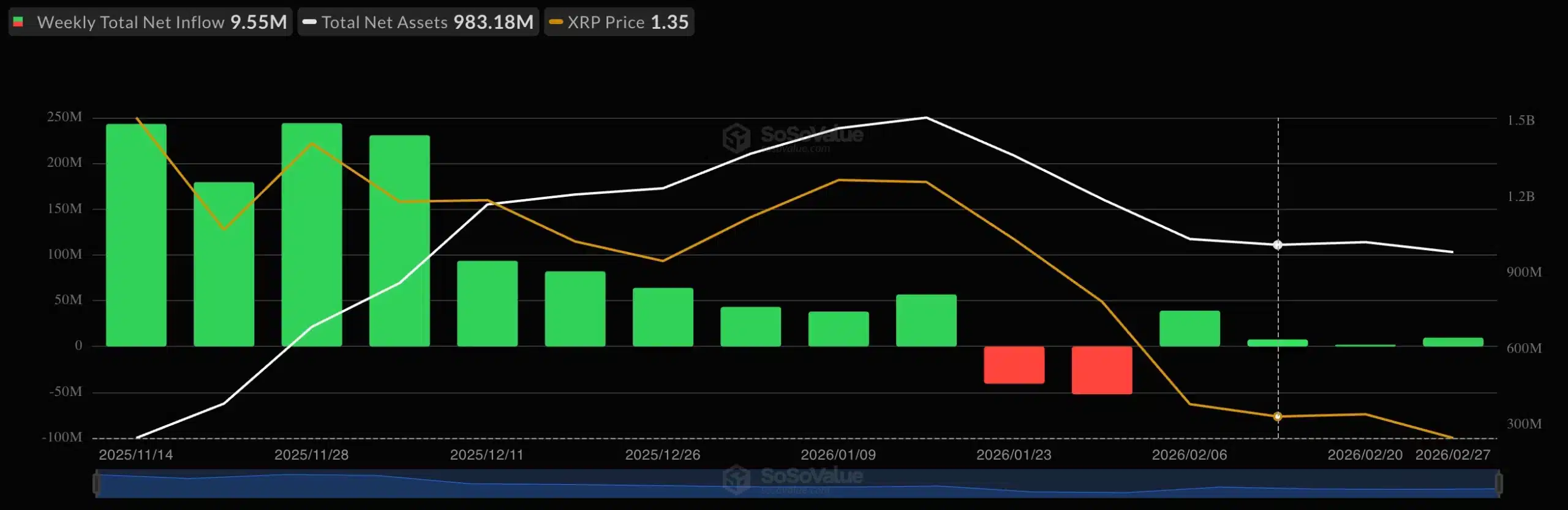
While Bitcoin ETFs bled, Solana and XRP won the week – Here’s the data!
美股收盘 | 三大指数集体收跌;新能源车股重挫,Rivian大跌超14%,特斯拉跌近6%;热门中概股普跌,极氪跌超23%
American Bitcoin posts $59M Q4 loss
Ripple CEO: Gary Gensler Apologizes to Ripple (XRP), Says “Sorry, I Was Wrong”
Trending news
MoreCrypto prices
More





