
The Gorman-Rupp Company (GRC): A Bull Case Theory

We came across a bullish thesis on The Gorman-Rupp Company on Danny’s Substack by Danny Green. In this article, we will summarize the bulls’ thesis on GRC. The Gorman-Rupp Company's share was trading at $65.13 as of February 18th. GRC’s trailing and forward P/E were 33.37 and 29.94 respectively according to Yahoo Finance.
Gorman-Rupp operates in cyclical industrial end markets, but its diversified exposure across water and wastewater, fire protection, construction, and industrial OEM demand helps moderate macro sensitivity, particularly because many projects are tied to long-lead municipal infrastructure spending that remains structurally supportive. Incoming orders of $550.2 million for the first nine months of 2025, up roughly 10.9% year over year, reinforce the view that demand remains intact despite broader economic uncertainty, although a slowdown in construction activity or municipal capital expenditures could still pressure project starts and replacement cycles.
Fundamentally, performance is modestly improving, with Q3 2025 net sales of $172.8 million (up 2.8% year over year) and first-nine-month net income rising to $39.3 million from $29.1 million, while adjusted EBITDA of $97.3 million and double-digit order growth indicate resilient pricing and conversion dynamics, even as margin pressure warrants monitoring. The company benefits from durable competitive advantages driven by mission-critical pump applications, a large installed base, aftermarket service revenue, and long-standing OEM relationships, which create switching costs and recurring revenue visibility, though commoditization risk remains in certain product categories.
Management appears disciplined, evidenced by covenant compliance, conservative balance-sheet stewardship, and a 53-year dividend growth streak, including a recent increase to $0.19 per quarter, signaling steady cash generation.
The investment case offers asymmetric risk/reward, with upside from margin recovery, backlog conversion, and potential multiple expansion, while downside primarily stems from cyclical order weakness or sustained cost inflation. Reasonable valuation at normalized industrial multiples, combined with dividend support, modestly favors investors, with clear catalysts including margin trends, order conversion, capital allocation decisions, and large contract developments.
The Gorman-Rupp Company is not on our list of the
Disclaimer: The content of this article solely reflects the author's opinion and does not represent the platform in any capacity. This article is not intended to serve as a reference for making investment decisions.
You may also like
Can Tokenization Push HBAR Towards a Trillion‑Dollar Market Cap?
Altseason Mentions Hit Extreme Lows: Is Dogecoin About To Benefit?

GMX mounts rally as projects reevaluate effectiveness of buybacks
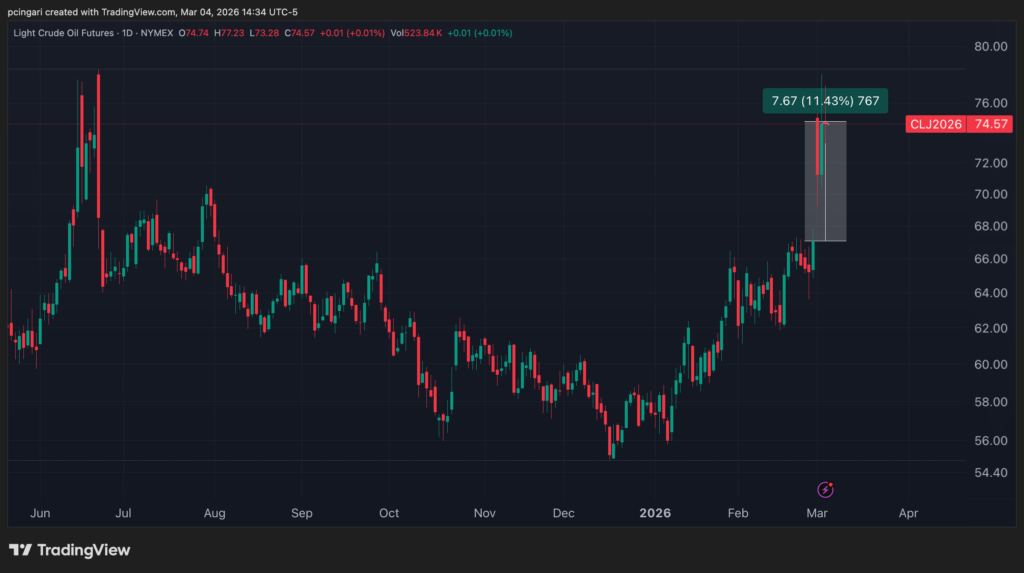
EXCLUSIVE: Why US, Iran War May Not Spark The Oil Crisis Everyone Fears
Trending news
MoreCrypto prices
More





