
Oxford-based start-up supported by the CIA plans to launch a British competitor to Starlink

OpenCosmos Gains Strategic Satellite Rights to Challenge SpaceX
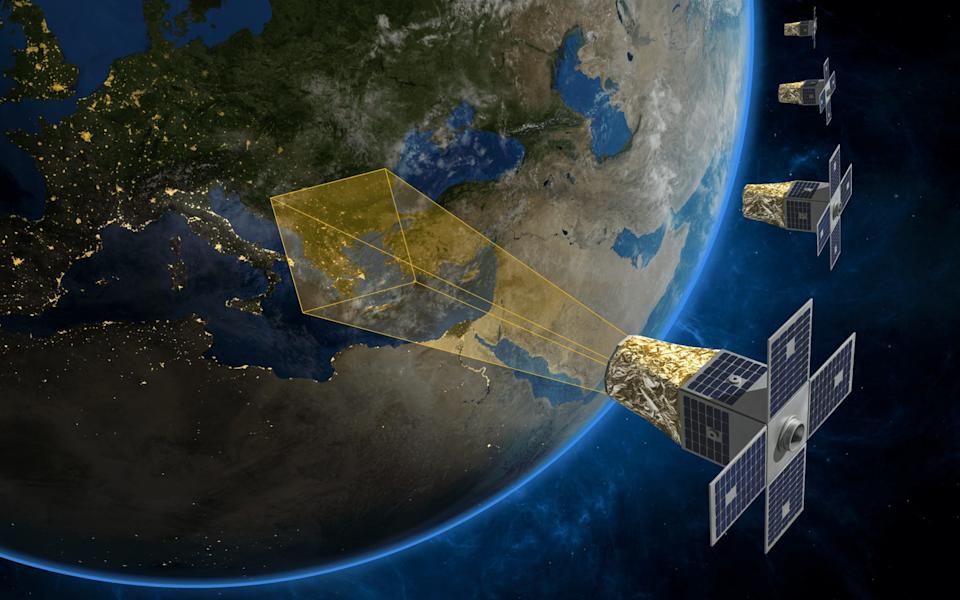
OpenCosmos, an Oxford-based start-up with backing from the CIA, is gearing up to manufacture hundreds of satellites annually as it aims to compete with Elon Musk’s Starlink network.
The British company, supported by investors including the CIA’s venture capital arm, has unveiled plans for a new satellite constellation named ConnectedCosmos. This initiative is intended to reduce Europe’s dependence on large-scale satellite networks operated from outside the continent.
Founder and CEO Rafel Jorda Siquier revealed that OpenCosmos is on track to produce up to 200 satellites each year, with its main production hub located in Harwell, near Oxford. “Our facilities can currently deliver up to 150 satellites annually, and soon we’ll reach nearly 200,” he stated. “At Harwell, we’re now able to assemble a new satellite every三 days on average.”
Siquier emphasized that OpenCosmos could offer European governments and telecom providers an independent alternative to Starlink, which many have relied on for secure communications. Starlink, operated by SpaceX, consists of thousands of satellites and has played a crucial role in maintaining connectivity for Ukrainian forces and authorities during the ongoing conflict.
Nevertheless, European officials have grown increasingly cautious about depending on Starlink, citing concerns over the unpredictable leadership of Elon Musk.
Seeking European Autonomy in Satellite Communications
“It’s vital that our critical infrastructure isn’t subject to decisions made by a single person overseas,” Siquier remarked. “We aim to provide a dependable solution for the UK, the wider European region, and any countries seeking partnerships without relying on the US or China.”
Europe has been considering its own sovereign satellite system, Iris 2, but this project is projected to cost billions and won’t be operational until 2030.
In January, OpenCosmos obtained essential spectrum licenses for low-Earth orbit satellites from Liechtenstein regulators, enabling the company to launch up to 288 satellites by 2028. “Many were surprised when we secured spectrum valued in the billions,” Siquier commented. The announcement of the ConnectedCosmos network was made at the Mobile World Congress in Barcelona.
Industry Partnerships and Broader Connectivity
Meanwhile, Vodafone has entered into an agreement with Jeff Bezos’s satellite venture to enhance mobile coverage in hard-to-reach rural locations. The telecom giant will leverage Amazon Leo’s low-Earth orbit satellites to connect calls, messages, and data in areas where installing fibre infrastructure is impractical or too costly.
Beyond addressing rural connectivity gaps, Vodafone will also use this satellite technology to bolster network reliability for emergency services and essential online functions in the event of fibre outages or flooding. The rollout will begin this year across Europe, including the UK, and extend to Africa.
OpenCosmos launched the first satellites for its new network in January, collaborating with Rocket Lab from New Zealand. Recently, SpaceIntelReport revealed that OpenCosmos is seeking up to $200 million (£160 million) in funding to support its growth plans.
Disclaimer: The content of this article solely reflects the author's opinion and does not represent the platform in any capacity. This article is not intended to serve as a reference for making investment decisions.
You may also like
Rare earths company REalloys receives Pentagon funding
InterGroup Upgraded to Neutral on Improving Operations and Liquidity
Peter Schiff To Pompliano: 'Why Buy More Bitcoin?-Just Buy Your Discounted Shares'
Smart Contract Breaches Reveal New Threats in Blockchain Safety
Trending news
MoreCrypto prices
More





