
Trump Announces US to Provide Escort and Insurance for Oil Tankers During Iran Conflict

US Moves to Safeguard Oil Shipments Amid Middle East Tensions
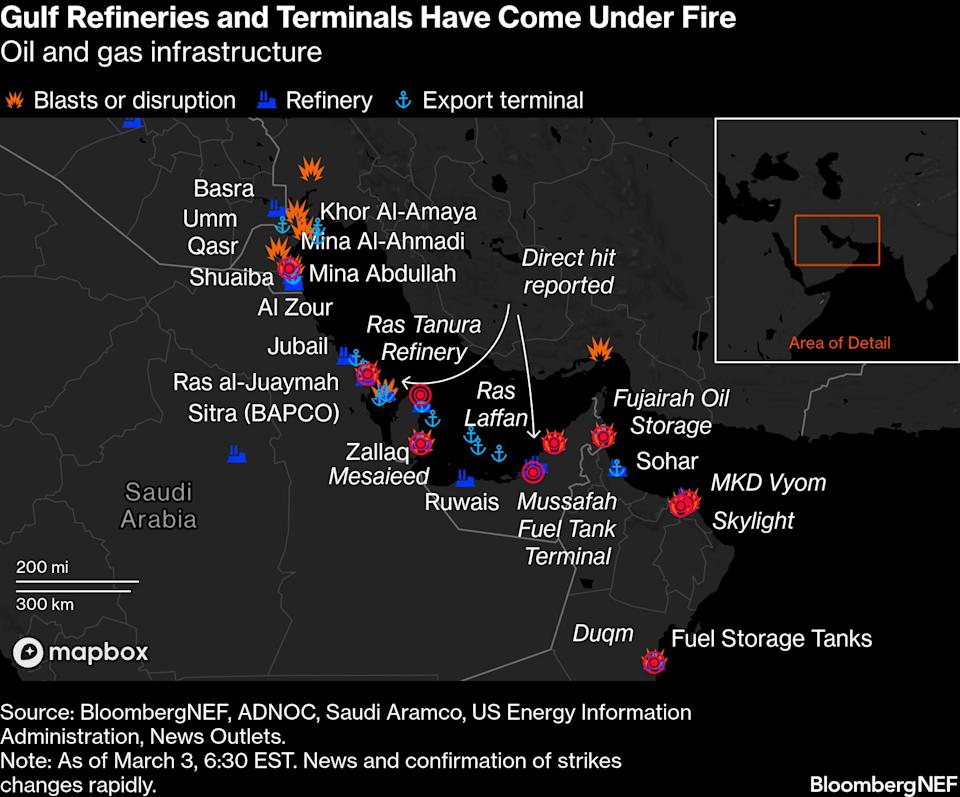
Sources: BloombergNEF, ADNOC, Saudi Aramco, US Energy Information Administration, News Outlets.
President Donald Trump announced that the United States will offer insurance coverage and naval protection for oil tankers and commercial vessels navigating the Strait of Hormuz. This initiative is intended to prevent a potential energy crisis resulting from the ongoing conflict with Iran.
On Tuesday, Trump stated that the US International Development Finance Corporation will provide insurance at competitive rates to support the continued movement of energy and trade in the Gulf region. He also indicated that, if required, the US Navy would begin escorting ships through the strategic waterway as soon as possible.
Top Stories from Bloomberg
“The United States will guarantee the uninterrupted supply of energy to the world, regardless of circumstances,” Trump declared on social media.
Following the announcement, oil prices briefly trimmed their gains, with Brent crude hovering around $80 per barrel. Although these steps eased some risk in the energy markets, many traders remain doubtful that oil shipments through the Strait of Hormuz will quickly return to normal.
Since the US and Israel initiated strikes against Iran over the weekend, oil prices have climbed by more than 10%. The resulting instability has severely disrupted the flow of oil through the Strait of Hormuz, a vital route that handles about 20% of global energy shipments.
Details about the insurance program from the DFC, which typically focuses on encouraging private investment in developing countries, were not provided in Trump’s statement.
Bob McNally, president of Rapidan Energy Group and a former White House adviser, commented, “While the announcement may calm some market nerves, implementing insurance and naval escorts will require time. The US military will first need to neutralize Iran’s capacity to lay mines and launch attacks using missiles and drones.”
He added, “If Iran continues to resist, restoring full oil transit through Hormuz could take weeks, not just hours or days, even with these new measures.”
Trump’s remarks followed reports that some insurers were withdrawing coverage, which contributed to rising oil prices, according to sources familiar with the situation.
Additional Developments
Several leading maritime insurance groups have suspended war risk coverage for vessels entering the Persian Gulf, as the industry reassesses how to price insurance for ships in the region.
The administration is also working to address the impact of rising fuel costs on consumers, as gasoline prices have reached their highest point in five months—a potential political challenge for Trump ahead of the upcoming midterm elections.
Secretary of State Marco Rubio told reporters that the government had anticipated the spike in energy prices. Treasury Secretary Scott Bessent and Energy Secretary Chris Wright are expected to introduce measures to help offset the effects. Trump was scheduled to meet with both officials at the White House on Tuesday afternoon to discuss the issue.
Political risk insurance, such as that offered by the DFC, is designed to protect against losses stemming from war, violence, and political instability.
Most Read from Bloomberg Businessweek
©2026 Bloomberg L.P.
Disclaimer: The content of this article solely reflects the author's opinion and does not represent the platform in any capacity. This article is not intended to serve as a reference for making investment decisions.
You may also like
As Oil Climbs to $80, China’s Reserves Turn Into a Strategic Advantage
Gran Tierra Energy: Fourth Quarter Earnings Overview
UK self-driving startup Oxa raises $103mln to scale up at ports, airports
Trending news
MoreCrypto prices
More





