
Final call for the ‘punk’ who brought chaos to BrewDog

The Rise and Fall of BrewDog: James Watt’s Ambitious Journey
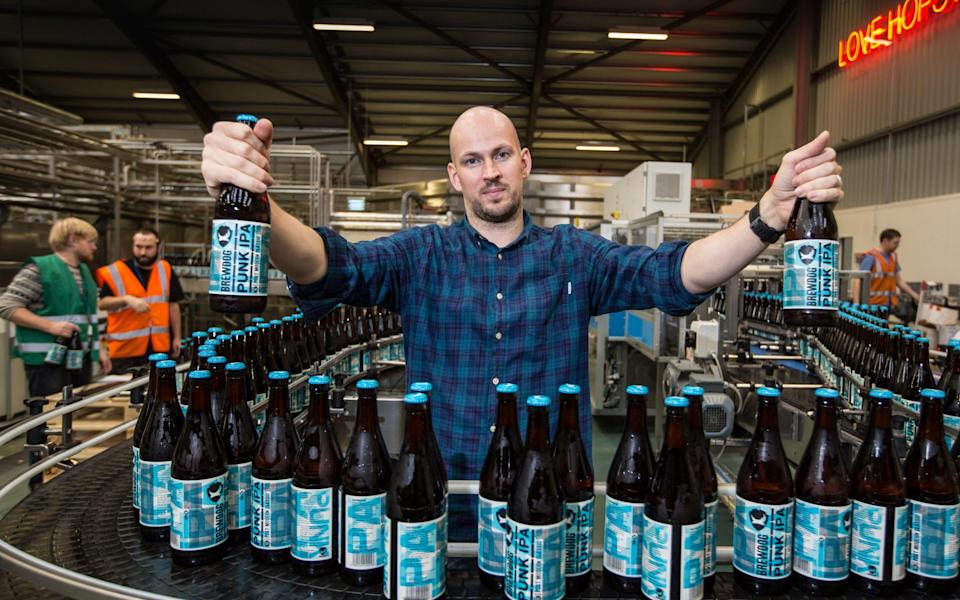
James Watt’s vision to create a beer powerhouse to rival industry leaders has dramatically collapsed. (Alamy Images)
Ten years ago, James Watt and his team of innovative brewers were at the forefront of a craft beer revolution. Their company, BrewDog, had shaken up the beverage sector, leaving global brewing giants wary of their disruptive tactics.
Renowned for its bold and unconventional marketing, the Scottish brewery forced established players to take notice as Watt’s inventive strategies began to transform the beer landscape, which had long been dominated by lagers.
Watt’s confidence was so high that he openly mocked potential buyers. In 2016, he famously declared on social media, “Bigger companies want to buy BrewDog. Go away, silly big companies. BrewDog is not for sale, especially not to you,” a statement that resonated with the brand’s loyal following.
At just 33, Watt was at the pinnacle of his career. The brewery he and Martin Dickie had started in a modest Fraserburgh facility had blossomed into a major success.
At one point, the brewery that Watt and Dickie built seemed destined for lasting triumph.
BrewDog had become the UK’s top-selling craft beer, generating £45 million in annual revenue and exporting to over 50 countries. It even became the first British brewery to establish operations in the United States.
However, a decade later, Watt’s ambition to build a beer empire to rival the industry’s titans has spectacularly unraveled.
On Monday, BrewDog was acquired by US-based Tilray Brands for a modest £33 million—a staggering decline from its £2 billion valuation just five years prior.
The “equity punks”—the passionate investors who helped fuel BrewDog’s meteoric ascent—and the private equity firm that once supported it will walk away with nothing.
Watt, now 43, will also receive no proceeds from the sale, though he remains wealthy thanks to previous share sales.
He expressed gratitude to BrewDog’s backers and apologized to the hundreds of employees who lost their jobs, stating, “I am heartbroken for all of the hard-working and passionate team members who have lost their jobs. I am heartbroken for all of our brilliant equity punks who did not get the return on their investment they wanted.”
He added, “And heartbroken to have dedicated the best 20 years of my life to something that ultimately did not have the ending we all wished for.”
BrewDog’s story is a remarkable tale of rapid ascent and sudden decline—a brand that once aimed to dethrone the beer industry’s giants, and a founder whose overconfidence, some argue, led to its downfall.
Unconventional Strategies and Risky Diversification
Watt’s relentless energy shaped every aspect of BrewDog. The company ventured into several unusual projects, such as a costly Scottish rewilding initiative to plant hundreds of thousands of trees in the Highlands.
One of BrewDog’s diversification efforts included an expensive rewilding project in Scotland.
The company also launched a gin and whisky distillery with limited success and opened numerous bars in prime locations, primarily as marketing showcases for the brand.
These ventures reflected Watt’s scattershot approach to business—a style that ultimately contributed to BrewDog’s undoing. Employees described a workplace where new ideas emerged constantly, only to be abandoned if they didn’t quickly succeed.
“There was a real sense from walking around the headquarters, the executive suite, and Watt’s office, that this was a business that had been run chaotically,” one industry insider told The Telegraph.
Punk Attitude and Marketing Genius
BrewDog emerged during a shift in drinking habits, sparking a surge in interest in craft beer. By 2008, consumers were turning away from generic lagers in favor of hoppier, more distinctive brews and a rebellious approach to alcohol.
The rise of digital platforms like the iPhone, Twitter, and Instagram gave entrepreneurs like Watt direct access to potential customers. BrewDog’s breakthrough came after winning Tesco’s 2008 home-brewing competition, which led to its “Punk IPA” being stocked by major UK retailers.
What truly set BrewDog apart was Watt’s knack for grabbing attention. He embraced the brand’s punk ethos with headline-making stunts. In 2008, BrewDog released an 18.2% ABV stout, drawing criticism from Alcohol Concern for encouraging irresponsible drinking. Watt responded by launching “Nanny State,” a beer with just 1.1% alcohol.
The company also faced backlash for naming a beer “Speedball”—a slang term for a mix of heroin and cocaine—before renaming it “Dogma” after intervention from regulators. BrewDog even produced a 55% ABV Belgian ale, packaged inside taxidermied animals, which shocked the industry.
These antics put BrewDog in the spotlight during an era when “move fast and break things” was the prevailing business mantra.
Watt positioned himself as a disruptor, determined to change Britain’s beer culture. “People go out and drink 10 pints of some cold, industrially brewed, fizzy nonsense, eat a kebab and call that a Saturday night,” he told The Times in 2009. “We wanted to change people’s perception.”
For a while, his approach paid off. BrewDog expanded rapidly, opening three bars in Scotland in 2010 and eventually operating 71 bars across the UK.
Watt also capitalized on the growing trend of retail investors by launching the “equity for punks” scheme, even driving a tank through London to promote it.
Despite his public disdain for big corporations, BrewDog sold a 22% stake to US private equity firm TSG Consumer Partners in 2017. TSG invested £100 million to fuel BrewDog’s growth and spent another £113 million buying out early investors.
Unusually, the deal guaranteed TSG a maximum 18% compounding return, requiring BrewDog to sell for nearly £1 billion to meet the terms. Watt insisted BrewDog planned to go public within four or five years.
Financial Troubles and Scandal
However, after the TSG deal, cracks began to appear. Starting in 2019, BrewDog reported five straight years of losses, and by the time of its collapse, it owed TSG over £800 million.
In 2021, as BrewDog’s situation worsened, Watt faced damaging allegations from more than 60 employees, who accused him of fostering a culture of fear and misogyny.
Initially, Watt dismissed these complaints, saying, “this type of fast-paced and intense environment is definitely not for everyone, but many of our fantastic long-term members have thrived in our culture.”
After a strong backlash, he reversed course, admitting, “The tweet we saw last night proves that on many occasions we haven’t got it right. We are committed to doing better, not just as a reaction to this, but always, and we are going to reach out to our entire team, past and present, to learn more. But most of all, right now, we are sorry.”
As BrewDog unraveled, Watt tried to regain control by offering £10 million of his own money and seeking outside investment, but he was ultimately excluded from the sale process.
Watt and Dickie reportedly made £100 million from the 2017 TSG deal. “We’re not going to let the deal go to our heads, but Martin did buy himself a new jumper,” Watt joked at the time.
Due to an accounting error, Watt’s windfall was briefly sent to a Russian bank account, which he later called “the most expensive mistake of my professional life,” before the funds were redirected correctly.
Reflecting on his experience, Watt said, “Pay attention to the details. Sometimes the tiniest mistakes can cost you the most.”
Disclaimer: The content of this article solely reflects the author's opinion and does not represent the platform in any capacity. This article is not intended to serve as a reference for making investment decisions.
You may also like
Crypto regulatory clarity matters more for banks, ex-CFTC chief says
Underwriting as Software: How On-Chain Innovations Break Open the Black Box of Traditional Capital Formation
Trending news
MoreCrypto prices
More





