
War with Iran disrupts the supply of oil and natural gas, underscoring Asia's vulnerability in energy security.

Global Energy Markets Disrupted by Persian Gulf Conflict
The ongoing conflict in the Persian Gulf has severely impacted the global energy market, restricting the flow of oil and natural gas and driving prices sharply higher.
Asian countries are particularly vulnerable, as they depend heavily on imported energy, much of which passes through the Strait of Hormuz. This narrow waterway is a crucial route for about 20% of the world’s crude oil and liquefied natural gas (LNG) trade.
According to Kpler, an energy consultancy, approximately 13 million barrels of oil per day were transported through this corridor in 2025, accounting for nearly a third of all crude shipped by sea. LNG shipments are also significant, with about one-fifth of global LNG passing through the strait. The U.S. Energy Information Administration reports that over 80% of the LNG moving through the strait in 2024 was destined for Asia.
Since the outbreak of the Iran conflict, Brent crude prices have surged by 15%, reaching around $84 per barrel—the highest since July 2024.
U.S. President Donald Trump announced that the United States would provide risk insurance to shipping companies and could deploy naval forces to safeguard vessels if necessary. However, the effects of these disruptions are being felt globally. When supplies dwindle, wealthier countries often outbid less affluent nations for limited shipments, leaving developing economies at risk of shortages. This pattern was evident during previous crises, such as Russia’s 2022 invasion of Ukraine.
Zulfikar Yurnaidi from the ASEAN Centre for Energy warned, “The closure of the Strait of Hormuz could not only push oil and gas prices higher but also bring global economic activity to a standstill.”
Major Risks for China and India
The sheer size of China and India, Asia’s two most populous nations, amplifies their exposure to energy market volatility.
China is the world’s top importer of crude oil, with India ranking third. Prolonged increases in energy prices could have widespread effects on their economies, impacting transportation, industry, and households alike.
While China is the largest purchaser of Iranian oil, it has made energy security a priority and diversified its sources, including significant investments in renewable energy. Last year, China imported about 1.4 million barrels per day from Iran, representing roughly 13% of its total seaborne crude imports, according to Kpler.
Kpler estimates that China’s current oil shipments at sea will meet demand for another four to five months. The country also maintains large strategic petroleum reserves, though the exact figures remain confidential.
China can also increase imports from Russia. Independent Chinese refiners, often called “teapots,” have been major buyers of discounted oil from Iran, Russia, and Venezuela, taking advantage of lower prices due to Western sanctions. Despite the turmoil, global oil supplies remain generally adequate.
Muyu Xu, a senior crude oil analyst at Kpler, noted, “China is unlikely to face difficulties in securing enough crude for its needs. The real issue is the cost.”
India, meanwhile, may resume buying Russian oil despite pressure from the U.S. to refrain.
India’s crude reserves would last less than a month. Energy analyst Vibhuti Garg from the Institute for Energy Economics and Financial Analysis (IEEFA) in Delhi stated that the coming weeks are critical. If the conflict continues, fuel prices and inflation could rise rapidly.
“The situation is extremely unpredictable,” Garg commented.
She added that the greatest threat is rising prices for perishable foods, which are sensitive to supply disruptions. Additionally, a weakening rupee and higher interest rates could slow economic growth.
East Asia’s Heavy Reliance on Middle Eastern Energy
East Asian economies are among the most susceptible to disruptions in Middle Eastern energy supplies.
- Japan imported 2.34 million barrels of crude oil daily in January, with about 95% coming from overseas. It is also one of the world’s largest LNG importers.
- South Korea is almost entirely dependent on imported energy, sourcing roughly 70% of its crude oil and 20% of its LNG from the Middle East.
- Taiwan imports nearly all its LNG and has been working to reduce its dependence on the Middle East. However, about a third of its LNG still comes from Qatar, which halted production after attacks on its facilities.
Japan and South Korea have built up significant energy reserves, while Taiwan has announced it has enough supplies for March and has contingency plans in place.
However, experts caution that reserves are only a temporary solution. Energy-intensive sectors, such as Taiwan’s semiconductor industry, remain at risk.
Grant Hauber from IEEFA observed that governments are preparing for the worst while hoping for the best, and some may regret not investing in renewables sooner, which could have provided a buffer against such disruptions.
Fossil fuels still dominate the energy mix in Japan, South Korea, and Taiwan. Renewables account for less than 10% of electricity generation in South Korea and Taiwan, and about 22% in Japan, according to the International Energy Agency.
Southeast Asia Prepares for Energy Challenges
Developing nations in Southeast Asia, with growing energy needs, risk being outcompeted by wealthier countries as supplies become scarce.
- Singaporean authorities have warned both businesses and households to expect higher energy costs.
- In Manila, the government has restricted non-essential travel and limited official vehicle use to conserve fuel.
- Thailand has called on citizens to save energy, leading to long lines at gas stations as prices rise.
Delivery drivers and taxi operators, who are vital for urban mobility in Thailand, are particularly affected. Sommit Sutar, a 64-year-old taxi driver in Chiang Rai, expressed concern about his ability to continue working amid rising fuel costs, saying, “Gasoline was already expensive. This war will only make things harder.”
To protect domestic reserves, Thailand has halted petroleum exports and claims it has enough reserves for up to 61 days. The country is also increasing natural gas production from the Gulf of Thailand and Myanmar.
Amy Kong from Zero Carbon Analytics highlighted that Thailand’s reliance on spot-market LNG makes it especially vulnerable to price swings and geopolitical instability, increasing the risk of being outbid by richer nations.
Reporting by Ghosal from Hanoi, Vietnam. Additional contributions by Chan Ho-him in Hong Kong.
Disclaimer: The content of this article solely reflects the author's opinion and does not represent the platform in any capacity. This article is not intended to serve as a reference for making investment decisions.
You may also like
WISeKey Reports FY 2025 Preliminary Financial Results

Analyzing why crypto is trending again DESPITE markets being in ‘extreme fear’
Why Did CDT Environmental Tech (CDTG) Stock Pop 42% After Hours
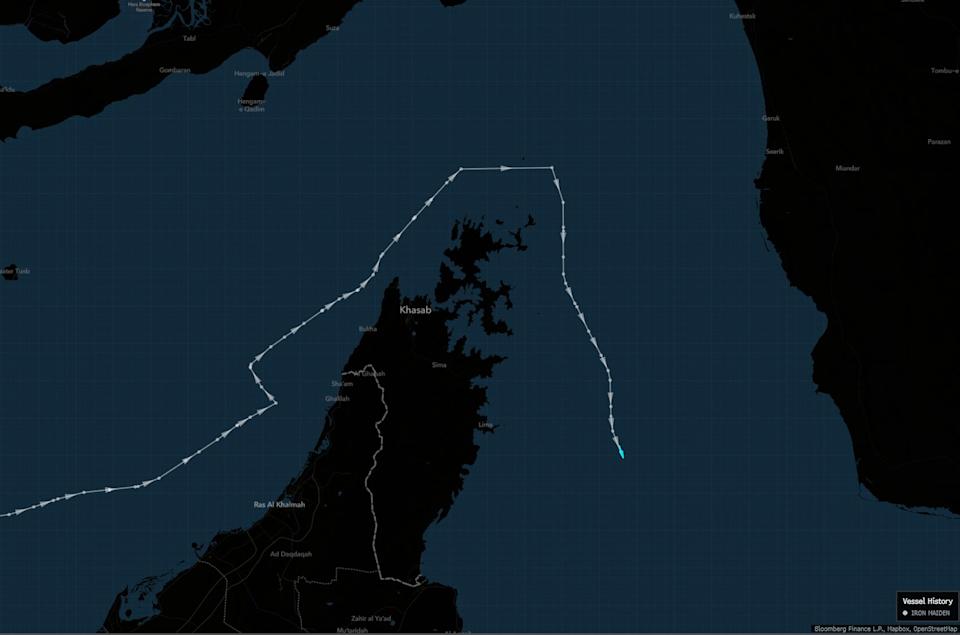
Bulk cargo ship identifying as Chinese sails through the Strait of Hormuz
Trending news
MoreCrypto prices
More





