
Aehr Test Systems Encounters "Sell the News" Pressure as High Valuation Offers Little Room for Mistakes

Market Responds to William Blair's Upgrade
When William Blair raised its rating on March 2nd, the market responded swiftly—shares surged to open near their highest point in a year. This reaction suggests investors saw the upgrade as confirmation of an already positive trajectory, rather than a surprising development. Now, the question is whether expectations have been recalibrated to reflect this improved outlook.
The key issue is the gap in valuation. By late February, Wall Street analysts had set an average price target of $25.16 per share for Aehr Test SystemsAEHR-5.09%. This target is 32.78% below the stock’s recent price, indicating a significant disconnect between current optimism and analyst caution. Even after the upgrade, consensus forecasts still factor in considerable risk or a potential slowdown in the AI testing surge that has benefited the company.
In summary, while the upgrade affirms a positive reality, the stock’s valuation tells a more cautious story. The market is already pricing in a great deal of optimism, leaving little tolerance for missteps. Any operational hiccup or delay in the expected AI spending cycle could quickly erase the current gains, potentially triggering a “sell the news” reaction.
Assessing the $14 Million AI Order and Q2 Performance
Recent developments have exceeded earlier expectations. The announcement of a $14 million order from Aehr’s leading AI processor client earlier this month sparked a 17.35% jump in the stock price. This wasn’t just a response to new business—it was a sign that the company is delivering on near-term opportunities. The order’s size and its focus on fully automated, high-volume systems indicate the customer is moving from testing to full-scale production.
This marks a shift from previous narratives. In January, Aehr’s fiscal Q2 results showed progress, with $9.9 million in revenue. Although the company reported a non-GAAP net loss, the reinstatement of second-half guidance was key. Management cited improved visibility from AI processor demand and highlighted recent orders as evidence.
The $14 million order now provides tangible proof that this visibility is translating into firm, production-level commitments.
These milestones are raising expectations for the AI testing market. The size of the order and the customer’s need for greater capacity point to a significant acceleration in AI-related capital spending. For Aehr—a company positioned as a key supplier in this trend—such execution is pivotal. It suggests that earlier doubts about the pace of AI-driven revenue growth may have been overstated, and reality is beginning to match the optimistic outlook.
AI Growth Prospects and Valuation Concerns
The long-term growth story for Aehr is compelling. Management is targeting annual revenue of $204 million, representing a 282% increase from current levels. Such ambitious growth could justify a premium valuation. However, the market remains skeptical—analysts’ average price target of $25.16 per share signals a 32.78% downside from recent prices. This gap reflects a bet that the company’s rapid expansion may not materialize as expected.
Institutional sentiment has also shifted. While the total value of institutional holdings remains steady, the number of funds invested in Aehr dropped by 25.8% last quarter, with only 210 funds reporting positions. This suggests that some large investors are reducing exposure, possibly taking profits or reallocating away from a stock they now see as fully valued. The concentration of ownership among the most optimistic funds leaves the stock more exposed to a broader sell-off if the growth narrative falters.
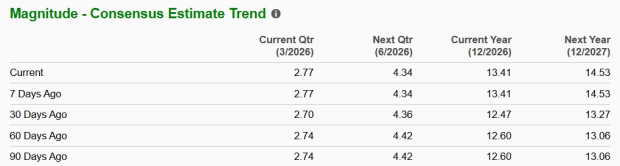
Ultimately, Aehr’s high valuation means there is little room for disappointment. The projected annual non-GAAP EPS of $1.48—a 27% drop from previous estimates—underscores the challenges of scaling up. This is not a straightforward “beat and raise” scenario; instead, the company must execute flawlessly. Any setbacks in the AI testing boom, delays in customer expansion, or downward revisions to guidance could quickly close the expectation gap, turning positive momentum into a classic “sell the news” event.
Key Catalysts, Risks, and What Lies Ahead
Aehr Test Systems now faces a critical test: can it deliver on its ambitious growth targets and overcome market skepticism? Upcoming earnings reports will be pivotal in demonstrating whether the company is on track to achieve its projected $204 million in annual revenue. Investors will be watching closely for improvements in margins, as scaling up to meet demand will put pressure on profitability.
Immediate catalysts include confirmed orders. The $14 million order from the leading AI processor customer is a strong indicator of production ramp-up. Additional large orders would reinforce the view that this is an ongoing trend rather than a one-off event. A guidance increase, particularly one that incorporates new visibility from this customer, would be a powerful endorsement of the company’s premium valuation and challenge the consensus expectation of a 32.78% downside.
The greatest risk remains the disconnect between the company’s valuation and its growth story. With shares trading at a premium, there is almost no margin for error. The decline in the number of institutional investors, despite a higher average allocation per fund, points to a consolidation of bullish positions. This leaves the stock vulnerable if the high-growth narrative falters. Any delays in customer expansion, downward guidance revisions, or failure to convert the order backlog into revenue could quickly erase gains, making flawless execution essential to justify the current price.
Strategy Spotlight: RSI Oversold Long-Only Approach
- Entry Criteria: Buy AEHR when the 14-day RSI falls below 30 and the closing price is above the 20-day simple moving average.
- Exit Criteria: Sell when the RSI rises above 70, after 10 trading days, or if a take-profit (+15%) or stop-loss (−7%) is triggered.
- Backtest Period: Last 2 years.
Backtest Summary
- Strategy Return: 0%
- Annualized Return: 0%
- Maximum Drawdown: 0%
- Win Rate: 0%
Trade Statistics
- Total Trades: 0
- Winning Trades: 0
- Losing Trades: 0
- Average Hold Days: 0
- Max Consecutive Losses: 0
- Profit/Loss Ratio: 0
- Average Win Return: 0%
- Average Loss Return: 0%
- Max Single Return: 0%
- Max Single Loss Return: 0%
Disclaimer: The content of this article solely reflects the author's opinion and does not represent the platform in any capacity. This article is not intended to serve as a reference for making investment decisions.
You may also like
Aptera Motors (SEV) Surges 20.77% on Bullish Technicals and Volatile Options Activity
Crocs' Profit Margins Face Challenges: Short-Term Setback or Lasting Change?
BNPQY or NABZY: Which Stock Offers Greater Value?
Trending news
MoreCrypto prices
More





