
Munich Re's Record Income and 8%+ EPS Growth Target Signal Compounding Setup Amid Capital-Return Surge

The numbers for 2025 are exceptional. Munich Re's net result came in at €6.121 billion, marking the fifth consecutive year it has outperformed its own guidance. This isn't just a strong quarter; it's a sustained run of excellence that builds a powerful case for the company's durability. The core of this performance is a robust investment portfolio, which generated €7.514 billion in income last year, delivering a solid 3.2% return on average market value. This income stream provides a stable foundation, but the true test for a value investor is whether it can compound over the long term.
The board is signaling confidence in this durability by proposing a significant capital return. For 2025, it intends to propose a dividend of €24.00 per share, a substantial increase from the €20.00 paid the prior year. This is paired with a €2.25bn share buy-back program, creating a total capital repatriation of €5.3bn. For shareholders, this sets up a compelling near-term yield. Yet, the value of this return depends entirely on the quality and sustainability of the underlying income. The investment portfolio's 3.2% return is respectable, but it must be viewed alongside the reinsurance business's performance. The technical result increased by 13% to €9.8 billion, driven by a 5% year-on-year rise in investment income. This suggests the company is effectively managing its capital across both its insurance and investment arms.
The challenge, as always, is to separate the durable from the cyclical.
| Total Trade | 26 |
| Winning Trades | 7 |
| Losing Trades | 19 |
| Win Rate | 26.92% |
| Average Hold Days | 4.77 |
| Max Consecutive Losses | 12 |
| Profit Loss Ratio | 0.77 |
| Avg Win Return | 4.26% |
| Avg Loss Return | 6.6% |
| Max Single Return | 10.3% |
| Max Single Loss Return | 21.74% |
Valuation and the Margin of Safety
The market is pricing Munich Re for continued excellence, but the question for a value investor is whether the current price offers a sufficient margin of safety. The stock trades at a price-to-book ratio of 1.76, a premium to the tangible accounting value of its assets. This is not an extreme multiple, but it sits well above the averages for some of its German peers, such as Deutsche Bank at 0.97 and Commerzbank at 1.28. It does, however, compare favorably to other reinsurance peers like Hannover Rück, which trades at a higher 2.78. This valuation reflects the market's confidence in Munich Re's durable earnings power and its elevated return on equity, which hit 18.3% last year. The premium suggests investors are paying for quality and stability, which are key moat components.
That confidence is further underscored by the market's implied view of the company's forward guidance. Management has set a target for a net result of more than €6.1 billion for 2025, which it has already exceeded. For 2026, the board is proposing a dividend of €24.00 per share and a €2.25bn buy-back, signaling that the record income is expected to continue. The market appears to be buying this story, as the stock has held up well despite a slight pullback in the fourth quarter. The setup is one where the company's capital returns are being funded by a business that is not only profitable but also growing its earnings base.
The long-term compounding framework provides the critical context for assessing value. Munich Re has laid out a clear path through 2030, targeting an average earnings per share growth of more than 8% per year. This is a disciplined, multi-year plan that aims to outpace the broader market. For a value investor, this is the essential ingredient: a durable business with a credible growth trajectory. The current price-to-book ratio of 1.76, when viewed against this 8%+ growth target, suggests the market is not pricing in a dramatic acceleration of earnings, but rather a steady, reliable compounding of the existing high-quality earnings stream.
The bottom line is that Munich Re offers a margin of safety built on quality, not cheapness. The valuation premium is justified by the company's wide moat, demonstrated by its five-year streak of beating guidance and its high return on equity. The proposed capital returns are a direct payout of this durable income, not a speculative bet. For a patient investor, the safety lies in the business's ability to compound earnings at a rate that exceeds its cost of capital, a process that the current price appears to acknowledge but not overpay for.
Risks to the Income Stream and Long-Term Outlook
The durable income story is not without its vulnerabilities. The reinsurance business operates in a cyclical environment, where underwriting cycles can compress margins during periods of intense competition. While Munich Re has managed its portfolio prudently, the potential for a sharp downturn in the property and casualty reinsurance market remains a fundamental risk. This is compounded by the company's significant exposure to currency fluctuations, as seen in the currency result of –€189m in Q3. A sustained shift in exchange rates, particularly against the dollar, could pressure reported earnings and capital ratios. Furthermore, the regulatory landscape is evolving, with potential changes that could pressure capital requirements and limit the flexibility of a company with a 287% Solvency II capital ratio.
The key catalyst for navigating these risks and maintaining the >8% EPS growth target is the successful execution of the post-Ambition 2025 strategy. Management has set a clear path through 2030, aiming to exceed all financial targets of the nearly completed Ambition 2025. The strategy's success hinges on profitable expansion in its higher-margin lines, particularly Global Specialty Insurance and cyber, which are designed to offset volatility in the property and casualty reinsurance segment. The diversification is already showing results, with the technical result rising 13% to €9.8 billion last year. The real test will be sustaining this momentum.
For investors, the forward view must be monitored through specific, tangible points. First, watch the quarterly technical results and, more critically, the combined ratios for signs of deterioration. The recent strength in property-casualty reinsurance and Global Specialty, with a combined ratio of 62.7% in Q3, is a positive signal. However, any widening in these ratios, especially in the life and health reinsurance segment where claims experience has been unfavourable, would indicate the cyclical pressures are gaining ground. Second, track the progress of the €2.25bn share buy-back program. Its execution is a direct commitment to capital return and a vote of confidence in the durability of the income stream. A slowdown or cancellation would be a red flag.
The bottom line is that Munich Re's wide moat provides a buffer, but it does not eliminate risk. The company's ability to compound at an 8%+ annual rate depends on its disciplined underwriting, its successful pivot to specialty lines, and its resilience against currency and regulatory shifts. These are the factors that will determine whether the current record income becomes a lasting legacy or a peak in a cycle.
Disclaimer: The content of this article solely reflects the author's opinion and does not represent the platform in any capacity. This article is not intended to serve as a reference for making investment decisions.
You may also like
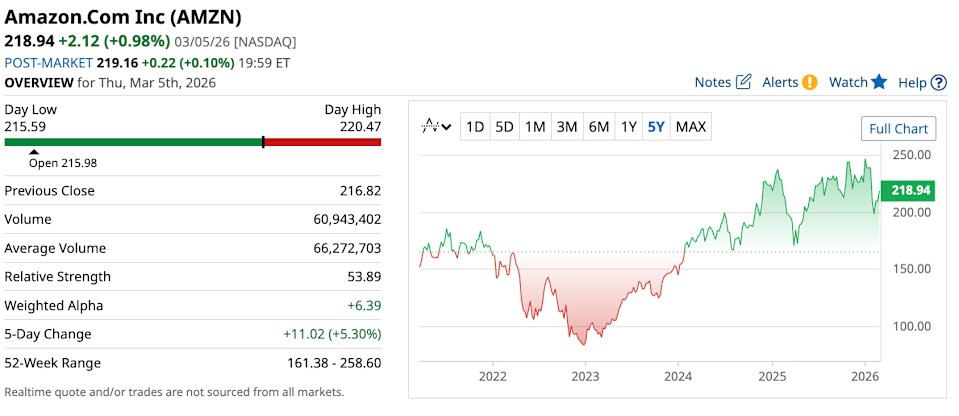
The $200 Billion Dilemma: Has the Time Come for Amazon to Issue a Dividend?
XOM | Oil Is About To Make a Move | LONG
$15.9B Unrealized Loss Hits BitMine and Strategy
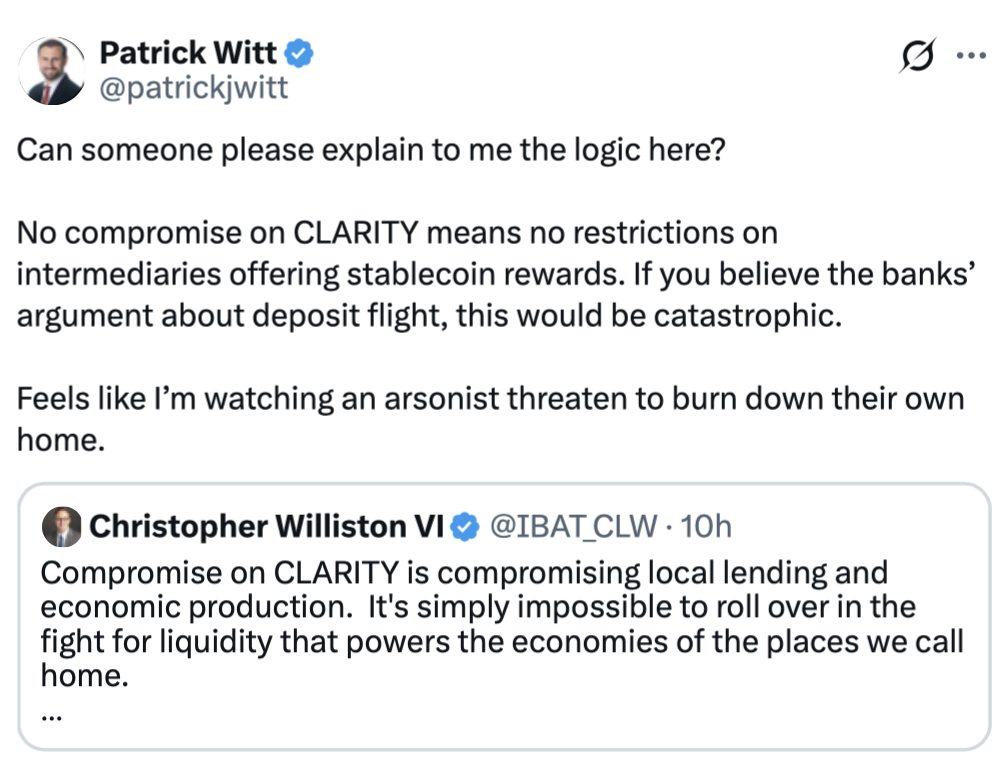
Community banks and crypto industry ‘are allies’ in CLARITY Act debate: Exec
Trending news
MoreCrypto prices
More





