
Micron's 6.74% Drop Sparks $12.83B in Trading, Marking Fourth-Largest Volume Day as AI Advances and Middle East Unrest Persist

Overview of Market Activity
On March 6, 2026, Micron Technology (MU) experienced a significant drop, closing down by 6.74%. This marked one of the largest single-day declines for the company in recent times. Trading volume was exceptionally high, with $12.83 billion worth of shares changing hands, making it the fourth most actively traded stock that day. The heightened trading activity, despite the price decrease, points to strong investor interest, likely fueled by Micron’s recent product launches and increased market volatility. The selloff occurred amid a broader market downturn, triggered by rising geopolitical tensions in the Middle East, which particularly impacted high-volatility technology stocks such as Micron.
Innovation and Competitive Position
On March 3, 2026, Micron Technology revealed a major advancement by shipping customer samples of its 256GB SOCAMM2 LPDRAM module. This product stands as the highest-capacity low-power DRAM available for AI data centers, utilizing the industry’s first monolithic 32Gb LPDDR5X die. Compared to the previous 192GB SOCAMM2, the new module offers 1.33 times more capacity. It supports up to 2TB of LPDRAM per 8-channel server CPU, meeting the increasing need for large memory capacity in applications like long-context large language model (LLM) inference and high-performance computing (HPC). The SOCAMM2 module also reduces energy use and physical size to just one-third of standard RDIMMs, directly addressing efficiency and cost challenges in modern data centers.
Performance benchmarks further highlight the module’s strengths. For real-time LLM inference, the SOCAMM2 achieves a 2.3-fold improvement in time to first token when used for key-value cache offloading. In standalone CPU scenarios, it delivers three times better performance per watt compared to mainstream memory options. These enhancements position Micron at the forefront of tackling key obstacles in AI and data-heavy computing. Additionally, the module’s modular design improves serviceability and supports liquid cooling, making it adaptable as memory requirements evolve.
Strategic Partnerships and Industry Influence
Micron’s partnership with Nvidia demonstrates its pivotal role in developing next-generation AI infrastructure. The two companies are working together to design memory solutions optimized for advanced AI CPUs, aligning with Nvidia’s efforts to maximize performance for complex workloads. Raj Narasimhan, Micron’s senior vice president of the Cloud Memory Business Unit, highlighted that the SOCAMM2’s high-capacity, low-power modular design showcases the company’s leadership in server memory innovation. Micron’s involvement in shaping JEDEC SOCAMM2 standards further emphasizes its influence in setting benchmarks for energy efficiency and performance across the industry.
The introduction of the SOCAMM2 also coincides with Micron’s ongoing manufacturing expansion, including the recent opening of a major assembly and testing facility in India. This strategic initiative aims to enhance supply chain resilience and lower costs for data center and PC clients. However, the long-term success of the product will depend on sustained demand driven by AI and the company’s ability to manage the cyclical nature of the memory market. Analysts caution that, while the SOCAMM2 addresses critical needs in AI infrastructure, competition from companies like Samsung and SK Hynix could lead to oversupply and margin pressure.
Investor Response and Future Outlook
Despite the technological advancements, Micron’s shares fell sharply on March 6, reflecting a combination of factors. The broader market decline, spurred by Middle East tensions, weighed heavily on high-beta tech stocks. Additionally, the stock’s recent volatility has highlighted its sensitivity to macroeconomic risks and profit-taking after a period of strong performance. While analysts at Morgan Stanley and UBS remain optimistic, citing better pricing and margin prospects, some warn of near-term challenges from geopolitical uncertainties and potential oversupply in the HBM and LPDDR markets.
Nonetheless, the launch of the SOCAMM2 strengthens Micron’s position as a key player in the growth of AI and high-performance computing. By delivering a modular, energy-efficient solution that reduces both rack space and total ownership costs, Micron is well-placed to capitalize on the expanding AI infrastructure sector. However, the company’s stock performance underscores the inherent volatility of the memory industry, where technological progress must be balanced against shifting supply and demand cycles. As investors look ahead to Micron’s Q2 2026 earnings report on March 18, the market will closely watch the adoption of the SOCAMM2 and the broader industry’s response to gauge the company’s ability to maintain its momentum in a changing environment.
Disclaimer: The content of this article solely reflects the author's opinion and does not represent the platform in any capacity. This article is not intended to serve as a reference for making investment decisions.
You may also like
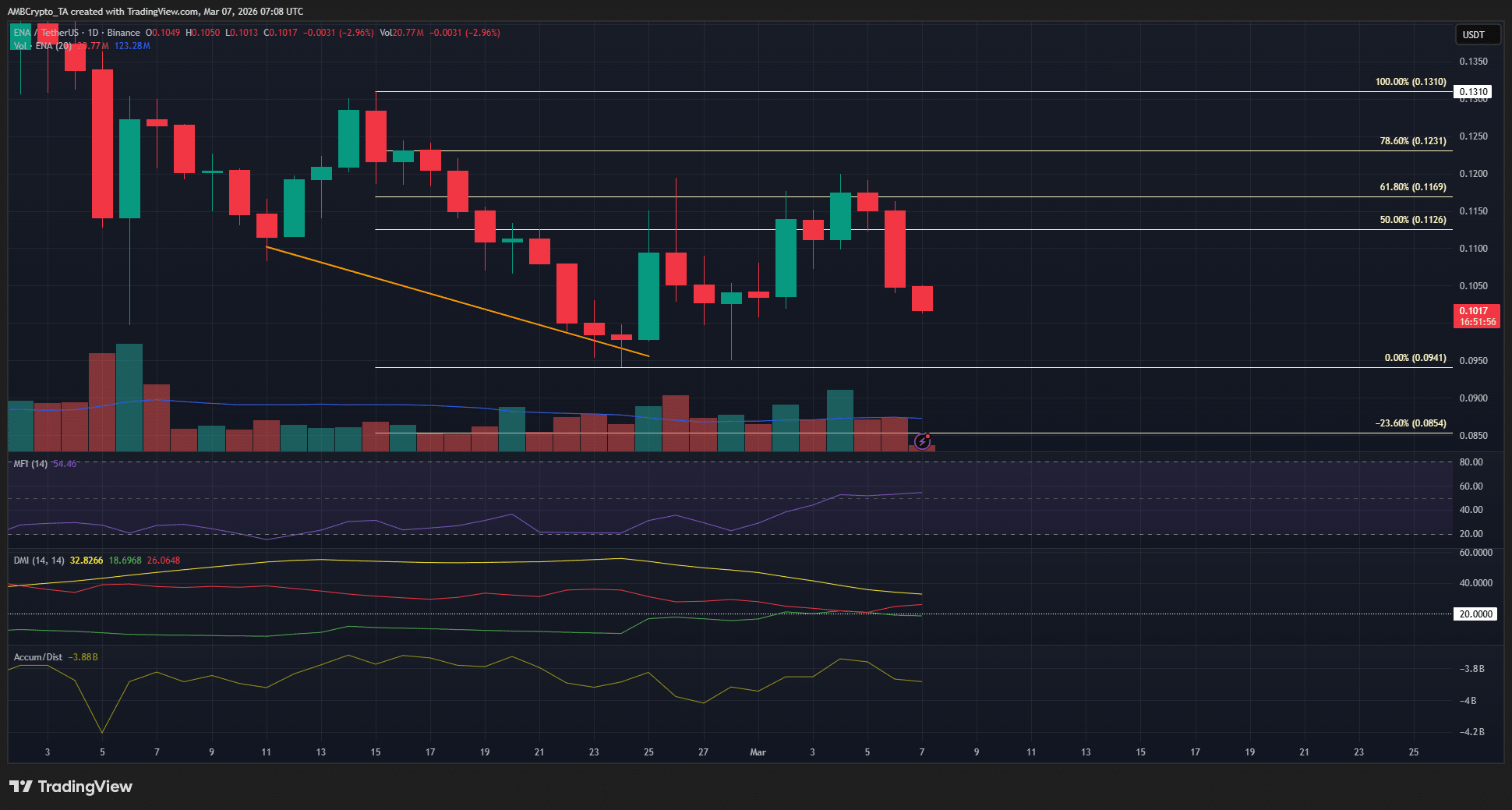
Ethena’s price slips 15% from its weekly high – Deeper losses ahead?
Trump Cyber Plan Now Backs Bitcoin and Blockchain Security

Energy Price Surge Triggered by Iran Conflict Highlights Europe’s Vulnerabilities

Trending news
MoreCrypto prices
More





