u.today
This week’s scheduled macroeconomic events could have a big impact on how the cryptocurrency market moves.
-
U.S. CPI (Consumer Price Index): March 11.
-
U.S. Jobless Claims: March 12.
-
Job Openings in Core PCE and JOLTS: March 13.
Market implications
Analysts at QCP claim that stress indicators have already started to appear in the larger macro environment. Recently rising tensions with Iran caused oil prices to surpass $115, which led to a discernible risk-off sentiment on international markets. Concerns about inflation are being raised once more by rising energy costs, which is causing uncertainty for both conventional assets and cryptocurrencies.
The market’s responses in recent sessions have been inconsistent. As concerns about inflation reappeared, both gold and Treasuries declined, while the U.S. dollar appreciated. In contrast to other riskier assets, Bitcoin demonstrated a comparatively robust profile. Instead of aggressively exiting positions, traders are positioning for volatility on derivatives markets, which suggests a hedging environment rather than a panic.
The short-term sentiment of the market will probably be determined by the upcoming inflation data. The notion that inflation is still persistently high may be strengthened if the CPI prints higher than anticipated. The dollar usually gains strength as a result, and riskier assets like cryptocurrencies are under more pressure. Conversely, a lower inflation rate might raise expectations for liquidity and give digital assets more leeway.
Another level of context will be added by labor market indicators to be released later this week. The JOLTS report gauges the level of labor demand, while weekly jobless claims provide one of the quickest indicators of an economic slowdown. These figures could affect expectations regarding future monetary policy when combined with the Core PCE inflation metric, which is the Federal Reserve’s preferred measure.
State of Bitcoin
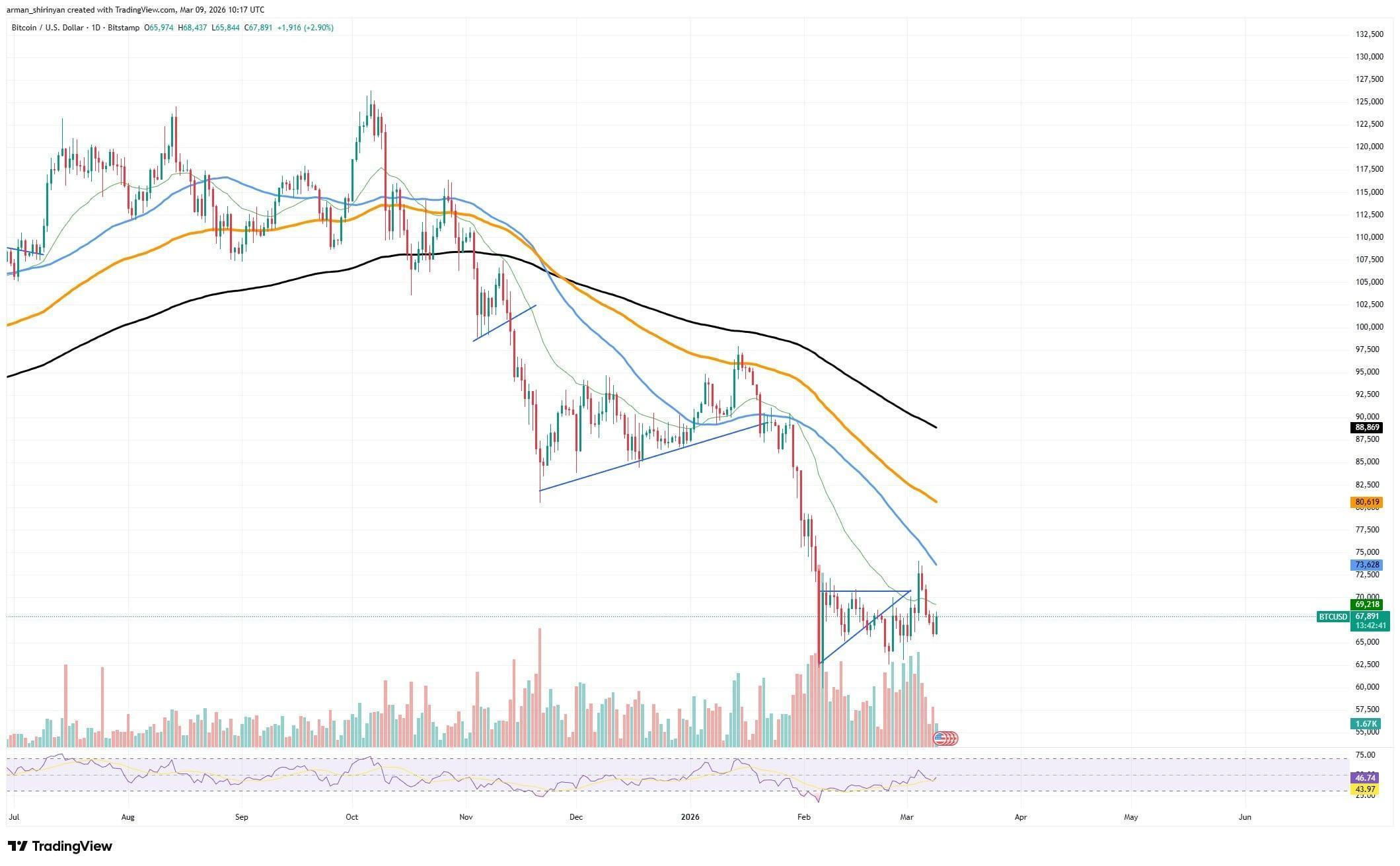
The overall uncertainty is reflected in Bitcoin’s technical picture. Price action has moved into a tightening range around the $68,000 mark following a steep decline in February. Buyers are trying to defend higher lows, as resistance keeps limiting upward movements, creating a short-term consolidation pattern.
Geopolitical developments, labor indicators and inflation data could all easily cause a spike in volatility. Instead of committing to a definite trend, the cryptocurrency market seems to be in a holding pattern until those signals appear.