
When Strait blockades turn "second-order acceleration" into "no oil transport", has the oil shipping cycle already peaked?

1. What Happened? Why Did Oil Prices Soar While Oil Shipping Stocks "Fell Instead of Rising"
During the recent Strait of Hormuz crisis, the market observed a significant divergence: international crude oil prices soared sharply, with expectations even exceeding $120 per barrel, yet key oil shipping stocks faced heavy sell-offs since March 4.
After the outbreak of the conflict, the nominal spot shipping rates in the oil transport market indeed reached astonishing historical highs. The WS index for the Middle East–Far East route once surged to 465, breaking the record set during the oil crisis 50 years ago, and the VLCC spot time charter equivalent (TCE) almost hit the incredible level of $470,000–$480,000 per day. However, this spike in freight rates is essentially a false boom lacking liquidity support.
Currently, the traffic volume through the Strait of Hormuz has plummeted. Under normal historical conditions, the average daily vessel volume for this strait is between 100 and 160 ships, but recently it has dropped to single digits—an extremely low level, down more than 90% from normal. On the other hand, over half of international insurance companies have issued cancellation notices for war risk insurance policies, with war risk premiums surging by up to 500% compared to pre-conflict levels. Without war risk coverage, this essentially means a halt in commercial transport, causing crude oil shipping within the Persian Gulf to fall into a “priced but illiquid” state, with virtually no actual cargo deals being made.
The initial market response was mechanical—after all, the Strait of Hormuz carries 20% of global crude oil trade. Once blocked, all VLCCs inside the Persian Gulf become “trapped in the bathtub,” and empty tankers outside the strait have no cargo to load. Through extremely linear extrapolation, some viewpoints argue that if Middle Eastern oil supply is completely cut off, global oil consumption will enter a “wartime rationing system,” and the shipping industry will find itself plunging directly from “skyrocketing freight rates” into the abyss of “trade standstill.”
……
Disclaimer: The content of this article solely reflects the author's opinion and does not represent the platform in any capacity. This article is not intended to serve as a reference for making investment decisions.
You may also like
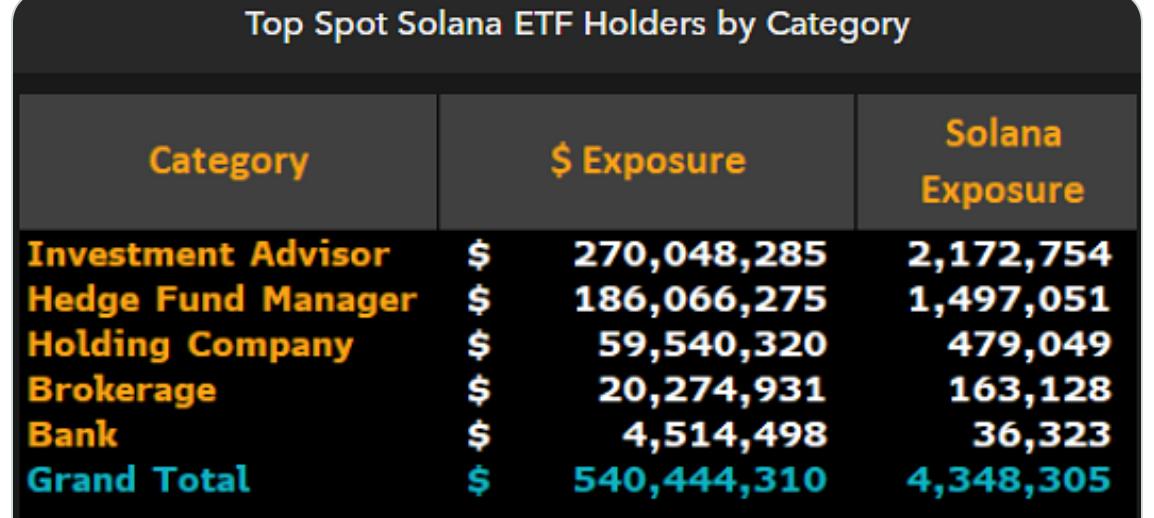
Wall Street funneled $540M into US Solana ETFs in Q4: Bloomberg
European freight truck makers brace for wave of low-cost Chinese rivals
IR (Infrared) 24-hour price fluctuation reaches 40.2%: trading volume slightly expands as support level is tested
Trending news
MoreCrypto prices
More





